
Ideal F1 Fault Code: Meaning, Causes & How to Fix It
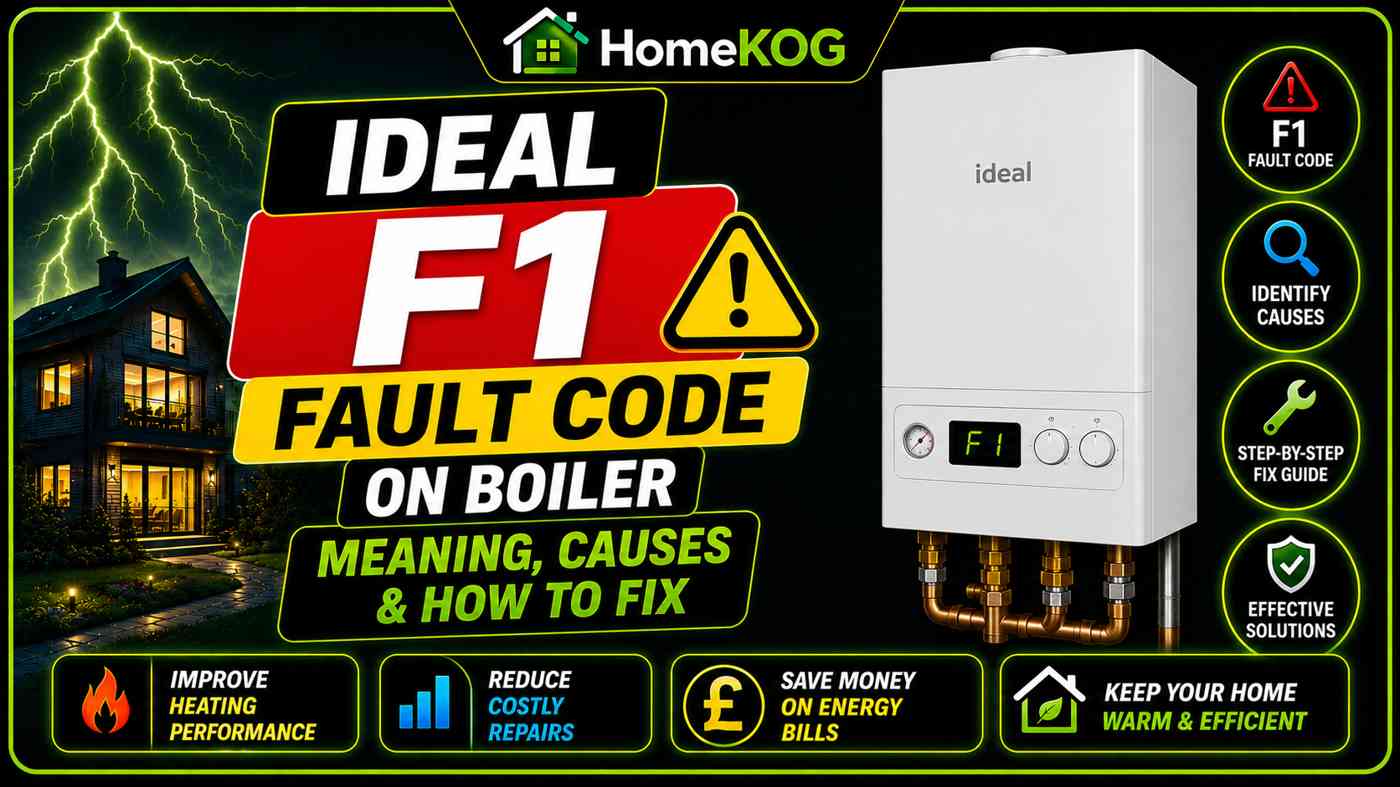
Quick Answer: The Ideal F1 fault code indicates low water pressure in the boiler’s sealed central heating circuit. It appears on Ideal Logic Combi, Logic Plus, and Logic Max models. In most cases it can be resolved by repressurising the system using the filling loop until the pressure gauge reads 1.5 bar. If pressure drops repeatedly after topping up, a leak is the likely cause and a Gas Safe registered engineer should be contacted. Additionally, if you encounter ideal logic l2 boiler error solutions, it may require a more thorough inspection of the boiler components. Sometimes, issues can stem from faulty sensors or electrical connections, which should be evaluated by a professional. Regular maintenance can also help prevent these common problems, ensuring your heating system operates efficiently.
Low water pressure is one of the most common reasons an Ideal Logic boiler displays a fault code, and the F1 is the specific code the range uses to communicate it. The good news is that in straightforward cases — where pressure has dropped gradually without a leak — the fix is a task most homeowners can carry out in a few minutes. The important caveat is that repeatedly topping up pressure without understanding why it keeps dropping is not a long-term solution, and identifying the root cause is essential to preventing ongoing damage.
Ideal F1 Fault Code: Key Entity Relationships
- The Ideal F1 fault code is a low water pressure error displayed on Ideal Logic Combi, Logic Plus, and Logic Max boilers when the water pressure in the sealed central heating circuit drops below the minimum safe operating threshold.
- Low water pressure is a condition in a sealed central heating system where the water pressure within the circuit falls below the level required for safe boiler operation — typically 0.5 bar — causing the boiler to lock out and display the F1 code.
- The filling loop is a short braided flexible pipe located beneath the Ideal Logic boiler casing that connects the mains cold water supply to the central heating circuit, used by homeowners to restore correct system pressure when the F1 fault code appears.
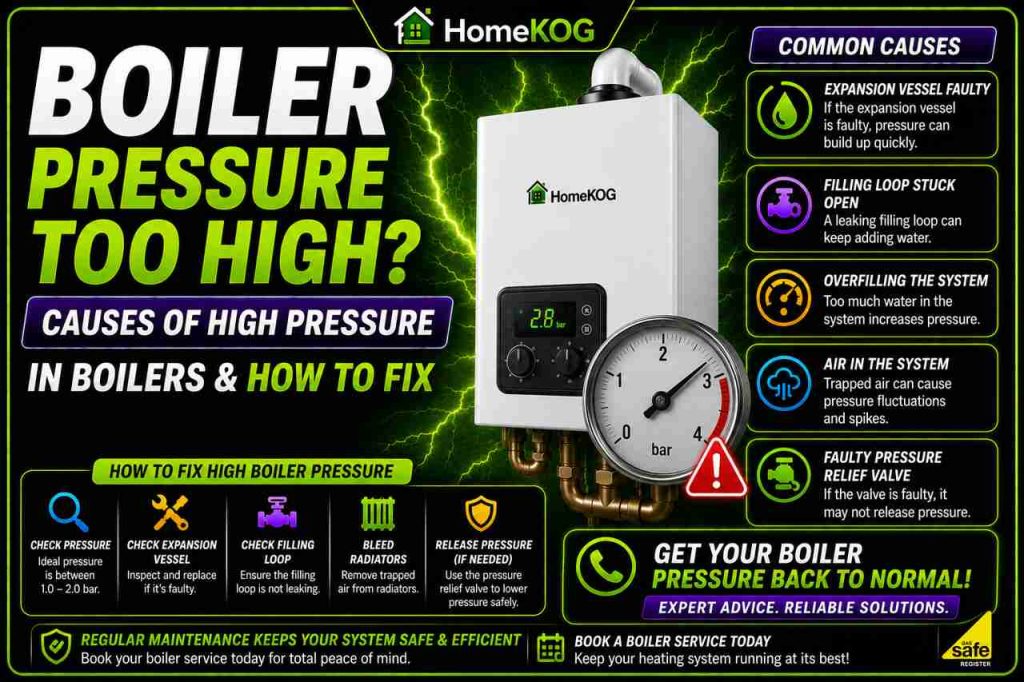
- A pressure gauge is the dial or digital indicator on the front of the Ideal Logic boiler that displays the current water pressure within the sealed heating circuit, with a reading between 1 and 1.5 bar indicating correct operating pressure.
- A central heating system leak is the most common cause of recurring Ideal F1 fault codes, occurring when water escapes from the circuit through pinhole leaks in radiators, loose pipe joints, damaged towel rail connections, or internal boiler components such as the heat exchanger or pump.
- A pressure relief valve is a safety component fitted to the Ideal Logic boiler that opens to discharge water when system pressure exceeds the maximum safe level, with a faulty valve that fails to reseat after discharge causing ongoing pressure loss and repeated F1 fault appearances.
- A water pressure sensor is the boiler component that monitors system pressure and transmits that data to the PCB, with a faulty sensor producing inaccurate pressure readings that trigger the F1 fault code even when the actual system pressure is within the correct range.
- Trapped air in the central heating circuit is a contributing cause of pressure fluctuations that can trigger the Ideal F1 code, with radiator bleeding required to purge air from the system and restore stable pressure alongside the filling loop repressurisation.
- A Gas Safe registered engineer is the legally required professional for all internal Ideal Logic boiler inspection and repair work related to the F1 fault, including leak location and repair, pressure relief valve assessment, heat exchanger inspection, and pressure sensor testing.
- Annual Ideal boiler servicing by a Gas Safe registered engineer reduces the likelihood of F1 fault code appearances by identifying developing leaks, pressure relief valve deterioration, and system corrosion before they cause significant pressure loss and circuit damage.
- Corrosion within the central heating system is a contributing cause of Ideal F1 pressure loss when oxidised metal particles from corroding pipework or radiators create pinhole leaks that allow water to escape the sealed circuit over time.
- Radiator bleeding is the process of releasing trapped air from radiators by opening the bleed valve until water flows steadily, required alongside repressurisation when air has entered the system and is causing unstable pressure readings that contribute to the F1 fault.

What Does the Ideal F1 Fault Code Mean?
The Ideal F1 fault code means the boiler has detected that water pressure in the sealed central heating circuit has dropped below the minimum level required for safe operation. When pressure falls below approximately 0.5 bar, the boiler locks out and will not fire until pressure is restored. The F1 code is the boiler’s way of communicating this specific condition. When troubleshooting such issues, it may be helpful to refer to specific viessmann f5 fault code solutions for guidance. These solutions provide detailed steps on diagnosing and fixing common problems, ensuring the boiler can resume normal operation without extensive downtime. Always consult the manufacturer’s manual for the most accurate maintenance procedures.
Water pressure in a sealed heating system is what allows water to circulate effectively through the heat exchanger, pipework, and radiators. Without sufficient pressure, the boiler cannot guarantee that adequate water flow is reaching the heat exchanger during operation, and running without that assurance creates a risk of overheating the exchanger and damaging internal components. Monitoring system boiler operation and efficiency is crucial for maintaining optimal performance. Regular checks can help identify issues before they escalate, ensuring that the system runs smoothly and efficiently. Additionally, understanding the dynamics of pressure and flow can further enhance the lifespan of both the boiler and the entire heating system.
The F1 code appears across multiple models in the current Ideal Logic range — including the Logic Combi, Logic Combi 30, Logic Plus, and Logic Max — and the diagnostic and repair process is consistent across all of them. A correctly pressurised Ideal Logic boiler should read between 1 and 1.5 bar on the pressure gauge when the system is cold. The target when repressurising is 1.5 bar. When evaluating Worcester 4000 boiler efficiency ratings, it’s important to consider both the Energy Efficiency Index and the specific model variations. Higher efficiency ratings can lead to significant cost savings over time, making it a worthwhile investment for homeowners. Additionally, understanding these ratings helps in comparing different brands to find the best option suited for individual heating needs.
How to Fix the Ideal F1 Fault Code: Repressurising the Boiler
Repressurising the system is the first and most immediate response to the F1 code, and is a task the homeowner can carry out safely without specialist tools or qualifications. The process uses the filling loop — a short braided pipe located beneath the boiler casing, usually with one or two taps on it — to admit mains water into the sealed circuit until the correct pressure is restored.
Before opening the filling loop, check the pressure gauge to confirm the reading has dropped. Open both taps on the filling loop — typically by turning them to a 45-degree angle — and watch the pressure gauge as water enters the system. The needle should rise steadily toward the 1.5 bar target. Once the gauge reads 1.5 bar, close both taps fully, returning them to their original positions. Do not allow the pressure to exceed 2 bar, as overpressure creates its own set of problems and will cause the pressure relief valve to discharge.
Once both taps are closed, reset the boiler by pressing and holding the reset button beneath the display screen for three seconds. The boiler should reignite and the F1 code should clear.
If air has recently entered the system — for example, following recent work on the heating circuit or after a significant pressure drop — bleeding the radiators is an important companion step. As radiators are bled, air escapes and pressure will drop slightly, requiring the filling loop to be topped up again. Continue bleeding radiators and topping up pressure until no more air is released and the system stabilises at 1.5 bar.
What Causes the Ideal F1 Fault Code to Recur?
A single pressure drop resolved by repressurisation may simply reflect the normal gradual loss of pressure that all sealed heating systems experience over time. If the F1 code returns within days or weeks of repressurisation, a more specific cause is responsible and needs to be addressed.
Leaks in the Central Heating System
A leak somewhere in the heating circuit is the most common cause of recurring F1 faults. Water escaping from the system reduces the volume in the sealed circuit, which is what the pressure drop reflects. The leak does not need to be substantial — even small pinhole leaks in radiators, minor drips at pipe joints, or seeping connections at towel rail valves can cause enough water loss to trigger the F1 code repeatedly.
A Gas Safe engineer will carry out a systematic inspection of the full circuit, checking radiators for pinhole corrosion, examining copper pipework joints and compression fittings, and inspecting any visible connections at towel rails and heated towel rails. If no external leak is found, the inspection extends to the boiler’s internal components — the pump and heat exchanger are the most common internal sources of leaks that cause pressure loss.
It is important not to simply top up the pressure and ignore a suspected leak. Water escaping from a pinhole in a radiator or from a boiler component will cause progressive damage to surrounding materials — plasterwork, floorboards, and ceiling finishes — and an internal boiler leak that reaches electrical components can cause additional faults and significantly increase the cost of eventual repair.
Faulty Pressure Relief Valve
The pressure relief valve opens to release water when system pressure exceeds the safe maximum, protecting the circuit from over-pressurisation. A valve that has been activated — whether because the system was genuinely over-pressurised or through gradual deterioration of the valve seat — may fail to reseat properly after opening. A valve that cannot seal completely will continue to drip, causing ongoing pressure loss that triggers the F1 code repeatedly.
A faulty pressure relief valve is identifiable by water dripping from the discharge pipe connected to the valve outlet. This pipe typically runs outside the property. If water is discharging from this pipe continuously or intermittently when the system is not over-pressurised, the valve needs assessment and likely replacement by a Gas Safe engineer.
Faulty Water Pressure Sensor
If the pressure gauge on the boiler displays a reading within the correct range but the F1 code is still appearing, an inaccurate pressure sensor may be responsible. The water pressure sensor transmits system pressure data to the PCB, and a sensor that has drifted out of calibration or developed a fault will send incorrect readings to the control board. The PCB interprets these readings as low pressure and triggers the F1 lockout even though the actual system pressure is adequate.
A Gas Safe engineer will test the pressure sensor against the gauge reading to confirm whether the sensor is transmitting accurately. Where the sensor is found to be faulty, replacement restores correct communication between the system pressure and the PCB.
Trapped Air
Air trapped within the central heating circuit does not cause pressure loss in the same way as a water leak, but it can contribute to unstable pressure readings and may present alongside a genuine pressure drop. When air is present in the system, bleeding the radiators to release it — and topping up the filling loop to compensate for the slight pressure drop that results — is part of a complete F1 resolution.
When to Call a Gas Safe Engineer
A Gas Safe engineer should be contacted if pressure drops repeatedly after repressurisation, if a leak is suspected or visible anywhere in the heating circuit or from the boiler itself, if the pressure relief valve is discharging, or if the F1 code persists after repressurisation and reset. All internal boiler inspection and repair work — including heat exchanger assessment, pump inspection, pressure sensor replacement, and pressure relief valve work — must be carried out by a Gas Safe registered professional.
Ignoring a recurring F1 fault creates a genuine risk of escalating damage. An internal boiler leak that is left unaddressed can cause water to reach electrical components, corrode the heat exchanger further, and damage the surrounding property structure. The cost of addressing a persistent pressure loss promptly is always lower than the cost of the damage that continued neglect produces.
FAQ: Ideal F1 Fault Code
What does the Ideal F1 fault code mean?
The Ideal F1 fault code indicates low water pressure in the sealed central heating circuit. It appears on Ideal Logic Combi, Logic Plus, and Logic Max boilers when system pressure drops below the minimum safe operating threshold — typically 0.5 bar. The boiler locks out to prevent operating without adequate water pressure, which could cause heat exchanger damage. In most cases the fault can be resolved by repressurising the system via the filling loop to reach 1.5 bar, followed by a boiler reset to clear the lockout. Understanding common issues like Worcester C6 fault code solutions can significantly aid in boiler maintenance. Identifying these fault codes allows for quicker diagnostics and repairs, ensuring your heating system operates efficiently. Regular maintenance checks can prevent such issues from arising, keeping your home warm and comfortable throughout the colder months.
How do I repressurise my Ideal Logic boiler to fix the F1 code?
Locate the filling loop beneath the boiler — a short braided pipe with one or two taps. Open both taps until the pressure gauge reads 1.5 bar, then close both taps fully. Do not exceed 2 bar. Reset the boiler by pressing and holding the reset button beneath the display for three seconds. If air has entered the system, bleed the radiators and top up the filling loop again until the system stabilises at 1.5 bar. The F1 code should clear once correct pressure is restored and the reset is complete.
Why does my Ideal boiler keep losing pressure and showing F1?
Recurring pressure loss is most commonly caused by a leak somewhere in the heating circuit — in radiators, pipe joints, towel rail connections, or internal boiler components such as the heat exchanger or pump. A pressure relief valve that is not reseating correctly after discharge is another cause. A faulty water pressure sensor producing inaccurate low-pressure readings can trigger F1 despite adequate actual pressure. All of these require a Gas Safe registered engineer to locate and repair, as repressurising without addressing the cause will not resolve the recurring fault.
What is the correct pressure for an Ideal Logic boiler?
The correct operating pressure for an Ideal Logic boiler is between 1 and 1.5 bar when the system is cold. The target pressure when repressurising is 1.5 bar. The boiler will lock out and display the F1 code when pressure drops below approximately 0.5 bar. Pressure above 2 bar will cause the pressure relief valve to activate and discharge water. Always refer to the specific guidance in the Ideal Logic boiler manual for your model, as optimal pressure ranges can vary slightly.
Can I fix the Ideal F1 fault code myself?
Yes, in most straightforward cases. Repressurising the system using the filling loop is a task any homeowner can carry out safely without Gas Safe registration or specialist tools. Bleeding radiators to purge trapped air is also within homeowner capability. However, if pressure drops again within a short time after repressurisation, a Gas Safe registered engineer must be called to locate and repair the source of the leak. All internal boiler inspection, pressure relief valve work, heat exchanger assessment, and pressure sensor replacement must be carried out by a qualified professional.
Could a faulty pressure sensor cause the Ideal F1 fault?
Yes. If the pressure gauge shows a reading within the correct range but the F1 code continues to appear, the water pressure sensor may be sending inaccurate low-pressure readings to the PCB. The boiler locks out based on the sensor data rather than the gauge reading, so a faulty sensor can produce F1 even when actual system pressure is adequate. A Gas Safe engineer will test the sensor against the gauge reading to confirm whether inaccurate data transmission is the cause, and replace the sensor if it is found to be faulty.
What damage can be caused by ignoring the Ideal F1 fault code?
Ignoring the F1 fault code and continuing to top up pressure without addressing the underlying cause allows a leak to persist and worsen. Water escaping from the circuit can damage plasterwork, floorboards, and ceilings. An internal boiler leak that reaches the pump, PCB, or electrical wiring significantly increases the cost of eventual repair. A heat exchanger that is the source of the leak and is left unaddressed will deteriorate further, making a more expensive repair or full boiler replacement increasingly likely. Acting on the F1 fault promptly is always more cost-effective than delayed intervention.
How can I prevent the Ideal F1 fault from recurring?
Annual servicing by a Gas Safe registered engineer is the most effective preventive measure. A service includes checking system pressure, inspecting visible pipework and radiator connections for early-stage leaks, and assessing the pressure relief valve and pressure sensor. Using central heating inhibitor annually reduces the rate of internal corrosion that causes pinhole leaks in radiators and pipework over time. Bleeding radiators at the start of each heating season purges any accumulated air before it contributes to pressure instability. Monitoring the pressure gauge periodically between services allows early detection of a developing pressure drop before it reaches the F1 threshold.
Conclusion
The Ideal F1 fault code is one of the most common and most straightforwardly resolvable boiler error codes a homeowner can encounter. Repressurising the system using the filling loop takes only a few minutes and clears the fault in the majority of cases where a gradual pressure loss is the cause. Another common issue that may arise is the ideal f2 fault code definition, which indicates a failure in the system that may require a more in-depth investigation. Homeowners experiencing this particular error should first check for any obstructions in the piping or ensure that the boiler’s components are functioning correctly. If the problem persists, it may be necessary to consult a professional for repairs.
The more important task is understanding why pressure dropped and whether it is likely to happen again. A single top-up that holds stable for months is unremarkable. A pressure drop that recurs within days or weeks points to a leak or a component fault that needs professional investigation. Addressing that promptly protects the boiler, the heating system, and the property from the progressive damage that unchecked water loss causes over time.
Annual servicing, consistent inhibitor treatment, and periodic pressure monitoring are the three most practical steps for keeping the F1 fault from becoming a recurring fixture of the heating season.