
Gas Safety Certificate and Boiler Service: What’s the Difference? 2026
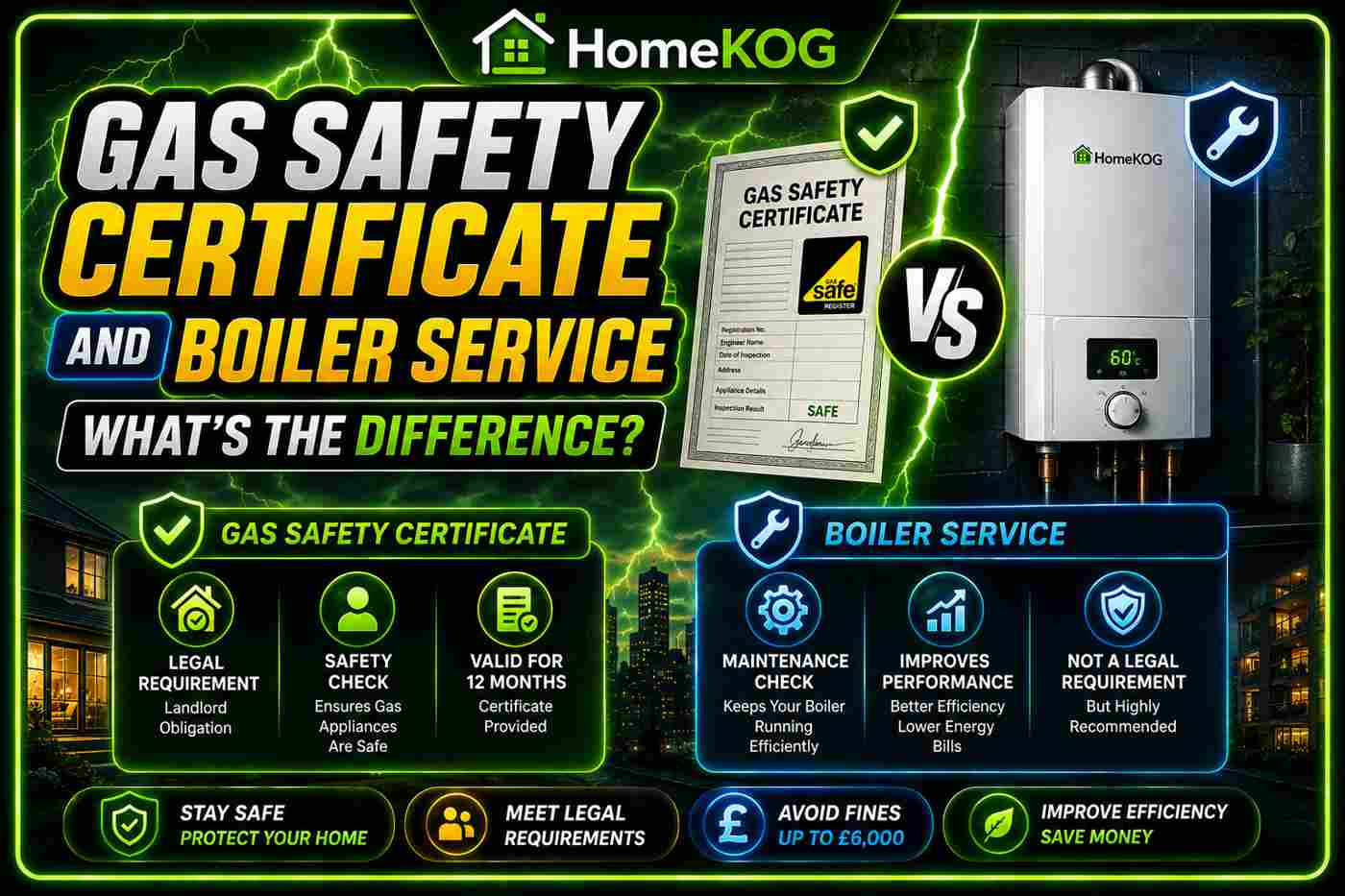
Quick Answer: A gas safety check is a legal inspection of all gas appliances in a property to confirm they are operating safely — required annually for landlords under the Gas Safety (Installation and Use) Regulations 1998. A boiler service is a more comprehensive maintenance inspection of the boiler specifically — including cleaning, component checks, combustion analysis, and inhibitor testing — that keeps the boiler efficient, identifies developing faults, and maintains the manufacturer’s warranty. A boiler service includes all the checks of a gas safety inspection and more. Landlords need both; homeowners are not legally required to have either, but annual boiler servicing is strongly recommended to maintain warranty validity and prevent costly breakdowns.
The confusion between gas safety certificates and boiler services is understandable — both involve a Gas Safe engineer visiting, both relate to gas appliance safety, and both happen annually. The distinction matters practically because they serve different purposes, carry different legal obligations, and provide different levels of protection for the boiler and its warranty. This guide explains clearly what each involves, who needs which, and what the consequences are of skipping either. Understanding the erp directive benefits can further enhance compliance and efficiency in managing these safety requirements. By grasping the advantages, businesses can streamline their operations and reduce risks associated with non-compliance. Ultimately, investing time in these directives ensures a safer environment for both consumers and service providers alike.
What is a Gas Safety Check?
A gas safety check is an inspection carried out by a Gas Safe registered engineer to confirm that all gas appliances in a property — including the boiler, gas cooker, gas fires, and any other gas-burning appliances — are operating safely. The primary focus is safety rather than efficiency or maintenance. The gas safe register certification process ensures that engineers are thoroughly trained and qualified to carry out these vital safety checks. Compliance with this certification is crucial for maintaining high safety standards in gas installations and repairs. Homeowners are encouraged to verify the Gas Safe registration of any engineer they hire to instill confidence in the quality of work performed.
During a gas safety check the engineer inspects each gas appliance for visible signs of damage, checks that combustion is occurring correctly and that the gas is burning at the correct rate, verifies that the flue and ventilation systems are unobstructed and expelling gases safely to the outside, tests pressure relief devices, inspects seals on combustion covers for signs of leakage, and checks that safety devices are functioning correctly.
In a sealed heating system, the pressure relief valve and expansion vessel are inspected. In an open-vented system, the ball valve in the feed and expansion cistern is checked. The overall assessment produces a pass — the appliances are safe to continue operating — or identifies any remedial action required. understanding pressure release valves is crucial, as these components play a vital role in maintaining the safety of the system. Regular inspection ensures that pressure levels remain stable and any potential issues are addressed promptly. Additionally, familiarizing oneself with the operation and maintenance of these valves can prevent costly damage and enhance system longevity.
At the conclusion of the inspection, the engineer issues a Gas Safety Certificate (formally called a Gas Safety Record or CP12) documenting: the address, the landlord’s details, the engineer’s Gas Safe registration number, the appliances tested, the checks performed, any safety defects identified, and the date of the inspection.

What is a Boiler Service?
A boiler service is a comprehensive maintenance inspection focused specifically on the boiler. It includes all the safety checks of a gas safety inspection and adds a detailed physical inspection, cleaning, and component assessment that goes significantly beyond what a gas safety check covers. boiler maintenance importance for homeowners cannot be overstated. Regular maintenance not only extends the lifespan of the boiler but also ensures it operates efficiently, helping to reduce energy bills. Homeowners who prioritize boiler upkeep are likely to avoid unexpected breakdowns and costly repairs.
During a boiler service, the engineer removes the boiler’s front casing panel to access the internal components. The burner is inspected and cleaned — combustion deposits accumulate on the burner over a year of operation and reduce combustion efficiency if not removed. The heat exchanger is checked for signs of corrosion, scaling, or cracking. The ignition electrodes are inspected for condition and correct gap setting. The spark rectification probes and flame detection components are checked. Door seals are inspected and replaced if they have deteriorated.
The engineer also checks the flue ways for blockage or debris accumulation, inspects the insulation panels, tests the expansion vessel pressure, assesses the boiler’s operating pressure, and carries out a flue gas analysis to confirm combustion efficiency — measuring oxygen, carbon dioxide, and carbon monoxide concentrations in the flue gas to confirm the boiler is burning fuel correctly and efficiently.
The inhibitor concentration in the system water is checked and topped up if it has diluted below the protective level. Any visible vent points that need bleeding are identified. On completion, the engineer runs the boiler and listens for abnormal sounds before documenting all findings in the boiler’s benchmark log — the service record book that is the documentary evidence required to maintain the manufacturer’s extended warranty.
The Key Differences at a Glance
The analogy of a car’s annual MOT test versus a car service is the clearest way to understand the distinction. The MOT confirms the vehicle is roadworthy and safe to drive — it does not replace worn brake pads, change the oil, or clean the fuel injectors. A car service does the maintenance work that keeps the car running well beyond just confirming it is safe.
A gas safety check is the MOT — it confirms the appliances are safe. A boiler service is the service — it does the maintenance that keeps the boiler efficient and prevents faults from developing. Regular boiler service by local engineers ensures that any potential issues are identified early, avoiding costly repairs down the line. These professionals have the expertise to handle different types of boilers, providing tailored solutions that meet the specific needs of each household. By scheduling routine checks, homeowners can enjoy peace of mind knowing their heating system is both safe and efficient.
| Element | Gas Safety Check | Boiler Service |
|---|---|---|
| Legal requirement (landlords) | Yes | No (but recommended) |
| Legal requirement (homeowners) | No | No (but recommended) |
| Covers all gas appliances | Yes | No — boiler only |
| Issues a Gas Safety Certificate | Yes | No (benchmark log only) |
| Casing removal and internal inspection | No | Yes |
| Burner cleaning | No | Yes |
| Combustion analysis (flue gas) | Basic check | Full analysis |
| Inhibitor level check | No | Yes |
| Electrode and seal inspection | Basic | Detailed |
| Maintains manufacturer warranty | No | Yes — required annually |
| Typical cost | £60–£80 | £70–£100 |
| Duration | 20–30 minutes | 45–60 minutes |
Who Needs a Gas Safety Check?
Landlords in the UK are legally required under the Gas Safety (Installation and Use) Regulations 1998 to have all gas appliances, pipework, and flues in their rental properties checked by a Gas Safe registered engineer every 12 months. A valid Gas Safety Certificate must be provided to tenants within 28 days of the check being completed, or to new tenants before they move in. Failure to comply carries unlimited fines and potential criminal prosecution.
The legal obligation applies to private landlords, council landlords, housing associations, hotels, and bed-and-breakfast establishments. Tenants are not legally required to have gas safety checks but are responsible for the safety of any gas appliances they personally own. Social housing providers and large landlords often arrange gas safety checks and boiler services simultaneously to satisfy both the legal requirement and the maintenance need in a single engineer visit.
Homeowners are not legally required to have annual gas safety checks, though it is recommended that all gas appliances are inspected regularly for safety reasons.
Who Needs a Boiler Service?
Any homeowner or landlord who wants to maintain the manufacturer’s extended warranty on their boiler needs an annual boiler service. Every major boiler manufacturer — Worcester Bosch, Viessmann, Ideal, Vaillant, Alpha, Baxi — conditions their extended warranty on documented annual servicing by a Gas Safe registered engineer. The service record in the benchmark log is the evidence required to claim under the warranty if a fault develops.
Without annual servicing, the extended warranty reverts to the statutory minimum — typically two years — regardless of what the manufacturer advertises as their headline warranty period. Given that heat exchanger replacement costs £300 to £600 and PCB replacement costs £200 to £500, losing warranty protection for these components through a missed service is a false economy relative to the £70 to £100 annual service cost.
Beyond warranty maintenance, annual servicing prevents the efficiency degradation, developing faults, and component failures that cost significantly more to repair reactively than to prevent through regular maintenance.
Can a Gas Safety Check Replace a Boiler Service?
No. A gas safety check confirms appliances are safe to operate — it does not include the internal inspection, cleaning, combustion analysis, inhibitor testing, and component condition assessment that constitute a boiler service. A gas safety certificate does not satisfy the manufacturer’s annual service requirement for warranty maintenance. These are two distinct visits serving two distinct purposes, and one cannot substitute for the other.
Many landlords book a combined gas safety check and boiler service in a single engineer visit — this is the most efficient approach and ensures both legal compliance and boiler maintenance are addressed simultaneously at a combined cost that is lower than two separate visits. Confirm when booking that the engineer will carry out both a full service and a gas safety check on the visit.
When to Book
Summer — between May and September — is the optimal time to book both a gas safety check and an annual boiler service. Engineer availability is significantly better than during the heating season, waiting times are shorter, and any faults identified can be repaired before cold weather makes heating essential. Booking in the same month each year makes the annual cycle easy to remember and maintain consistently.
FAQ
Is a gas safety check the same as a boiler service?
No. A gas safety check inspects all gas appliances in the property for safety compliance and issues a Gas Safety Certificate. A boiler service is a comprehensive maintenance inspection of the boiler specifically, including internal cleaning, combustion analysis, and component assessment, that maintains efficiency, prevents faults, and keeps the manufacturer’s warranty valid. A boiler service includes all the safety checks of a gas safety inspection — but a gas safety check does not include the maintenance elements of a service.
Do landlords need a boiler service as well as a gas safety check?
Legally, landlords are required to arrange the annual gas safety check. They are not legally required to arrange an annual boiler service, though it is strongly recommended. The boiler service maintains the manufacturer’s warranty and prevents the developing faults that would cause disruption to tenants and expensive emergency repairs — making it a prudent investment regardless of the legal position.
How much does a combined gas safety check and boiler service cost?
A combined visit including both a full boiler service and a gas safety check typically costs £100 to £150 — less than the two visits would cost separately. In London and the South East the same combined service typically costs £120 to £175. Boiler installation costs in Wakefield can vary significantly based on the complexity of the job and the type of boiler being installed. Homeowners should expect to pay anywhere from £1,500 to £3,000, depending on these factors. It is advisable to obtain multiple quotes to ensure you get the best value for your boiler installation.
How do I know if my boiler has been serviced?
The benchmark log at the back of the boiler’s instruction booklet should have a completed service record entry for each annual service, including the date, the engineer’s details, and their Gas Safe registration number. This document is the primary evidence required to validate a warranty claim. If the log is missing or blank, the service history is unverified and the warranty may be at risk.
What happens if I skip an annual boiler service?
Missing an annual service voids the manufacturer’s extended warranty on most boiler brands — the warranty reverts to the statutory two-year minimum from the date of installation. The missed service also allows any developing faults to continue undetected, increasing the probability of an unexpected breakdown, and allows efficiency to decline as combustion deposits and system contamination accumulate. The cost of a single heat exchanger or PCB repair almost always exceeds the combined cost of several years of annual services. Understanding boiler warranty conditions for homeowners is essential to avoid costly repairs and ensure the longevity of the system. Homeowners should carefully review all terms and conditions to comply with maintenance requirements, as neglecting these can lead to significant financial burdens. Regular maintenance not only keeps the warranty intact but also enhances the overall performance and efficiency of the boiler system.
Conclusion
A gas safety check and a boiler service are distinct inspections serving different purposes, carrying different legal obligations, and providing different types of protection. The gas safety check is a legal requirement for landlords that confirms appliances are safe. The boiler service is a maintenance requirement that keeps the boiler efficient, prevents faults, and maintains the manufacturer’s warranty.
For homeowners, annual boiler servicing is the stronger practical priority — it directly protects the boiler warranty, prevents costly breakdowns, maintains efficiency, and provides the safety inspection that a gas safety check would otherwise provide. For landlords, both are required — the gas safety check legally, and the boiler service practically to maintain the property and protect the investment in the heating system.
Booking both in a combined summer visit from a Gas Safe registered engineer is the most cost-effective and convenient approach for any property, addressing legal compliance, warranty maintenance, and heating system health in a single scheduled appointment.