
Monthly Running Costs of Popular Home Appliances 2026
Quick Answer: The gas boiler is the most expensive appliance to run in the average UK home, accounting for approximately 55 to 65% of the total annual energy bill. At current energy prices, the average UK household spends approximately £100 to £150 per month on gas heating and hot water. The second highest costs come from electric ovens and hobs, tumble dryers, and electric showers. Leaving appliances on standby wastes an estimated £55 to £80 per year for the average UK household. The single most effective way to reduce home energy costs is replacing an old inefficient boiler with a modern A-rated condensing model.
Understanding where household energy spending actually goes each month is the first step towards meaningfully reducing bills. Most homeowners have a rough sense that the boiler is expensive, but the actual cost distribution across all household appliances — and the surprising amount lost to standby consumption — is rarely seen clearly in one place. This guide breaks down the monthly running costs of the most popular appliances in a typical UK home, explains the real cost of standby mode, and identifies the most impactful actions for reducing the total energy bill.
How Home Energy Costs Are Distributed
The average UK household energy bill in 2026 consists of gas costs — predominantly for space heating and hot water — and electricity costs for lighting, appliances, and cooking. The split varies significantly by property type and household behaviour, but for a typical gas-heated home the approximate breakdown is as follows.
| Cost Category | Approximate Share of Total Bill |
|---|---|
| Space heating (gas boiler) | 42% |
| Hot water (gas boiler) | 13% |
| Cooking | 13% |
| Lighting | 5% |
| Refrigeration | 5% |
| Washing and drying | 5% |
| Consumer electronics | 4% |
| Other appliances | 13% |
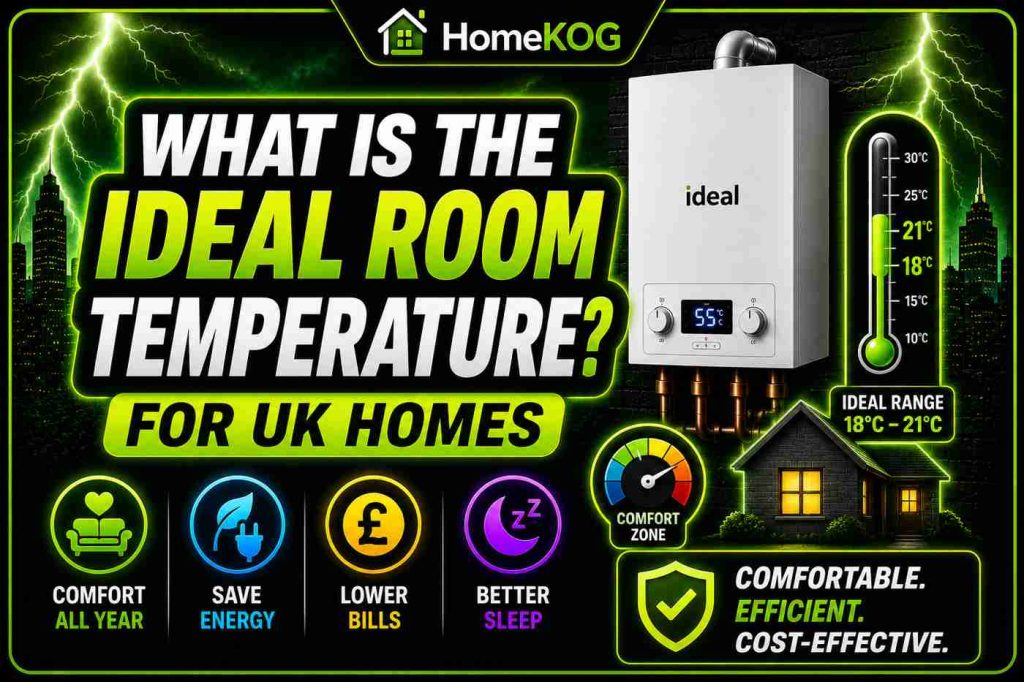
Space heating and hot water from the gas boiler together account for approximately 55% of the total household energy bill — making the boiler by far the most significant single driver of energy costs in the average UK home. This is why boiler efficiency, smart thermostat control, and correct system sizing have a disproportionately large impact on total bills compared to almost any other energy-saving action. Investing in underfloor heating installation costs can lead to significant long-term savings on energy bills due to improved efficiency. Homeowners looking to reduce their carbon footprint may find this heating solution particularly appealing, as it distributes warmth evenly and uses less energy overall. As energy prices continue to rise, prioritizing such upgrades can enhance comfort while minimizing expenses.

Monthly Running Costs of Common Household Appliances
The figures below are based on the current energy price cap rates of approximately 24.5p per kWh for electricity and 6.0p per kWh for gas, and reflect typical usage patterns for a medium-sized UK family home.
| Appliance | Typical Monthly Cost | Annual Cost |
|---|---|---|
| Gas boiler (heating and hot water) | £100 – £150 | £1,200 – £1,800 |
| Electric shower (daily, 8 minutes) | £20 – £30 | £240 – £360 |
| Tumble dryer (4 uses per week) | £15 – £25 | £180 – £300 |
| Electric oven (daily use) | £12 – £18 | £144 – £216 |
| Washing machine (5 washes per week) | £8 – £12 | £96 – £144 |
| Fridge-freezer (always on) | £7 – £12 | £84 – £144 |
| Dishwasher (daily use) | £7 – £10 | £84 – £120 |
| Television (3 hours per day) | £3 – £6 | £36 – £72 |
| Lighting (whole home) | £8 – £15 | £96 – £180 |
| Broadband router (always on) | £1 – £2 | £12 – £24 |
| Laptop (8 hours per day) | £2 – £4 | £24 – £48 |
| Game console (2 hours per day) | £3 – £6 | £36 – £72 |
The Real Cost of Standby Mode
Most UK households leave multiple appliances on standby continuously without considering the cumulative cost. Research by energy efficiency organisations consistently finds that standby power consumption across a typical UK home costs between £55 and £80 per year — money spent producing no useful output whatsoever.
The appliances that consume the most power in standby mode are often not the ones homeowners expect. Games consoles left on standby or in sleep mode consume significantly more standby power than a television. Set-top boxes — particularly older satellite and cable receivers that are never fully switched off — run heating and recording systems continuously even when not in use. Smart TVs maintain network connections and check for updates around the clock.
| Appliance | Typical Standby Cost Per Year |
|---|---|
| Games console (left in standby) | £12 – £18 |
| Set-top box / satellite receiver | £10 – £16 |
| Smart TV | £5 – £10 |
| Microwave (clock display) | £4 – £8 |
| Desktop computer (sleep mode) | £4 – £8 |
| Phone charger (plugged in, no phone) | £1 – £3 |
| Broadband router | £8 – £14 |
| Total (typical household) | £55 – £80 |
The solution for standby consumption is straightforward — switching appliances off at the wall rather than leaving them in standby mode. Smart plugs with schedules can automate this for appliances that are inconvenient to switch off manually, such as entertainment systems and broadband routers that need overnight updates.
The Boiler: Why It Dominates the Energy Bill
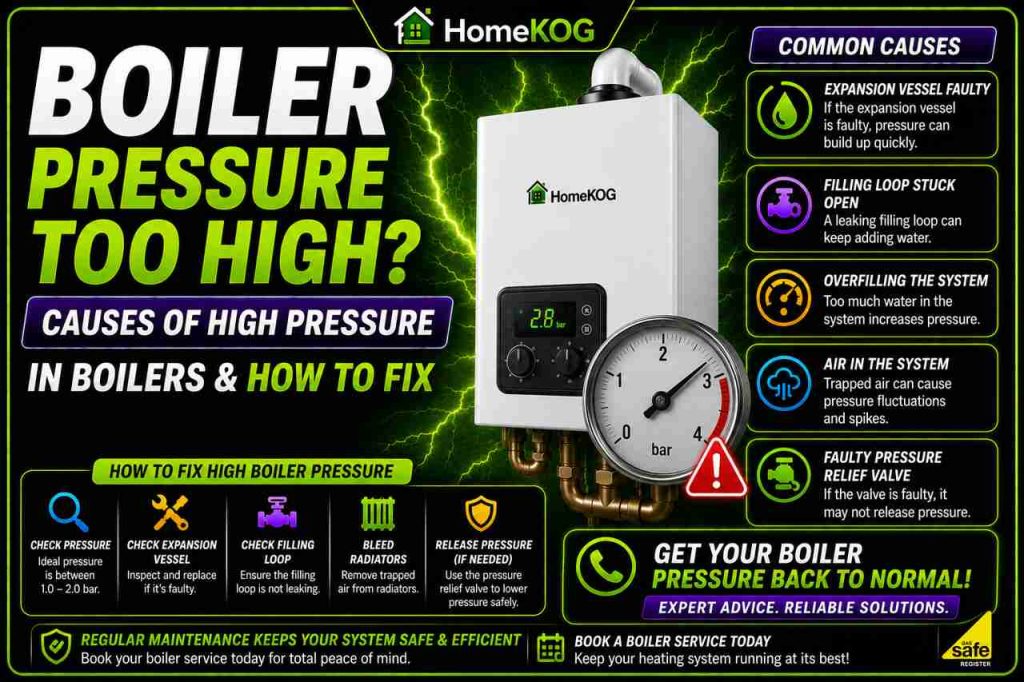
The gas boiler’s dominance of the household energy bill — typically 55% of total spend — reflects both the physics of heating a UK home and the operational characteristics of gas versus electricity pricing. Heating a typical three bedroom home through a UK winter requires a substantial and sustained energy input over four to six months, and maintaining hot water year-round adds continuous demand on top.
An older gas boiler operating at 70 to 80% efficiency wastes 20 to 30% of the gas it burns as heat escaping through the flue. On a £1,500 annual gas bill, this represents £300 to £450 per year spent on gas that produces no useful heat in the home — the equivalent of leaving the boiler running for two to three months of the year with every window open.
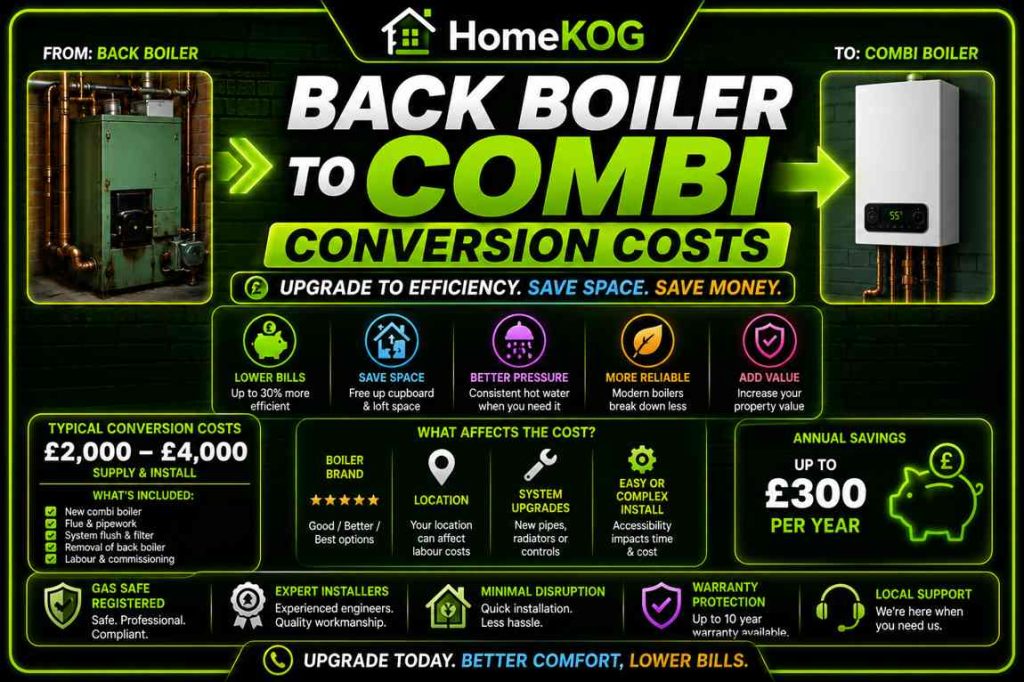
Replacing an old G-rated boiler with a modern A-rated condensing boiler at 92 to 94% efficiency reduces the wasted portion from 20 to 30% down to 6 to 8%. For a household spending £1,500 per year on gas, this efficiency improvement translates to annual savings of £300 to £400 — typically recouping the cost of a mid-range boiler installation within four to six years through fuel savings alone, in addition to the benefit of a reliable, warrantied boiler.
How to Reduce Boiler Running Costs
A smart thermostat is the single most cost-effective upgrade after a new boiler, typically saving £100 to £150 per year through geofencing, weather compensation, and optimised scheduling. The GPS geofencing feature of thermostats such as tado° and Google Nest eliminates the heating of empty homes — the most common source of boiler running cost waste in households with variable daily schedules.
Reducing the boiler’s flow temperature — the temperature of water leaving the boiler to the radiators — from the default 80°C to 55 to 60°C improves condensing efficiency and can reduce gas consumption by 6 to 8% with no reduction in home comfort in a well-balanced system. This adjustment is made in the boiler’s installer menu and should be set by a Gas Safe engineer at the annual service.
Annual boiler servicing maintains the boiler at its designed efficiency. A boiler that has not been serviced accumulates combustion deposits and calibration drift that progressively reduce efficiency — a well-maintained boiler consistently outperforms a neglected equivalent in real-world gas consumption. Homeowners should also consider various boiler finance options for homeowners to ease the upfront costs associated with purchasing a new unit. By exploring these options, they can invest in energy-efficient models that ultimately save money on utility bills and reduce their environmental impact. This approach not only enhances comfort and reliability but also aligns their financial planning with sustainable home improvements.
Magnetic filter installation and correct inhibitor dosing protect the heating circuit from sludge accumulation that reduces radiator output and forces the boiler to work harder — adding indirect running costs beyond the direct efficiency losses of the boiler itself.
Most Cost-Effective Actions to Reduce Home Energy Bills
Actions are ranked here by typical annual saving relative to the cost and effort of implementation.
Replacing a boiler over 10 years old with an A-rated model delivers the largest single annual saving of any home energy action — typically £200 to £500 per year depending on the old boiler’s efficiency and the household’s gas consumption. It also provides a 10 to 12-year warranty, improved reliability, and the environmental benefit of reduced gas consumption.
Installing a smart thermostat saves £100 to £150 per year through optimised scheduling and occupancy-based control, with installation costs of £150 to £300 recovered within 2 to 3 years.
Improving loft insulation to current standards (270mm mineral wool) costs £300 to £600 and saves £150 to £250 per year — a payback period of approximately 2 years.
Cavity wall insulation where applicable saves £130 to £220 per year at a cost of £400 to £700 — payback within 3 to 4 years.
Switching appliances off standby saves £55 to £80 per year at zero cost beyond the habit change.
Replacing LED lighting throughout saves £25 to £55 per year at a cost of £50 to £150 — payback within one year for a full home LED upgrade.
FAQ
What is the most expensive appliance to run in a UK home?
The gas boiler is by far the most expensive appliance to run, accounting for approximately 55% of the average UK household’s total energy bill. The annual cost of running a gas boiler for heating and hot water in a typical three bedroom home ranges from £1,200 to £1,800 depending on the boiler’s efficiency, the property’s insulation standard, and the household’s thermostat settings and usage patterns. In contrast, average heat pump installation costs can offer significant savings in the long run, particularly for homeowners looking to reduce their carbon footprint. These systems not only provide efficient heating but also integrate well with renewable energy sources, making them an attractive alternative. As households increasingly seek sustainable options, the initial investment in heat pump technology could be offset by lower energy bills and potential government rebates.
How much does leaving appliances on standby cost per year?
Standby consumption costs the average UK household approximately £55 to £80 per year. The highest standby consumers are games consoles, set-top boxes, and smart TVs. Switching these off at the wall when not in use eliminates the standby cost entirely. Smart plugs with scheduled switching can automate this for appliances that are inconvenient to manually switch off.
How much can I save by replacing an old boiler?
Replacing a G-rated boiler (70 to 80% efficiency) with a modern A-rated condensing boiler (92 to 94% efficiency) saves approximately £200 to £500 per year in gas costs depending on current consumption levels. The saving is proportional to the gas bill — households spending more on gas save more from the efficiency improvement. The payback period for a mid-range boiler installation at £2,000 to £2,500 is typically four to six years through fuel savings alone.
Does a smart thermostat really save money?
Yes. A smart thermostat with geofencing saves money by reducing heating when the home is empty — eliminating the cost of heating to an empty schedule. Studies by smart thermostat manufacturers and independent energy research organisations consistently report annual savings of £100 to £150 for typical UK households upgrading from a conventional programmer to a smart thermostat. Savings are higher for households with variable daily routines where geofencing has more frequent opportunities to reduce heating demand.
What is the cheapest appliance to run?
LED light bulbs are the cheapest appliances to run per hour of use — a modern 8W LED bulb costs less than 0.2p per hour at current electricity prices. Broadband routers are always-on but consume only 5 to 10W — approximately £10 to £14 per year in total. At the other end of the scale, electric showers — which consume 8 to 10kW during use — are the most expensive electric appliance per hour of operation, costing approximately 2p per minute at current rates.
Conclusion
The gas boiler’s dominance of the household energy bill — accounting for more than half of total annual energy spend in the average UK home — means that any meaningful strategy for reducing energy costs must start with the boiler. A modern A-rated condensing boiler, correctly sized for the property and maintained annually, combined with a smart thermostat and optimised flow temperature settings, delivers the largest available reduction in total energy costs of any combination of home improvements.
The additional actions — standby elimination, LED lighting, loft and cavity insulation — all contribute meaningful secondary savings at low cost. But the boiler remains the dominant variable, and the gap between an efficiently operated modern boiler and a neglected older model can represent hundreds of pounds per year in unnecessary gas expenditure. For homeowners with a boiler over 10 years old, understanding this cost profile makes the financial case for proactive replacement considerably clearer than waiting for the boiler to fail before acting.