
Heating Engineer or Plumber: What’s the Difference? 2026
Quick Answer: A plumber works on water-related jobs — leaking pipes, bathroom installations, drainage, and taps. A heating engineer works on heating systems — boilers, radiators, pipework, and hot water cylinders. The critical distinction is Gas Safe registration: only a Gas Safe registered engineer can legally work on gas appliances including boilers. Always verify Gas Safe registration before any boiler work begins. For oil boilers, the equivalent is OFTEC certification. Understanding thermostatic radiator valve benefits explained can help homeowners optimize their heating systems efficiently. These valves allow for precise temperature control in each room, reducing energy waste and enhancing comfort. By installing them, users can enjoy a more consistent heating experience tailored to their needs.
When something goes wrong with a pipe, radiator, or boiler, knowing which tradesperson to call is not always obvious. Plumbers and heating engineers carry out some of the same tasks, and many tradespeople are qualified in both disciplines — which adds to the confusion. Calling the wrong person for the job at best wastes time and money, and at worst, for gas appliances, creates a serious safety risk. This guide sets out exactly what each trade covers, what qualifications to look for, and who to call for every common heating and plumbing scenario.
What is a Plumber?
Plumbing has existed for over 2,500 years — the word itself derives from the Latin word for lead, plumbum, because Roman water pipes were made from lead. Modern domestic pipes are plastic, but the professional name has remained. A plumber works on any wet or dry pipework system in a property, covering everything water travels through or drains away from.
The typical scope of work a plumber handles includes bathroom installation covering showers, taps, and toilets; investigating and clearing drainage blockages; repairing or replacing leaking pipes and taps; sewage systems; hot water cylinder installation and replacement; fitting appliances such as dishwashers and washing machines; frozen pipe thawing; and loss of water supply investigation. One aspect that homeowners often overlook is the power flush benefits for home systems. This method not only enhances the efficiency of heating systems but also helps to extend the lifespan of boilers and radiators. By improving water flow and heat distribution, a power flush can result in significant energy savings and increased comfort throughout the home.
Plumbers do not require formal certification to practise, but a fully qualified plumber holds an NVQ Level 2 or Level 3 in Plumbing and Domestic Heating. Level 2 covers the core practical skills for on-site work. Level 3 provides advanced knowledge in specific areas such as drainage systems or water recycling. Most plumbers also build substantial practical expertise through apprenticeships and on-the-job experience before qualifying formally.

What is a Heating Engineer?
A heating engineer works specifically on heating systems — boilers, radiators, pipework, hot water cylinders, and heating controls. Many heating engineers begin their careers as plumbers and take additional qualifications to extend into heating system work. The standard qualification route is the NVQ Level 3, with diploma options covering electrical work on heating systems and the servicing and maintenance of hot water systems. In addition to traditional methods, many modern systems incorporate techniques such as immersion heaters for efficient heating. These devices provide a rapid and reliable way to heat water, making them ideal for residential and commercial applications. As energy efficiency becomes increasingly important, heating engineers must stay updated on the latest technologies to ensure optimal performance and compliance with regulations.
The typical scope of work a heating engineer handles includes installing heating systems including boilers and radiators; installing and maintaining hot water cylinders; pipework installation and modification; heating system maintenance; and fitting heating controls and thermostats. The heat exchanger functions in boilers plays a critical role in transferring heat efficiently. By optimizing this process, engineers can enhance the overall performance and energy efficiency of heating systems. Proper maintenance of these components is essential to ensure longevity and prevent costly breakdowns.
It is important to understand that not all heating engineers are automatically qualified to work on gas appliances. A heating engineer without Gas Safe registration can carry out heating controls wiring, thermostat installation, dry pipework, and power flushing — but cannot legally connect a boiler to a gas supply or carry out any work on the gas components of a boiler.
What is a Gas Engineer?
A gas engineer holds Gas Safe registration — the legal licence required to work on gas appliances in the UK. The Gas Safe Register replaced CORGI registration in 2009 and is the official list of businesses and engineers legally permitted to work on gas boilers, cookers, and other gas appliances. It is a legal requirement under the Gas Safety (Installation and Use) Regulations 1998 — anyone carrying out gas work without Gas Safe registration is committing a criminal offence.
All Gas Safe registered engineers complete a core safety assessment as part of registration. Beyond the core qualification, individual engineers hold specific competencies for different appliance types. An engineer may be qualified to work on cookers and gas meters but not to install boilers — which is why it is important to confirm that the specific qualification covers the work required, not just that the engineer holds Gas Safe registration in general.
All Gas Safe registered engineers carry a domestic ID card showing their name, registration number, photograph, licence start and expiry date, and the specific appliances they are qualified to work on. Always ask to see this card before work begins. The Gas Safe Register can also be searched online at gassaferegister.co.uk to verify any engineer’s credentials.
For oil boilers, the equivalent of Gas Safe registration is OFTEC certification. Any engineer working on an oil boiler or oil storage tank must hold a current OFTEC registration.
Heating Engineer Qualifications Explained
| Qualification | What It Covers |
|---|---|
| NVQ Level 2 Plumbing | Core plumbing — pipework, drainage, bathrooms |
| NVQ Level 3 Plumbing and Heating | Advanced plumbing, heating systems, hot water |
| ACS Safety Assessment | Required before applying for Gas Safe registration |
| Gas Safe Registration | Legal licence to work on gas appliances |
| OFTEC Registration | Legal licence to work on oil boilers and oil tanks |
The NVQ Level 3 includes gas-related units that cover the ACS (Approved Competence Scheme) safety assessment requirements. Completing the ACS assessment is the prerequisite for applying for Gas Safe registration. Engineers who hold the NVQ Level 3 without completing the gas units can work on heating systems but cannot legally touch gas connections.
Who to Call for Common Heating and Plumbing Jobs
| Job | Who to Call |
|---|---|
| Boiler installation or replacement | Gas Safe registered heating engineer |
| Boiler service or repair | Gas Safe registered heating engineer |
| Boiler fault diagnosis | Gas Safe registered heating engineer |
| Radiator installation or replacement | Heating engineer (Gas Safe not required for radiators alone) |
| Power flush of heating system | Heating engineer |
| Hot water cylinder replacement | Plumber or heating engineer |
| Leaking pipe repair | Plumber |
| Bathroom installation | Plumber |
| Dripping tap | Plumber |
| Drainage blockage | Plumber |
| Frozen pipe | Plumber |
| Dishwasher or washing machine fitting | Plumber |
| Heating controls and thermostat | Heating engineer |
| Oil boiler installation or service | OFTEC registered engineer |
Multi-Skilled Tradespeople
Many experienced tradespeople hold qualifications spanning all three disciplines — plumbing, heating engineering, and Gas Safe registration — having progressed through each level over the course of their career. Hiring a multi-skilled tradesperson for a complex job that involves elements of both plumbing and gas heating work can save time and cost by avoiding the need to coordinate two separate contractors.
When hiring a multi-skilled tradesperson, the same verification rules apply as for any specialist. Check that Gas Safe registration is current and covers the specific appliance work required. Review customer testimonials and previous work examples. Never assume that broad experience automatically means current registration — Gas Safe licences have expiry dates and must be renewed.
Why It Matters to Call the Right Person
For plumbing work, the worst outcome from hiring a less experienced plumber is usually some water damage or the need for a return visit. For gas appliances, the consequences of unregistered or incompetent work are far more serious. A poorly installed or repaired gas boiler can leak carbon monoxide — a colourless, odourless gas that prevents blood from carrying oxygen around the body.
Symptoms of carbon monoxide poisoning — headache, dizziness, confusion, nausea, and shortness of breath — are frequently mistaken for flu until exposure has already caused serious harm. More than 4,000 people are admitted to A&E in the UK each year due to carbon monoxide poisoning, and fatalities occur every year from undetected leaks in properties without functioning CO alarms.
If you can smell gas or suspect a gas leak at any point, do not attempt to investigate the source yourself. Leave the property, leave doors open as you exit, and call the National Gas Emergency Service on 0800 111 999 immediately.
FAQ
Do I need a Gas Safe engineer to replace a radiator?
Not necessarily — replacing a radiator on an existing heating system does not inherently require Gas Safe registration, as it does not involve working on gas components. However, if the radiator replacement involves draining the heating system and refilling it, or if any work touches gas pipework or the boiler connection, a Gas Safe engineer should be involved. If in doubt, a Gas Safe registered heating engineer can carry out radiator work as part of a broader heating system job.
Can a plumber fix a boiler?
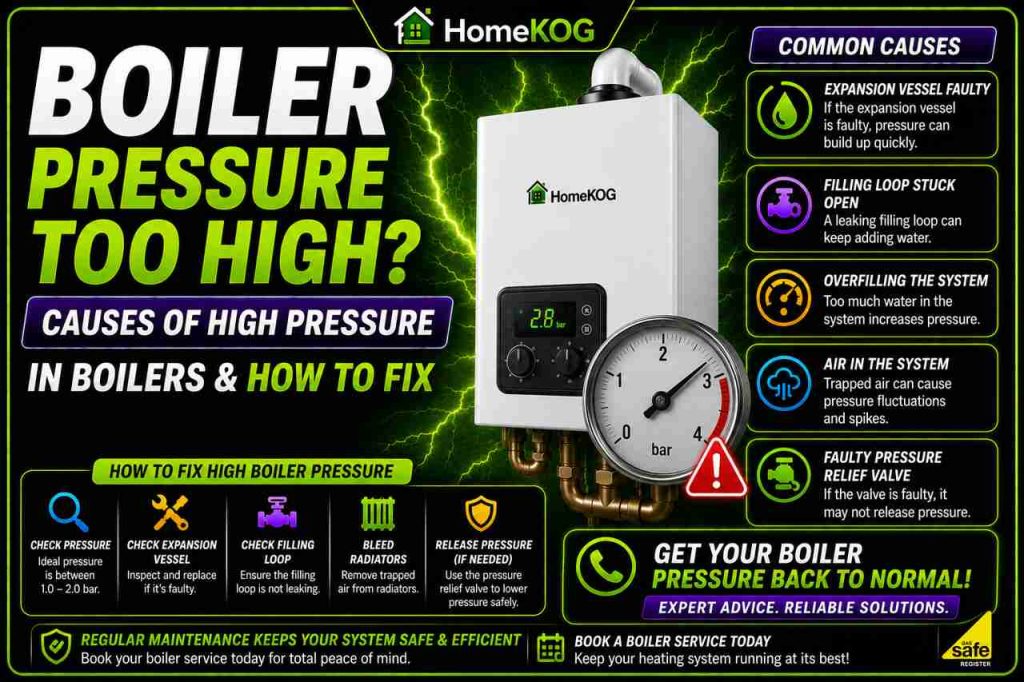
A plumber without Gas Safe registration cannot legally work on the gas components of a boiler. A plumber can work on the water-side pipework connected to the boiler — such as the filling loop, system pipework, or pressure relief valve discharge — but any work involving the gas valve, burner, heat exchanger, flue, or gas connection requires a Gas Safe registered engineer. understanding pressure release valves is essential for ensuring the safe operation of heating systems. These valves help prevent excessive pressure buildup, which can lead to dangerous situations if not properly managed. Regular maintenance and inspection of these components are critical to avoid malfunctions and ensure overall system efficiency.
How do I check if an engineer is Gas Safe registered?
Visit gassaferegister.co.uk and search by the engineer’s name or registration number. You can also ask the engineer to show their Gas Safe ID card before work begins. The card shows their registration number, photograph, the appliances they are qualified to work on, and the expiry date of their registration. If an individual or company cannot provide Gas Safe credentials for gas appliance work, do not allow them to proceed — working on gas appliances without registration is illegal and creates serious safety risks.
What qualifications does a heating engineer need?
A heating engineer typically holds an NVQ Level 3 in Plumbing and Domestic Heating. To work on gas appliances, they must additionally hold Gas Safe registration, which requires completing the ACS safety assessment as a prerequisite. Engineers who hold the NVQ Level 3 without Gas Safe registration can install and maintain heating systems but cannot work on gas connections, gas valves, or any gas-burning components.
Is it illegal to work on a boiler without Gas Safe registration?
Yes. It is a criminal offence under the Gas Safety (Installation and Use) Regulations 1998 for any unregistered person to carry out work on gas appliances, including boilers. Unregistered work also invalidates the boiler’s manufacturer warranty and any home insurance policy that covers gas appliances. If you become aware of someone carrying out gas work without registration, this can be reported to the Gas Safe Register.
Who do I call for an oil boiler service or repair?
An OFTEC registered engineer. OFTEC (Oil Firing Technical Association) is the equivalent of Gas Safe registration for oil-fired heating systems. All installation, servicing, and repair work on oil boilers and oil storage tanks must be carried out by an OFTEC registered engineer. The OFTEC register can be searched at oftec.org to verify an engineer’s credentials before booking.
Conclusion
The distinction between a plumber and a heating engineer comes down to the scope of work — plumbers handle water systems, heating engineers handle heating systems. The distinction that matters most for safety is Gas Safe registration: only a Gas Safe registered engineer can legally carry out any work on a gas boiler or gas appliance, regardless of whether the person also holds plumbing or general heating qualifications.
For any boiler installation, service, or repair in 2026, always verify Gas Safe registration before work begins — either by checking the engineer’s ID card on arrival or by searching the Gas Safe Register online. For oil boilers, OFTEC certification is the equivalent requirement. Hiring an unregistered tradesperson for gas work is not only illegal but creates a genuine risk of carbon monoxide exposure that no cost saving justifies.