
Keston Boiler Error Codes: Full Guide to Causes and Fixes 2026
Quick Answer: The most common Keston boiler error codes are E37 and E67 (low water pressure), E12 (blown thermal fuse), and E28 (fan fault). E37 and E67 can both be resolved by the homeowner by repressurising the system. All other fault codes require a Gas Safe registered engineer. Keston uses separate fault code systems across the C36 Combi, S30 System, and C40 boiler ranges — identifying the correct model is the essential first step. For homeowners with Navien boiler error code solutions, understanding the specific issue is crucial for effective troubleshooting. Common errors include low water pressure and ignition failures, which can often be addressed with simple fixes. However, it is always advisable to consult a qualified technician for persistent or complex problems to ensure safety and proper functioning.
Keston is a premium UK boiler brand with a long heritage in high-efficiency condensing technology. Their current range includes the C36 Combi, S30 System, and C40 boiler models, each of which uses a separate fault code system. This guide covers every Keston fault code across all three ranges, with detailed explanations for the most commonly reported faults and clear guidance on whether professional help is required. Keston boiler manuals can be downloaded from the Keston website for model-specific guidance. understanding system boiler functionality is essential for troubleshooting and maintaining these heating systems. By familiarizing yourself with the operational principles, you can identify issues more quickly and decide if a service is needed. Additionally, recognizing the common fault codes can save time and potentially prevent costly repairs.
How Keston Fault Codes Work Across Different Models
The Keston C36 Combi uses E-prefix codes from E01 to E99, with some codes appearing on multiple models but with different meanings. The S30 System uses a mixed format including F codes, L codes, C codes, and numeric status indicators. The C40 uses E-prefix codes from E00 to E44, but several code numbers overlap with the C36 and have different meanings. Always confirm the specific model before diagnosing a fault using this guide.

Common Keston Boiler Error Codes
E37 — Water Pressure Fault (C36) / Open Circuit Return Thermistor (C40)
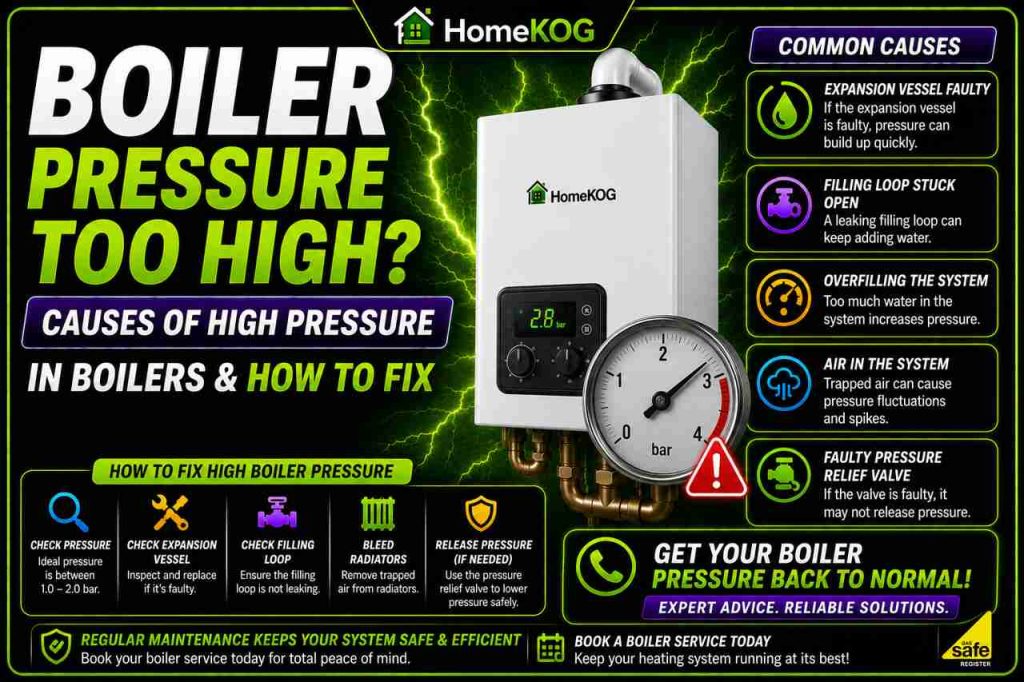
On the Keston C36 Combi, E37 indicates the water pressure is incorrect — most commonly too low for the boiler to operate safely. This is the most straightforward Keston fault and one the homeowner can resolve without a Gas Safe engineer by adding water to the system via the filling loop until the correct pressure is reached. The Keston manual confirms the target pressure for the specific model.
On the Keston C40, E37 has a completely different meaning — it indicates an open circuit on the return thermistor, which is a component fault requiring a Gas Safe engineer. Always confirm which model is installed before acting on an E37 code.
C36: Can you fix it yourself? Yes — repressurise via the filling loop. Call an engineer if pressure drops repeatedly. C40: Can you fix it yourself? No — a Gas Safe engineer is required.
E67 — Water Pressure Below 0.4 Bar (C36)
The E67 code on the Keston C36 is a more severe low-pressure indicator than E37, appearing when pressure has dropped to below 0.4 bar. The resolution is the same as for E37 — adding water to the system via the filling loop while watching the pressure gauge and restoring pressure to between 1 and 2 bar.
If pressure drops repeatedly after topping up, a water leak in the system is the likely cause. A Gas Safe engineer should locate and repair the source of the leak rather than the homeowner continuing to repressurise as a temporary fix.
Can you fix it yourself? Yes — repressurise to between 1 and 2 bar. Call an engineer if pressure drops repeatedly.
E12 — Blown Thermal Fuse (C36)
The E12 code on the Keston C36 indicates a blown thermal fuse — a safety component that cuts power to the boiler if it detects a temperature above the safe operating limit. Thermal fuse replacement requires the boiler casing to be removed, which means only a Gas Safe registered engineer can carry out the repair. If the boiler is under warranty, Keston’s technical helpline should be contacted to arrange an engineer visit under the warranty terms.
Can you fix it yourself? No — a Gas Safe engineer is required.
E28 — Faulty Fan (C36)
The E28 code on the Keston C36 indicates a fan fault. The typical behaviour when E28 appears is the boiler pump running for approximately five seconds before the system enters lockout mode — the boiler is attempting to start but cannot complete the start-up sequence without a functioning fan. A Gas Safe engineer should first check whether power is reaching the fan correctly, as a wiring fault can produce the same symptom as a mechanical fan failure and is typically a less expensive repair.
Can you fix it yourself? No — a Gas Safe engineer is required.
F1 — Low Water Pressure (S30)
On the Keston S30 System boiler, F1 indicates low water pressure — the equivalent of E37 and E67 on the C36. As with all low-pressure fault codes, repressurising the system via the filling loop to the level specified in the S30 manual is the first step and will resolve F1 in most cases without an engineer’s visit.
Can you fix it yourself? Yes — repressurise via the filling loop. Call an engineer if pressure drops repeatedly.
Full Keston Fault Code Reference: C36 Combi
| Code | Fault | DIY Fix? |
|---|---|---|
| E01 | Ignition failure | Check gas supply, attempt reset — then engineer |
| E02 | False flame or gas supply issue | Check gas supply, attempt reset — then engineer |
| E03 | Boiler overheated | No — engineer required |
| E05 | Fan failure | No — engineer required |
| E07 | Flue overheating | No — engineer required |
| E08 | Flame circuit fault | No — engineer required |
| E09 | Valve drive error | No — engineer required |
| E10 | Faulty control box | No — engineer required |
| E11 | Flow and return sensor calibration failure | No — engineer required |
| E12 to E22 | Faulty control box | No — engineer required |
| E23 | Water filling process error | No — engineer required |
| E24 | Low pressure detected four times in 24 hours | No — engineer required to find source |
| E25 | Faulty control box | No — engineer required |
| E26 | Flame dropout | Check gas supply, attempt reset — then engineer |
| E28 | Faulty fan | No — engineer required |
| E30 | Flow sensor short circuit | No — engineer required |
| E31 | Flow sensor open circuit | No — engineer required |
| E32 | DHW sensor short circuit | No — engineer required |
| E33 | Hot water sensor short circuit | No — engineer required |
| E34 | Mains supply below 180V | Check consumer unit — contact electricity provider |
| E35 | Mains supply frequency fault | No — contact electricity provider |
| E37 | Water pressure incorrect | Yes — repressurise via filling loop |
| E38 | Faulty reset key | No — engineer required |
| E40 | Water pressure too high | Bleed radiator — engineer if recurring |
| E41 | Communication fault between fascia and control box | No — engineer required |
| E43 | Return sensor short circuit | No — engineer required |
| E44 | Return sensor open circuit | No — engineer required |
| E45 | Flue sensor short circuit | No — engineer required |
| E46 | Communication fault between fascia and control box | No — engineer required |
| E67 | Water pressure below 0.4 bar | Yes — repressurise to 1–2 bar |
| E99 | Flue sensor short circuit | No — engineer required |
Full Keston Fault Code Reference: S30 System
| Code | Fault / Status | DIY Fix? |
|---|---|---|
| 0 | Standby mode — normal status | No action required |
| C | Desired temperature not yet reached — normal status | No action required |
| C + burner light | Operating for heating and hot water — normal status | No action required |
| F + burner light | Frost mode active — normal status | No action required |
| F0 | Missing boiler chip code | No — engineer required |
| F1 | Water pressure too low | Yes — repressurise via filling loop |
| F2 | Loss of flame | Check gas supply, attempt reset — then engineer |
| F3 | Fan fault | No — engineer required |
| F4 | Flow thermistor fault | No — engineer required |
| F5 | Return thermistor fault | No — engineer required |
| F6 | Outside sensor failure | No — engineer required |
| F7 | Mains voltage too low | Check consumer unit — contact electricity provider |
| F9 | PCB fault | No — engineer required |
| L1 | Flow temperature overheating | No — engineer required |
| L2 | Flame loss | No — engineer required |
| L5 | Too many resets within 5 minutes | No — engineer required |
| L6 | False flame lockout | No — engineer required |
| C0 | Boiler chip card fault | No — engineer required |
| C2 | Boiler chip card fault | No — engineer required |
Full Keston Fault Code Reference: C40
| Code | Fault | DIY Fix? |
|---|---|---|
| Enn | System fault causing boiler shutdown | No — engineer required |
| E00 | Unexpected flame detected | No — engineer required immediately |
| E02 | Ignition fault after restart | Check gas supply, attempt reset — then engineer |
| E03 | Faulty or disconnected gas valve | No — engineer required |
| E04 | Lockout following power reset | Attempt restart — engineer if recurring |
| E11 | Internal electronics fault | No — engineer required |
| E18 | Flow temperature overheating | No — engineer required |
| E19 | Return water temperature exceeded maximum | No — engineer required |
| E25 | Rapid flow temperature increase exceeding parameters | No — engineer required |
| E30 | Flow to return temperature differential too high | No — engineer required |
| E31 | Flow thermistor short circuit | No — engineer required |
| E32 | Return thermistor short circuit | No — engineer required |
| E36 | Low thermistor open circuit | No — engineer required |
| E37 | Return thermistor open circuit | No — engineer required |
| E44 | Water pressure too low | Yes — repressurise via filling loop |
Fault Code Detail: Key Secondary Codes
E01 (C36) / E02 (C40) — Ignition Failures
Ignition fault codes on both the C36 and C40 indicate the boiler has failed to establish a stable flame during the start-up sequence. Checking the gas supply by confirming other gas appliances are working is the first step. A single reset attempt is appropriate before calling an engineer. If the fault persists, a Gas Safe engineer should inspect the ignition electrode, gas valve, and PCB.
E02 (C36) / E00 (C40) — False Flame Codes
These are safety-critical codes. E02 on the C36 indicates a false flame signal — the control system detects a flame when the burner should not be firing. E00 on the C40 is the equivalent — an unexpected flame is detected. Both can indicate a gas valve that is not fully closing when the boiler is in standby, which is a potential safety concern. Neither should be reset by the homeowner — a Gas Safe engineer should inspect the gas valve and flame detection system immediately.
E03 (C36) and E03 (C40) — Overheating and Gas Valve Faults
E03 on the C36 indicates boiler overheating, while E03 on the C40 indicates a faulty or disconnected gas valve — two completely different faults sharing the same code number across different models. This is why confirming the model before diagnosing any Keston fault code is critical. Both require a Gas Safe engineer, but for different reasons and with different urgency levels.
E24 (C36) — Repeated Low Pressure
E24 indicates the system pressure has fallen below the minimum threshold four times within 24 hours. A single low-pressure event can be resolved by repressurising, but four events in one day confirms a persistent and significant leak in the heating system. An engineer should carry out a full pressure test to locate and repair the source of the leak rather than the homeowner continuing to top up the system.
L5 (S30) — Too Many Resets
The L5 code on the S30 appears when the boiler has been reset more than the permitted number of times within a five-minute period. Like the Baxi LC code, this is a safety feature that prevents the boiler from being forced into repeated restart attempts when an underlying fault is causing consistent lockouts. A Gas Safe engineer should identify the cause of the repeated lockouts before the boiler is restarted.
L6 (S30) — False Flame Lockout
As with E02 on the C36 and E00 on the C40, the L6 lockout on the S30 is triggered by a false flame detection — the boiler senses a flame when none should be present. This is a safety lockout that should not be reset by the homeowner. A Gas Safe engineer should inspect the gas valve and flame detection circuit before any restart is attempted.
E34 (C36) / F7 (S30) — Low Mains Voltage
Both codes indicate the electrical supply to the boiler has dropped below the required voltage — 180V for E34 and an unspecified low limit for F7. These are electrical supply issues rather than boiler faults. Checking the consumer unit for tripped breakers and contacting the electricity network operator if the supply appears abnormal are the appropriate first steps before calling a Gas Safe engineer.
FAQ
What does the Keston E37 fault code mean?
The answer depends entirely on which Keston model is installed. On the C36 Combi, E37 means the water pressure is incorrect — most commonly too low — and can be resolved by the homeowner by repressurising via the filling loop. On the C40, E37 means an open circuit on the return thermistor, which is a component fault requiring a Gas Safe engineer. Always confirm the model before acting on an E37 code.
Can I fix Keston boiler faults myself?
Yes, in some cases. The E37 and E67 codes on the C36 Combi and F1 and E44 on the S30 and C40 respectively all indicate low water pressure and can be resolved by repressurising the system. E40 high pressure on the C36 can be addressed by bleeding a radiator. The S30 status codes 0, C, and F with burner light are normal operating statuses requiring no action. All other Keston fault codes require a Gas Safe registered engineer.
What is the difference between E37 on the Keston C36 and E37 on the Keston C40?
E37 on the Keston C36 indicates incorrect water pressure — a homeowner-resolvable fault. E37 on the Keston C40 indicates an open circuit on the return thermistor — a component fault requiring a Gas Safe engineer. This is one of the most important reasons to confirm the specific Keston model before diagnosing any fault code, as several code numbers are shared between ranges with completely different meanings.
What does the Keston E28 fault code mean?
The Keston E28 fault code on the C36 Combi indicates a fan fault. The typical behaviour is the boiler pump running for around five seconds before the system enters lockout. A Gas Safe engineer should check whether power is reaching the fan correctly before replacing the fan itself, as a wiring fault is a simpler and less expensive repair that can produce identical symptoms to a mechanical fan failure.
What does the Keston S30 show during normal operation?
The Keston S30 uses several display codes as normal status indicators rather than faults. Code 0 means the boiler is in standby waiting for a heating or hot water demand. Code C means the boiler is working to reach the desired temperature. C displayed alongside the burner light indicates active heating or hot water operation. F displayed alongside the burner light indicates frost protection mode is active. None of these require any action.
How do I prevent Keston boiler fault codes?
Annual servicing by a Gas Safe registered engineer is the most effective way to prevent Keston boiler fault codes. During a service the engineer checks gas pressure and combustion quality, inspects the fan, tests the thermal fuse and all temperature sensors, examines the flue, and identifies any components approaching the end of their service life. Keeping the system pressure within the correct range and addressing any pressure drops promptly prevents the most common E37, E67, F1, and E44 codes from appearing.
When should I replace a Keston boiler rather than repair it?
A Keston boiler under 10 years old with a single fault is almost always worth repairing. For boilers where the control box has developed a fault — which applies to E10, E12 through E22, and E25 on the C36, and F9 on the S30 — the repair cost can be significant and should be compared honestly against the cost of a new installation before committing. For any Keston boiler over 12 years old where multiple faults are recurring, a new A-rated boiler installation will typically deliver better long-term reliability and meaningfully lower running costs from the day of installation. When considering options for a reliable heating solution, the Worcester Boiler EA 227 overview reveals it as a strong contender. Known for its efficiency and advanced features, this model consistently receives high ratings from users. As with any boiler, regular maintenance is crucial to ensure optimal performance and longevity.
Conclusion
Keston’s three-range fault code system requires the homeowner to identify their specific model before any fault diagnosis is attempted — several code numbers are shared between the C36, S30, and C40 with completely different meanings, and acting on the wrong interpretation risks an unnecessary call-out or an incorrect repair. Of all the codes covered in this guide, the low-pressure codes — E37 and E67 on the C36, F1 on the S30, and E44 on the C40 — are the ones most likely to be resolved by the homeowner through repressurising the system.
For all other Keston fault codes, a Gas Safe registered engineer should be contacted. The safety-critical false flame codes — E02 on the C36, L6 on the S30, and E00 on the C40 — should be treated with particular urgency and should not be reset by the homeowner. Annual servicing and a consistent approach to monitoring system pressure are the two most effective steps any Keston boiler owner can take to prevent unexpected fault codes and maintain reliable heating and hot water supply throughout the boiler’s operational life. Understanding worcester boiler error code meanings can help homeowners identify issues before they escalate. By recognizing these codes and their implications, users can communicate more effectively with their service technicians or take the necessary steps to troubleshoot minor problems. Regular inspections and immediate attention to warning signs will ensure the boiler operates safely and efficiently.