
Back Boiler Conversion: The Complete Guide to Replacing Your Back Boiler
Quick Answer: A back boiler conversion involves decommissioning or removing an old back boiler and replacing it with a modern condensing boiler — typically a combi, system, or regular boiler. The process costs between £3,000 and £4,500, takes 2 to 3 days, and can reduce annual energy bills by over £800 by upgrading from 70% to over 90% efficiency.
Introduction
Back boilers were the heating standard in UK homes throughout the 1960s, 70s, and 80s — compact units hidden behind a fireplace that provided central heating and hot water through a connected storage tank. Today, back boilers are no longer legally manufactured, increasingly difficult to service, and operating at efficiency levels that cost homeowners hundreds of pounds in wasted energy every year.
A back boiler conversion replaces the old unit with a modern condensing boiler — a category that includes combi boilers, system boilers, and regular boilers — all of which operate at over 90% efficiency. The conversion process is more involved than a standard boiler swap because the new boiler is installed in an entirely different location, new pipework is often required, and the existing fireplace structure must be accessed to decommission or remove the old unit.
This guide covers everything you need to know: how back boilers work, your replacement options, what the conversion involves, realistic costs, and how to choose the right boiler for your home.

Understanding Back Boiler Conversions: The Core Relationships
A back boiler conversion involves multiple interconnected components, each with a defined role in transitioning from an outdated heating system to a modern, efficient one.
- A back boiler is a heating unit installed behind a fireplace that uses heat from a gas, coal, or wood fire to warm water stored in a connected tank.
- A back boiler conversion is the process of decommissioning or removing a back boiler and installing a modern condensing boiler in a new location.
- A combi boiler heats water on demand without requiring a separate hot water storage cylinder, making it the most popular replacement choice for back boilers.
- A system boiler heats water that is stored in a separate hot water cylinder and is better suited to larger homes with high simultaneous hot water demand.
- A regular boiler — also called a conventional or heat-only boiler — requires both a hot water cylinder and a cold water storage tank in the loft.
- A condensing boiler extracts additional heat from exhaust gases that older boilers wasted, achieving efficiency ratings above 90% compared to a back boiler’s typical 70%.
- A Gas Safe registered engineer is the only professional legally qualified to decommission a back boiler, install a new boiler, and connect it to the gas supply.
- Boiler decommissioning disconnects the back boiler from its energy source without physically removing it from behind the fireplace.
- Back boiler removal physically extracts the unit from behind the fireplace and typically requires partial dismantling of the fire surround, mantle, and floor covering.
- New pipework connects the replacement boiler — positioned in a kitchen, utility room, or airing cupboard — to the existing central heating circuit.
- A boiler flue is installed as part of every new boiler fitting, providing a sealed exit route for combustion gases in the new boiler location.
- Annual boiler servicing maintains the efficiency and safety of the replacement boiler and is required to keep most manufacturer warranties valid.
What Is a Back Boiler?
A back boiler is a type of central heating unit that sits behind a fireplace — typically concealed within the chimney breast — and uses heat generated by the fire to warm water for both central heating and domestic hot water.
When fuel burns in the fireplace — whether gas, coal, or wood — the heat produced passes through the back boiler unit rather than being lost up the chimney. This heats water stored in a connected tank, which a pump then circulates through radiators or underfloor heating throughout the home. As the water cools, it returns to the tank to be reheated in a continuous cycle.
Back boilers were considered an efficient use of heat in their era because they captured energy that would otherwise be wasted. However, compared to modern condensing boiler technology, they fall significantly short — most back boilers operate at around 70% efficiency, meaning roughly 30p in every £1 spent on gas produces no useful heat.
Why Back Boilers Are No Longer Manufactured
Back boilers were removed from UK manufacturing in 2005 due to health, safety, and efficiency concerns. The combination of low efficiency, limited servicing availability, and the risk of sudden failure without warning made them incompatible with modern energy and safety standards.
Key reasons to replace a back boiler include:
- Low energy efficiency — back boilers operate at approximately 70% efficiency, compared to over 90% for modern A-rated condensing boilers, resulting in significantly higher gas bills.
- Scarce specialist engineers — fewer heating engineers now train to service or repair back boilers, meaning faults are increasingly difficult and expensive to fix.
- Sudden failure risk — back boilers can shut down without warning, leaving a home without heating or hot water, particularly in cold weather when the impact is most severe.
- No longer manufactured — replacement parts for back boilers are becoming harder to source, making long-term maintenance increasingly unviable.
- Environmental impact — the lower efficiency of back boilers produces higher carbon emissions per unit of heat generated compared to modern condensing alternatives.
Your Options When Replacing a Back Boiler
You cannot replace a back boiler with another back boiler — they are no longer manufactured and installing one would not comply with current Building Regulations. Instead, you have three types of modern condensing boiler to choose from, each suited to different property sizes and household requirements.
Option 1: Back Boiler to Combi Boiler Conversion
A combi boiler — short for combination boiler — heats water directly from the mains on demand, eliminating the need for a separate hot water cylinder or cold water storage tank. This makes it the most straightforward and space-efficient replacement for a back boiler in most UK homes.
A combi boiler is the most popular back boiler replacement choice because:
- It removes the need for a bulky hot water storage cylinder, freeing up airing cupboard or loft space.
- It delivers hot water instantly at mains pressure without the wait associated with tank-based systems.
- Installation is typically faster and less disruptive than system or regular boiler alternatives.
- Running costs are lower for average-sized households because water is only heated when needed.
A combi boiler conversion is best suited to homes with one bathroom and up to three bedrooms, where simultaneous hot water demand across multiple outlets is limited.
Option 2: Back Boiler to System Boiler Conversion
A system boiler heats water that is stored in a separate hot water cylinder, which is drawn on when taps or showers are opened. Unlike a regular boiler, a system boiler does not require a cold water storage tank in the loft — all the key components are contained within the boiler unit itself.
A system boiler is better suited to larger homes because:
- It can supply hot water to multiple bathrooms and showers simultaneously without pressure loss.
- The hot water cylinder stores a large volume of pre-heated water ready for immediate use during peak demand periods.
- It handles the higher hot water demands of families with four or more occupants more effectively than a combi boiler.
The trade-off is that a system boiler requires space for a hot water cylinder — typically in an airing cupboard — and hot water supply is limited to the capacity of the cylinder once it is exhausted.
Option 3: Back Boiler to Regular Boiler Conversion
A regular boiler — also known as a conventional or heat-only boiler — requires both a hot water cylinder and a cold water storage tank, usually positioned in the loft. This configuration most closely mirrors the system a back boiler uses, making it a viable option for properties that already have the necessary tank infrastructure in place.
Regular boilers are less commonly chosen for back boiler conversions today because the additional components required — cylinder and loft tank — increase installation complexity and cost compared to combi and system alternatives.
| Boiler Type | Hot Water Cylinder Required | Cold Water Tank Required | Best Suited For |
|---|---|---|---|
| Combi boiler | No | No | 1–2 bathrooms, up to 3 bedrooms |
| System boiler | Yes | No | 2+ bathrooms, larger families |
| Regular boiler | Yes | Yes | Properties with existing tank infrastructure |
What Does a Back Boiler Conversion Involve?
A back boiler conversion is more disruptive than a standard boiler replacement because the old unit is embedded within the fireplace structure and the new boiler must be installed in an entirely different location. Understanding the process helps you prepare for what to expect.
Step 1: Survey and Specification
A Gas Safe engineer surveys the property before any work begins. They assess the back boiler’s current condition, confirm the most suitable replacement boiler type, identify the new boiler location, and specify the pipework and flue route required. This survey determines the final installation cost.
Step 2: Decommissioning or Removal of the Back Boiler
The engineer must access the back boiler behind the fireplace to either decommission it or remove it entirely. Both options require partial dismantling of the fire surround, mantle, and in most cases the floor covering immediately in front of the hearth.
Decommissioning disconnects the back boiler from its gas and electrical supply without physically removing the unit. The boiler remains behind the fireplace but is permanently disabled. Decommissioning is less expensive than full removal but leaves the old unit in place.
Full removal physically extracts the back boiler unit from behind the fireplace. This is more disruptive — it typically requires more significant work to the fireplace structure — but leaves the space completely clear.
Expect some cosmetic damage to the fireplace area, flooring, and possibly surrounding plasterwork regardless of which option you choose. Factor in the cost of making good these areas when budgeting for the overall project.
Step 3: New Boiler Installation
The replacement boiler is installed in its new position — most commonly a kitchen cupboard, utility room, or airing cupboard. The engineer fits the boiler, installs the new flue to the nearest external wall or through the roof, and connects the unit to the gas supply and electrical system.
Step 4: Pipework Modifications
New pipework connects the replacement boiler to the existing central heating circuit. Depending on the age and condition of existing pipes, partial or full repipping may be recommended. If you are converting to a combi boiler, the hot water cylinder and associated pipework from the back boiler system are also removed at this stage.
Step 5: System Commissioning and Testing
Once installation is complete, the engineer fills and pressurises the system, fires the boiler, and runs a series of checks to confirm correct operation. Combustion analysis confirms that the flue is venting correctly and that the boiler is burning fuel safely and efficiently. A Building Regulations compliance certificate is issued on completion.
Back Boiler Conversion Costs
The cost of replacing a back boiler is higher than a standard boiler swap because of the additional labour involved in accessing, decommissioning, or removing the old unit and installing the new boiler in a different location.
| Work Required | Estimated Cost |
|---|---|
| Back boiler decommissioning only | From £3,000 |
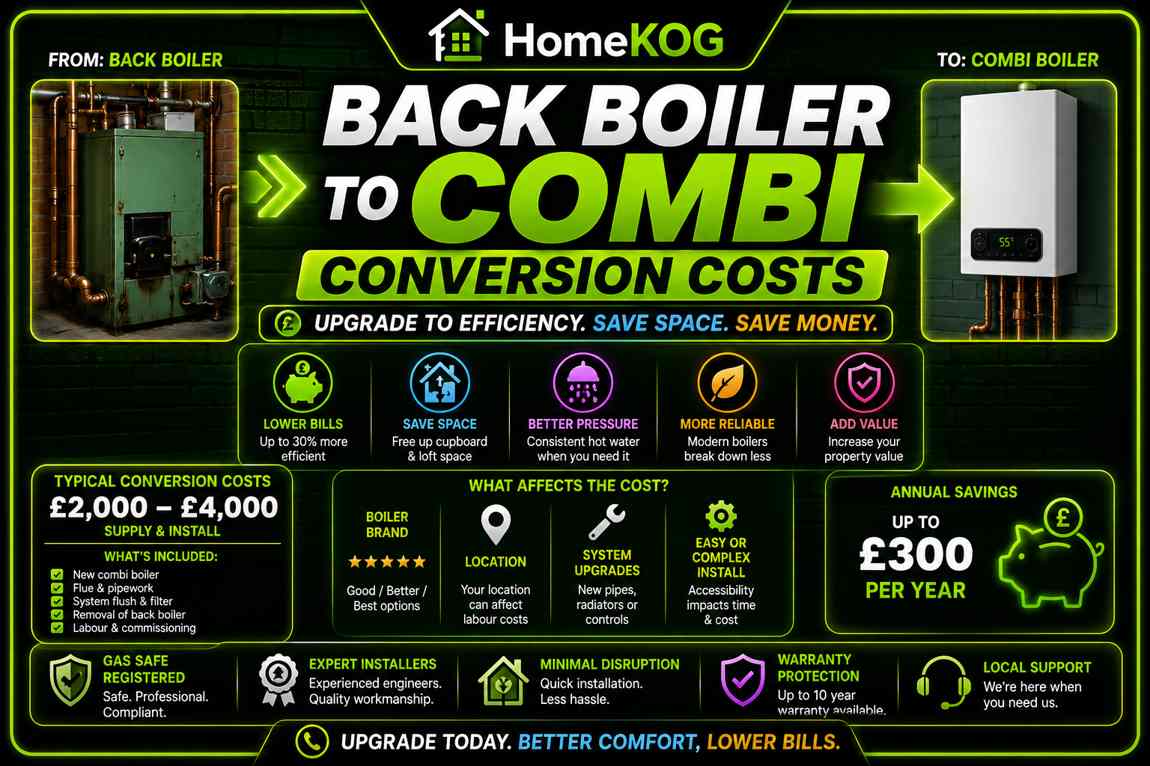
| Back boiler removal and new combi boiler | £3,000 – £4,500 |
| Back boiler removal and new system boiler | £3,500 – £5,000 |
| Additional pipework (if required) | £200 – £800 |
| Hot water cylinder (system boiler) | £400 – £900 |
| Making good fireplace and flooring | £200 – £600 |
These costs reflect the full scope of the project including labour, the new boiler, flue, and standard pipework modifications. Individual quotes will vary based on property size, boiler model, and the complexity of the installation.
Are Back Boiler Conversion Costs Worth It?
The upfront cost of a back boiler conversion is significant, but the long-term financial case is strong. A modern A-rated condensing boiler operating at over 90% efficiency compared to a back boiler’s 70% efficiency produces measurable savings from the first heating season.
The average UK household can save over £800 per year on energy bills by switching from a back boiler to a modern combi or system boiler. At that saving rate, the conversion cost is recovered within 4 to 5 years — after which the ongoing savings represent a clear financial benefit for the lifetime of the new boiler.
Finance options are available that spread the cost of conversion over monthly payments, making the upfront investment more manageable without delaying the efficiency and reliability benefits of a new system.
Grants Available for Back Boiler Replacement
Financial assistance may be available to reduce the cost of replacing a back boiler, depending on your personal circumstances and location.
The UK Government’s Boiler Upgrade Scheme, the Energy Company Obligation (ECO4), and various local authority grants provide funding for heating system upgrades in eligible households. Eligibility criteria typically include factors such as household income, receipt of qualifying benefits, property energy efficiency rating, and homeownership status.
To find out what support is available in your area, contact your local council, your energy supplier, or a Gas Safe registered heating engineer who can advise on current schemes and assist with the application process.
Recommended Combi Boilers for Back Boiler Conversions
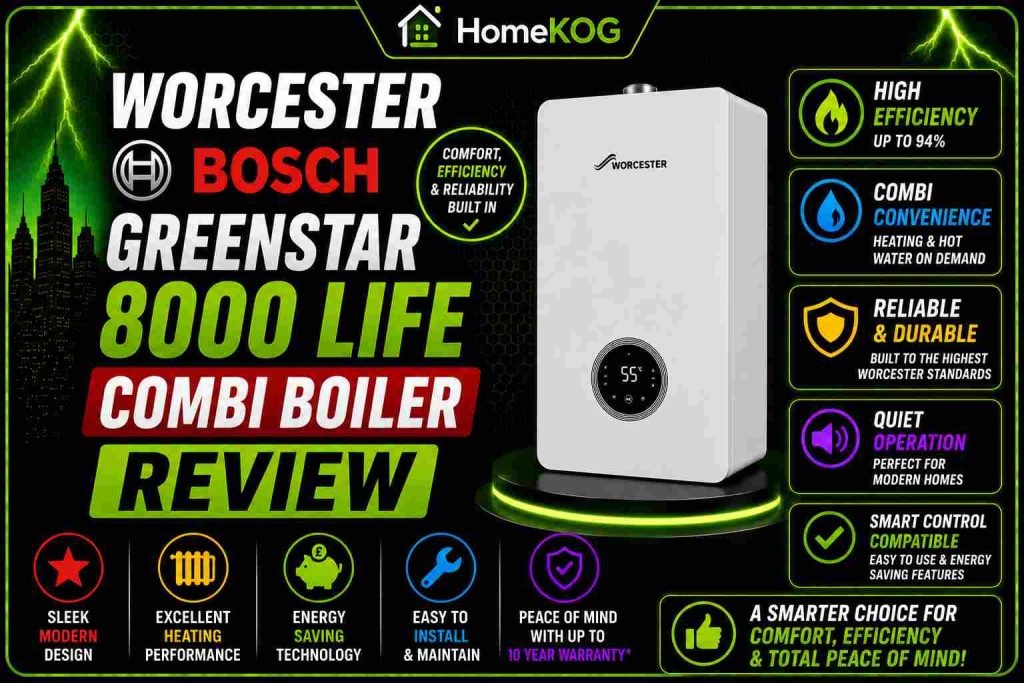
If you decide a combi boiler is the right replacement for your back boiler, choosing a model from a reputable manufacturer with a strong warranty reduces long-term maintenance risk. Leading models currently available include the Viessmann Vitodens 050-W, the Viessmann Vitodens 100-W, the Worcester Bosch 4000, and the Worcester Bosch 8000.
Modern combi boilers from these manufacturers include built-in WiFi connectivity for smart thermostat integration, hydrogen-blend ready technology for future fuel compatibility, and intelligent filling systems that monitor and maintain correct boiler pressure automatically.
All new boiler installations carry manufacturer warranties ranging from 5 to 12 years depending on the model selected, providing long-term protection on your investment.
Frequently Asked Questions
Can I replace a back boiler with another back boiler?
No — back boilers have not been manufactured in the UK since 2005 and cannot be legally installed under current Building Regulations. If your back boiler needs replacing, your options are a combi boiler, system boiler, or regular boiler. All three are modern condensing boilers operating at over 90% efficiency. A Gas Safe registered engineer can assess your property and recommend the most suitable replacement based on your home’s size and hot water demand.
How long does a back boiler conversion take?
A back boiler conversion typically takes 2 to 3 days to complete, depending on the complexity of the installation. Day one usually covers decommissioning or removing the back boiler and beginning the new boiler installation. Day two covers pipework modifications and connecting the new unit to the heating circuit. Day three — when required — covers final commissioning, system testing, and making good any cosmetic damage to the fireplace area or flooring.
What is the difference between decommissioning and removing a back boiler?
Decommissioning a back boiler disconnects it permanently from its gas and electrical supply, leaving the physical unit in place behind the fireplace. Removal physically extracts the boiler from behind the fireplace, which requires more significant access work to the fire surround and flooring but leaves the space entirely clear. Decommissioning is less expensive than full removal, but both options require a Gas Safe engineer and result in some cosmetic disruption to the fireplace area.
How much does a back boiler conversion cost?
A back boiler conversion costs between £3,000 and £4,500 for decommissioning or removal and installation of a replacement combi boiler, including labour, the new boiler, and a standard flue. System boiler conversions typically cost £3,500 to £5,000 due to the additional hot water cylinder required. Additional costs apply for extensive pipework modifications, making good the fireplace area, and scaffolding if a vertical flue is needed. Finance options are available to spread the cost over monthly payments. If you’re looking to save on installation costs, consider budget combi boilers under £1,000 as a cost-effective alternative. These options provide reliable heating and hot water without breaking the bank. Additionally, researching different brands can help you find the best value for your needs. When considering combi boiler installation costs breakdown, it’s essential to factor in potential variations based on your location and the specific features of the boiler. Consult with multiple installers to get detailed estimates that highlight all components of the pricing. This thorough understanding will ensure you make an informed decision that aligns with your budget and heating requirements.
Will I save money by replacing my back boiler?
Yes — replacing a back boiler with a modern condensing boiler produces significant annual energy savings. Back boilers operate at approximately 70% efficiency, meaning around 30% of every pound spent on gas is wasted. Modern A-rated condensing boilers achieve over 90% efficiency. The average UK household saves over £800 per year after switching from a back boiler to a combi boiler, meaning the conversion cost is typically recovered within 4 to 5 years through reduced energy bills alone.
Can I keep my gas fire after a back boiler conversion?
In many cases, yes — it is possible to retain the existing gas fire after a back boiler conversion even after the back boiler itself has been decommissioned or removed. The fire operates independently from the back boiler unit, and a Gas Safe engineer can disconnect the boiler while leaving the fire connected and functional. This reduces the overall scope of the fireplace work required and keeps the focal point of the room intact. Confirm this option with your engineer during the initial survey.
Is a combi boiler the best replacement for a back boiler?
A combi boiler is the most popular back boiler replacement in the UK because it eliminates the need for a hot water cylinder, delivers instant hot water at mains pressure, and is well-suited to the majority of UK homes. However, a system boiler is a better choice for larger properties with multiple bathrooms and higher simultaneous hot water demand. The right replacement depends on your property size, number of occupants, and hot water usage patterns — a Gas Safe engineer can recommend the correct option after assessing your home.
Are there grants available to help with back boiler replacement costs?
Yes — financial assistance may be available through the UK Government’s Energy Company Obligation (ECO4) scheme, the Boiler Upgrade Scheme, and local authority grants for eligible households. Eligibility typically depends on household income, receipt of qualifying benefits such as Universal Credit or Pension Credit, and the energy efficiency rating of your property. Contact your local council, energy supplier, or a Gas Safe registered heating engineer to find out which schemes apply to your circumstances and to begin the application process.
Conclusion: Make the Switch and Start Saving
A back boiler conversion is one of the most impactful heating upgrades available to UK homeowners still running an outdated system. A modern condensing boiler reduces energy bills by hundreds of pounds per year, eliminates the risk of sudden heating failure, and provides a reliable, efficient system backed by manufacturer warranties of up to 12 years.
The upfront cost of conversion is higher than a standard boiler replacement due to the additional work involved, but the long-term financial return — combined with improved comfort, reliability, and environmental performance — makes it a sound investment for any home still relying on a back boiler.
Get a fixed-price quote from a Gas Safe registered engineer, explore the finance options available, and check your eligibility for government grants that could reduce the cost of your conversion significantly. The sooner you make the switch, the sooner your energy savings begin.