

Why Are My Radiators Not Heating Up? Causes and Fixes
Quick Answer: Radiators that aren’t heating up are usually caused by trapped air, internal sludge, a faulty thermostatic radiator valve, or low boiler pressure. A single cold radiator is typically a localised problem you can fix yourself by bleeding it or freeing a stuck valve. Multiple cold radiators usually point to a system-wide issue that may need a heating engineer to resolve.
A radiator that stays cold while the rest of the house warms up is one of the more common heating complaints UK homeowners face, particularly at the start of the colder months. The good news is that many causes are straightforward to diagnose and fix without professional help.
Understanding whether the problem is isolated to one radiator or affecting several is the most important first step, because the cause — and the solution — differs significantly between the two scenarios.
Key Entity Relationships
- A thermostatic radiator valve (TRV) controls the flow of hot water into an individual radiator by responding to the air temperature in the room, and a faulty or stuck TRV is a common cause of a single cold radiator.
- Trapped air inside a radiator rises to the top of the unit and prevents hot water from filling the space fully, causing the top of the radiator to remain cold while the bottom stays warm.
- Bleeding a radiator is the process of releasing trapped air through the bleed valve using a radiator key, and it is one of the most effective first fixes for a cold radiator.
- A lockshield valve is a flow-regulating valve fitted to one side of each radiator that controls how much hot water the radiator receives relative to other radiators in the system.
- Balancing a central heating system involves adjusting lockshield valves across all radiators to achieve an even temperature distribution throughout the property.
- Magnetite sludge is a dark, iron-oxide deposit that accumulates inside radiators and pipework over time and can restrict or fully block the flow of hot water through a radiator.
- A power flush is a professional cleaning process in which a high-flow machine pushes water and chemical cleaning agents through the heating system to clear sludge, debris, and corrosion.
- A diverter valve is a component inside a combi boiler that directs hot water either to the central heating circuit or to the domestic hot water circuit, and a faulty diverter valve can cause radiators to stay cold while taps run hot.
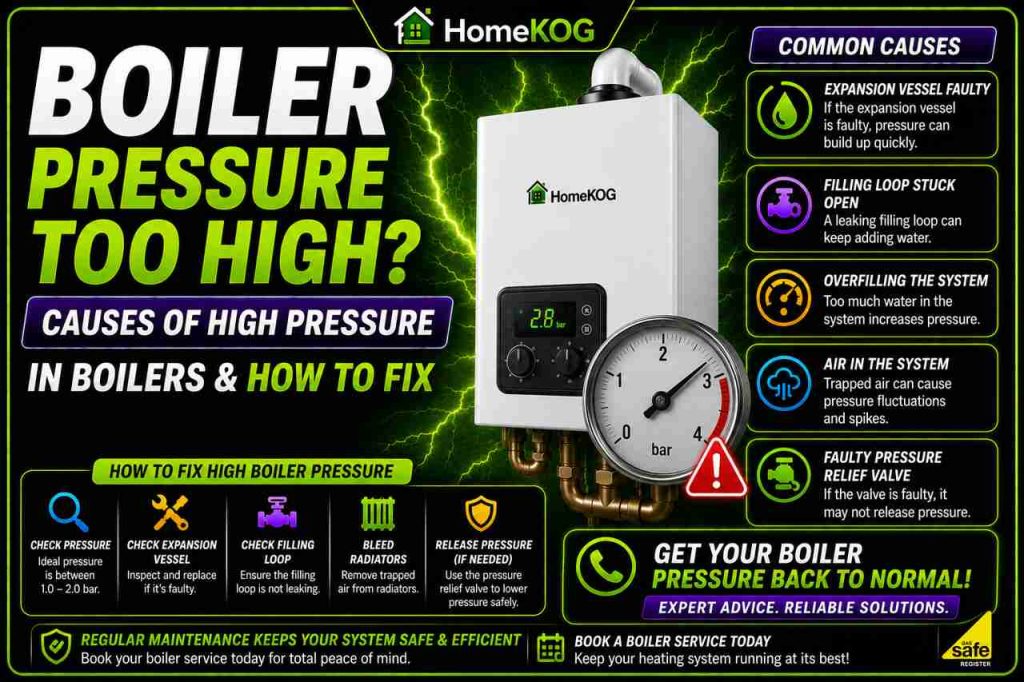
- Boiler pressure refers to the water pressure within the sealed central heating system, and most UK boilers require a pressure of between 1 and 1.5 bar for effective operation.
- A corrosion inhibitor is a chemical added to the system water that slows the breakdown of metal components and reduces the formation of magnetite sludge inside radiators and pipework.
- A magnetic system filter captures iron-oxide particles circulating in the system water before they can accumulate as sludge in radiators or damage the boiler’s heat exchanger.
- A Gas Safe registered engineer is the only professional legally qualified to carry out gas-related work on a central heating system in the UK, including diagnosing boiler-related causes of cold radiators.

Is It One Radiator or Several?
The first thing to establish is whether you are dealing with a single cold radiator or a pattern affecting multiple units across your home. These two scenarios have different root causes, and pursuing the wrong fix wastes time.
A single radiator that isn’t heating up while the rest of the system works normally almost always has a localised cause — trapped air, a blocked internal channel, or a valve that has stuck closed. These are problems you can generally address yourself with basic tools and no specialist knowledge.
Multiple radiators failing to heat at the same time, on the other hand, suggests something is affecting the system as a whole. Low boiler pressure, poor system balance, a faulty diverter valve, or heavy sludge contamination throughout the pipework are all candidates that may require professional investigation.
Why Is One Radiator Not Heating Up?
Trapped Air in the Radiator
Trapped air is the most common reason a single radiator fails to heat properly. As air accumulates inside the unit, it rises to the top and prevents hot water from filling that space. The result is a radiator that’s warm at the bottom but noticeably cooler — or completely cold — at the top. In addition to trapped air, do radiator covers affect heat distribution in the overall heating efficiency of a room? Poorly designed covers can hinder the flow of warm air, leading to uneven heating throughout the space. It’s important to consider the design and placement of both the radiator and its cover to maximize warmth and comfort.
The fix is straightforward: bleed the radiator. Turn the heating off and allow the system to cool slightly before you start. Locate the bleed valve at the top corner of the radiator — it looks like a small square or slotted fitting — and use a radiator key or flathead screwdriver to open it a quarter turn anticlockwise.
You will hear air hissing out. Hold a cloth beneath the valve and wait until the hissing stops and a steady trickle of water appears. At that point, close the valve firmly and check your boiler pressure gauge, as bleeding can cause a small pressure drop that may need topping up.
Magnetite Sludge and Internal Blockages
If bleeding the radiator doesn’t solve the problem, or if the radiator is cold at the bottom as well as the top, internal sludge is likely the cause. Magnetite — a dark, sandy sediment formed from the corrosion of steel components — builds up inside radiators over time and can partially or fully block the flow of hot water.
A radiator affected by heavy sludge will feel cold across much of its surface, or warm in patches rather than uniformly. You may also notice that the radiator makes a gurgling or rumbling sound when the heating is on.
Mild blockages can sometimes be cleared by isolating the radiator, removing it from the wall, and flushing it through with a hosepipe outdoors until the water runs clear. Severe sludge contamination that affects multiple radiators usually requires a professional power flush of the entire system.
A Faulty or Stuck Thermostatic Radiator Valve
A thermostatic radiator valve that has seized in the closed position will prevent hot water from entering the radiator entirely, leaving it completely cold even when the heating is running normally everywhere else.
TRV failure of this kind is particularly common after a long period without the heating being used — the pin inside the valve body can corrode or stick in the closed position over the warmer months.
To check whether this is the problem, remove the TRV head by unscrewing it from the valve body. Look for a small pin in the centre of the valve — if it isn’t moving freely up and down, it has stuck. You can often free it with a small pair of pliers and a drop of penetrating oil. If the valve body itself is damaged or leaking, replacement is the more reliable long-term fix.
Closed or Incorrectly Set Lockshield Valve
Each radiator has two valves — the TRV on one side and the lockshield valve on the other. Lockshield valves are usually covered by a plastic cap and are rarely adjusted after installation, but they can occasionally be turned fully closed either accidentally or during previous work on the system.
If the lockshield valve is fully closed, no hot water can flow through the radiator regardless of what the TRV is doing. Remove the cap and check whether the valve has been inadvertently closed. Opening it gradually — no more than a quarter turn at a time — should restore flow.
Why Are Multiple Radiators Not Heating Up?
Low Boiler Pressure
If several radiators across your home are underperforming or stone cold, checking the boiler pressure gauge should be your first action. Most sealed central heating systems operate correctly between 1 and 1.5 bar. Below 1 bar, the system lacks sufficient pressure to circulate water effectively, and radiators — particularly those on upper floors — will be the first to suffer.
Re-pressurising the system is done via the filling loop, which is typically a flexible braided hose connecting the mains cold water supply to the central heating circuit. Your boiler’s user manual will show you exactly where it is and how to use it. Add water slowly and stop when the gauge reads approximately 1.2 to 1.3 bar.
If the pressure drops again within a few days of re-pressurising, there is a leak somewhere in the system. Visible leaks at radiator valves or pipework joints should be investigated promptly. A leak that isn’t visible at surface level requires a Gas Safe engineer to locate and repair it.
An Unbalanced Heating System
When a central heating system is unbalanced, hot water follows the path of least resistance — typically the radiators closest to the boiler — and the radiators furthest away receive insufficient flow to heat up properly. This is a common issue in older systems and in homes where radiators have been added or removed over the years.
The table below describes typical symptoms to help distinguish an unbalanced system from other causes.
| Symptom | Likely Cause |
|---|---|
| Radiators near the boiler very hot; distant ones cold | System imbalance — lockshield valves need adjusting |
| All radiators warm at the bottom, cold at the top | Trapped air — bleed all radiators |
| All radiators cold despite boiler firing | Low pressure or diverter valve fault |
| Random radiators cold, no pattern | Localised sludge blockages |
| Radiators cold when hot water is running | Diverter valve fault in combi boiler |
Balancing the system involves adjusting the lockshield valves on each radiator to restrict flow through the closer radiators and direct more water to those further away. The goal is to achieve a consistent temperature drop of roughly 11 to 12 degrees Celsius between the flow and return pipes across all radiators. This is a methodical process that takes time but makes a significant difference to both comfort and efficiency.
A Faulty Diverter Valve
In a combi boiler, the diverter valve determines whether hot water goes to the central heating circuit or to the domestic hot water taps. When this valve fails — often sticking partially open in the hot water position — it can cause the radiators to remain cold or lukewarm while the hot water supply at the taps continues to work normally.
A diverter valve fault is worth suspecting if your radiators stop heating effectively at the same time as you use the taps for hot water, or if the radiators heat up only when no hot water is being drawn. This is not a component a homeowner can replace — it requires a Gas Safe registered engineer.
Heavy System-Wide Sludge Contamination
When sludge affects the system broadly rather than one or two radiators, radiators will feel generally cool and the boiler may cycle on and off more frequently than normal as it struggles to shift heat efficiently. In this situation, a power flush is usually the appropriate response.
A power flush is carried out by a heating engineer using specialist equipment that forces water and cleaning chemicals through the system at high flow rates, dislodging and removing sludge, rust particles, and debris. Following a power flush, a corrosion inhibitor is added to the system and — if one isn’t already fitted — a magnetic system filter is installed to prevent sludge from reaccumulating.
Preventing Radiator Problems in Future
Ongoing maintenance is far more cost-effective than dealing with a blocked or failing system mid-winter. Bleeding radiators at the start of each heating season removes any air that has accumulated over summer. Checking the boiler pressure monthly takes seconds and catches slow leaks before they become a problem.
Having the boiler serviced annually by a Gas Safe registered engineer also includes a check of the system water condition and inhibitor levels. Keeping inhibitor concentration correct is one of the most effective ways to slow sludge formation over the long term. Homeowners should explore various boiler finance options for homeowners to manage the costs of both servicing and potential repairs. These plans often provide flexible payment schedules, making it easier to maintain the efficiency and safety of the heating system. By investing in a new boiler or essential upgrades through financing, homeowners can also enhance energy efficiency and reduce long-term utility bills. boiler flue safety regulations explained are crucial for ensuring that emissions are properly vented from the home. Understanding these regulations helps prevent dangerous situations, such as carbon monoxide buildup, which can pose serious health risks to occupants. Homeowners should familiarize themselves with these guidelines to ensure compliance and enhance the overall safety of their heating systems.
If your radiators are more than fifteen years old and are performing poorly despite maintenance, replacement with modern low-water-content radiators may be worth considering. These units heat up faster, retain heat more efficiently, and are better suited to work with newer, higher-efficiency boilers.
What Common Issues Cause Both Radiators and Underfloor Heating to Fail?
Common issues that lead to failures in both radiators and underfloor heating include air locks, blockages, and poor circulation. Proper maintenance is essential for efficiency. For homeowners dealing with inadequate heat distribution, troubleshooting underfloor heating system issues can identify problems such as faulty valves or pump malfunctions that may arise.
FAQ
Why is my radiator cold at the top but hot at the bottom?
A radiator that is cold at the top and warm at the bottom almost always contains trapped air. As air accumulates inside the radiator, it occupies the upper section and prevents hot water from filling that space fully. Bleeding the radiator releases the trapped air through the bleed valve and allows hot water to circulate through the full unit. Turn the heating off before bleeding and check the boiler pressure gauge afterwards, as bleeding can cause a small pressure drop.
Why is my radiator cold at the bottom but warm at the top?
A radiator that is cold or lukewarm at the bottom while the top is warm is usually affected by magnetite sludge. This dark, sandy sediment settles at the bottom of the radiator over time and blocks the flow of hot water through the lower section. Removing the radiator and flushing it with a hosepipe outdoors can clear mild cases. Widespread sludge affecting multiple radiators generally requires a professional power flush of the entire system.
Why are all my radiators cold but the boiler is on?
If the boiler is firing but none of the radiators are heating up, the most likely causes are low system pressure, a stuck diverter valve inside a combi boiler, or a failed circulation pump. Check the boiler pressure gauge first — if it reads below 1 bar, re-pressurise the system via the filling loop. If pressure is correct and the issue persists, a Gas Safe registered engineer should inspect the boiler for a diverter valve or pump fault.
How do I bleed a radiator?
Turn the central heating off and allow the system to cool for around thirty minutes. Locate the bleed valve at the top corner of the radiator and use a radiator key or flathead screwdriver to open it a quarter turn anticlockwise. Hold a cloth beneath the valve as hissing air escapes. When the hissing stops and water begins to trickle out steadily, close the valve. Check the boiler pressure gauge and top up via the filling loop if the pressure has dropped below 1 bar.
What causes multiple radiators to stop heating up at the same time?
Multiple cold radiators at the same time usually indicate a system-wide problem rather than a localised fault. Common causes include low boiler pressure, a heavily sludged system restricting flow through the pipework, a central heating system that needs balancing, or a faulty diverter valve in a combi boiler. Each of these has a different fix, so identifying whether any of the radiators are partially warm — and whether the boiler is firing normally — helps narrow down the cause before any work is carried out. If you encounter any irregularities, consulting the warmflow boiler error code explanations can provide immediate guidance. Understanding these error codes is essential for diagnosing issues effectively and can prevent unnecessary service calls. By following the troubleshooting steps outlined in those explanations, you can often resolve problems quickly and efficiently.
What is a power flush and do I need one?
A power flush is a professional cleaning process in which a heating engineer connects specialist equipment to the central heating system and forces water and chemical cleaners through at high flow rates to remove sludge, rust, and debris. It is typically needed when multiple radiators are cold at the bottom, when the system water is visibly discoloured during bleeding, or when the boiler is cycling frequently without heating the home effectively. A power flush is usually followed by the installation of a magnetic filter and the addition of a corrosion inhibitor.
How do I fix a stuck thermostatic radiator valve?
Remove the TRV head by unscrewing it from the valve body and look for the small pin in the centre of the valve. If the pin is not moving freely up and down when pressed, it has stuck in the closed position. Apply a small amount of penetrating oil around the pin and use a pair of pliers to gently work it up and down until it moves freely. Refit the TRV head and check whether the radiator heats up. If the valve body is damaged or leaking at the joint, a full valve replacement is the appropriate fix.
How often should I check my boiler pressure?
Checking the boiler pressure gauge once a month takes only a few seconds and is one of the most effective habits for catching problems early. Most sealed central heating systems should sit between 1 and 1.5 bar at rest. A pressure reading that regularly drops back below 1 bar after you have re-pressurised the system suggests there is a slow leak somewhere that needs to be investigated by a Gas Safe registered engineer.
Conclusion
Most radiator problems that prevent heating are fixable — often without calling anyone out. Bleeding a single cold radiator, freeing a stuck TRV pin, or topping up boiler pressure are tasks within reach of any homeowner willing to take twenty minutes and follow the steps carefully.
Where multiple radiators are affected, a more systematic approach is needed: start with the pressure gauge, check for visible imbalance across the system, and consider whether the age of the system makes a professional clean worthwhile before winter arrives.
If the problem persists after working through these fixes, or if you suspect a boiler-side fault such as a diverter valve failure or a pump problem, contact a Gas Safe registered engineer. You can find and verify registered engineers in your area at gassaferegister.co.uk.