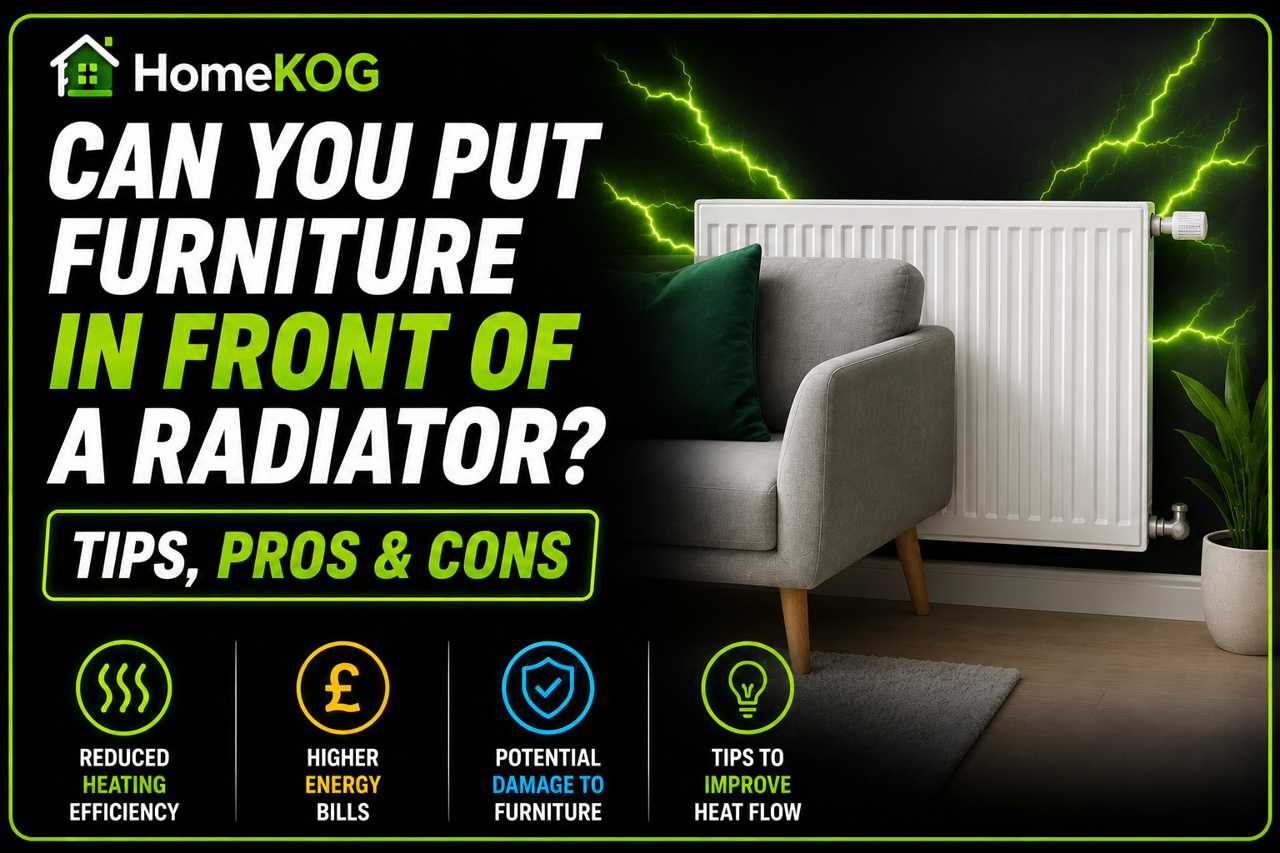

Placing furniture directly in front of a radiator reduces heating efficiency, increases energy use, and can damage certain materials over time. How much it matters depends on the gap you leave, the furniture material, and how your radiator distributes heat.
Why Furniture Blocks Radiator Heat
Most UK panel radiators distribute heat primarily through convection — air is warmed as it passes over the radiator’s fins or panels, rises, and circulates around the room. Place a sofa, bookcase, or any large piece of furniture directly in front and you interrupt that convection current. The furniture absorbs heat before it can circulate, the room takes longer to reach temperature, and your boiler runs for longer to compensate. To ensure your heating system operates efficiently, it’s essential to follow a boiler service maintenance checklist regularly. This checklist should include tasks such as checking for leaks, inspecting the pressure gauge, and ensuring that the thermostat is functioning correctly. By adhering to these guidelines, you can maintain optimal performance and extend the lifespan of your boiler system.
The effect is most pronounced with deep, upholstered furniture placed flush against a radiator. A slim console table with open legs causes far less disruption to airflow than a full-depth sofa pressed against the radiator face.
How Far Away Should Furniture Be from a Radiator?
A minimum clearance of 300mm (30cm) between furniture and the front face of a radiator is the commonly recommended guideline. This distance allows sufficient airflow for convection to function reasonably well. It is a practical guide rather than a regulatory requirement, but it is widely adopted by heating engineers and radiator manufacturers.
For furniture placed to the side of a radiator — bookshelves flanking a radiator, for instance — a gap of 150mm is generally adequate, as side obstruction has less impact on convection than frontal blocking.
Heat Damage to Furniture
Prolonged close exposure to radiator heat can cause real damage to certain materials. Leather can dry, crack, and discolour. Solid wood can warp or split as repeated heating and cooling cycles cause the wood to expand and contract. Upholstered fabrics may fade or degrade faster than normal, and adhesives in flat-pack furniture can soften over time.
The 300mm clearance guideline protects against most heat damage as well as efficiency loss. If furniture cannot be moved further away, a heat deflector — a shelf fitted above the radiator to direct warm air outward rather than straight up — can reduce the direct heat exposure to nearby items while also improving heat distribution into the room.
The TRV Problem
If your radiator has a thermostatic radiator valve (TRV), furniture obstructing airflow around the valve head causes an additional problem. A TRV senses the air temperature immediately around it to decide whether to open or close. If furniture traps warm air near the valve, the TRV reads a falsely high temperature, closes the radiator down prematurely, and the room stays cold. The radiator feels like it is not working, when in fact the TRV is simply responding to the microclimate created by the furniture.
If your furniture arrangement makes it impossible to keep the TRV head clear, remote TRV heads — which mount on the wall away from the radiator — are available for most valve types and are a worthwhile upgrade.
Where to Position Radiators for Best Efficiency
Radiators placed under windows or on external walls work most effectively. Cold air falling from a window or through an external wall is counteracted by the warm air rising from the radiator below, creating an even temperature across the room. Placing a radiator on an internal wall, particularly opposite a cold external wall, tends to create temperature gradients.
Fitting reflective radiator foil between the radiator and an external wall is an inexpensive efficiency improvement — it reduces the heat lost directly into the wall and redirects it back into the room.
Furniture and Radiator Placement: Quick Reference
Vertical and Designer Radiators
Vertical radiators are often chosen where wall space is limited — a tall, narrow radiator takes up less horizontal wall space than a traditional double-panel radiator. They are available in outputs comparable to standard radiators of the same kW rating, but many decorative vertical radiators prioritised for appearance are undersized for the room they are placed in. Always check the BTU or watt output against your room’s heat requirement before specifying one on aesthetic grounds alone.
Because they are often positioned in alcoves or corners as design features, furniture clearance applies equally — a vertical column radiator in a corner still needs clear airflow to convect effectively.
Is It Safe to Place Furniture Near a Radiator After Performing a Chemical Flush on Central Heating?
Placing furniture near a radiator after a central heating chemical flush can be risky. While the flush improves efficiency, it’s essential to maintain a safe distance to avoid heat damage or fire hazards. Understanding the central heating chemical flush benefits ensures you make informed decisions about your home’s layout and safety. When considering boiler service steps for homeowners, it’s important to schedule regular maintenance to enhance the longevity of your heating system. Additionally, homeowners should familiarize themselves with the warning signs that indicate a need for professional servicing. This proactive approach helps prevent costly repairs and ensures a comfortable living environment.
Radiator Covers
Radiator covers can improve the look of a room and reduce the risk of contact burns, but most reduce heat output to some degree by restricting convection. Open-fronted or slatted designs perform significantly better than enclosed box covers. If you fit a cover, ensure the front grille area is sufficient to allow free air movement and avoid placing objects on top that would block the warm air outlet. A shelf positioned directly on top of a radiator, rather than as part of an enclosed cover, tends to deflect warm air into the room rather than trap it — making it a more efficient option than a full cover.
Frequently Asked Questions
Is it OK to put a sofa in front of a radiator?
It is not ideal, but it is manageable if you maintain at least 300mm of clearance between the back of the sofa and the radiator face. Less than this disrupts convection, reduces heating efficiency, and risks heat damage to the sofa fabric or frame over time.
How should I arrange furniture around a radiator?
Keep a minimum 300mm gap in front of the radiator and ensure TRV heads are not obstructed by furniture. If the TRV cannot be kept clear, fit a remote TRV head. Avoid hanging curtains over the radiator face — curtains should stop at windowsill level to allow heat to enter the room rather than being trapped behind them.
Can a radiator damage furniture?
Yes, over time. Leather can crack and discolour, solid wood can warp, and upholstery may fade with prolonged close heat exposure. Maintaining the recommended 300mm clearance significantly reduces this risk. A heat deflector shelf above the radiator can help redirect heat away from nearby furniture.
Where is the best place to put a radiator?
Under a window or on an external wall is ideal. This positions the heat source where cold air enters the room, using convection to create an even temperature. Fitting reflective foil behind the radiator on an external wall reduces heat loss into the wall structure.
Is It Safe to Place Furniture in Front of a Radiator When It’s Turned On?
Placing furniture in front of a radiator when it’s turned on can pose a fire hazard and limit heat distribution. For optimal safety and comfort, ensure that there’s adequate clearance around the radiator. This promotes efficient airflow, efficiently activating your home radiator system, and maintaining a cozy environment without risks.
Do radiator covers reduce heat output?
Yes — most enclosed radiator covers reduce heat output, some by 15–30%, depending on the design. Open-fronted and slatted covers perform better than fully enclosed box designs. If efficiency is a priority, a simple shelf above the radiator is preferable to a full cover.