
A chemical flush cleans rust, sludge, and debris from your central heating system, restoring efficient water flow and protecting components from long-term damage.
A chemical flush introduces a specialist cleaning agent — such as Fernox F3 or Sentinel X400 — into the heating circuit. The solution circulates through the system, breaking down deposits, before the entire system is drained and refilled with fresh water. A corrosion inhibitor is then re-dosed to protect the system going forward. This re-dosing step is not optional — leaving a freshly flushed system without inhibitor accelerates corrosion rapidly.
The process should always be carried out by a qualified heating engineer. Draining and refilling a sealed, pressurised system without the right equipment and knowledge risks airlocks, pressure loss, and damage to components.
How a Chemical Flush Works
The engineer begins by draining the existing system water — often visibly dark or black, which itself indicates sludge contamination. A chemical cleaner is then introduced, typically via a radiator bleed valve or filling loop, and the system is run at normal operating temperature to circulate the solution through all radiators, pipework, the pump, and the heat exchanger.
Dwell time — the period the chemical solution remains active in the system — is typically between one and eight hours depending on the product used and the level of contamination. Once complete, the system is fully drained, flushed through with clean water, and refilled. A fresh dose of corrosion inhibitor is added, and the system pressure is restored to the correct operating level (usually 1–1.5 bar when cold).
The cleaning agents used are purpose-formulated heating system products, not industrial chemicals. Common UK products include Fernox F3 Cleaner, Sentinel X400, and Adey MC3+. These are specifically designed to be safe for system components including rubber seals, pump heads, and heat exchangers.
Signs Your System Needs a Chemical Flush
The most common indicators are cold spots on radiators — particularly at the bottom — and excessive noise from the boiler or pump. A system that takes a long time to heat up, requires frequent radiator bleeding, or produces dark water when bled is almost certainly sludge-contaminated.
If you are having a new boiler installed, a chemical flush of the existing system beforehand is strongly recommended — and many manufacturers require evidence of a system clean to validate the new boiler warranty.
How Often Should You Get a Chemical Flush?
As a general guide, a chemical flush is advisable every five to six years, or whenever a new boiler is installed. Systems with microbore pipework — the narrow 8mm or 10mm tubing common in 1970s and 1980s properties — may need attention more frequently, as the smaller bore makes blockages more likely.
A correctly dosed system inhibitor, checked annually at each boiler service, significantly reduces the rate at which sludge accumulates. Water treatment should comply with BS 7593, the British Standard for treatment of water in domestic hot water central heating systems.
Chemical Flush vs Power Flush
Both processes aim to remove sludge and restore system efficiency, but they work differently and suit different situations.
A chemical flush is the appropriate first-line treatment for most systems. A power flush may be recommended by your heating engineer where sludge is severe or where a chemical flush has not resolved the symptoms — particularly in older systems with heavily corroded radiators. The decision should be made by the engineer based on a system assessment, not assumed in either direction.
Is Chemical Flushing an Effective Method for Removing Central Heating Sludge?
Chemical flushing is an effective method for addressing the buildup of central heating sludge in systems. By using specialized agents, it breaks down and disperses unwanted debris, enhancing circulation and heat efficiency. Homeowners in the UK should consider integrating central heating sludge removal techniques UK to prolong the lifespan of their heating systems.
What Does a Chemical Flush Cost?
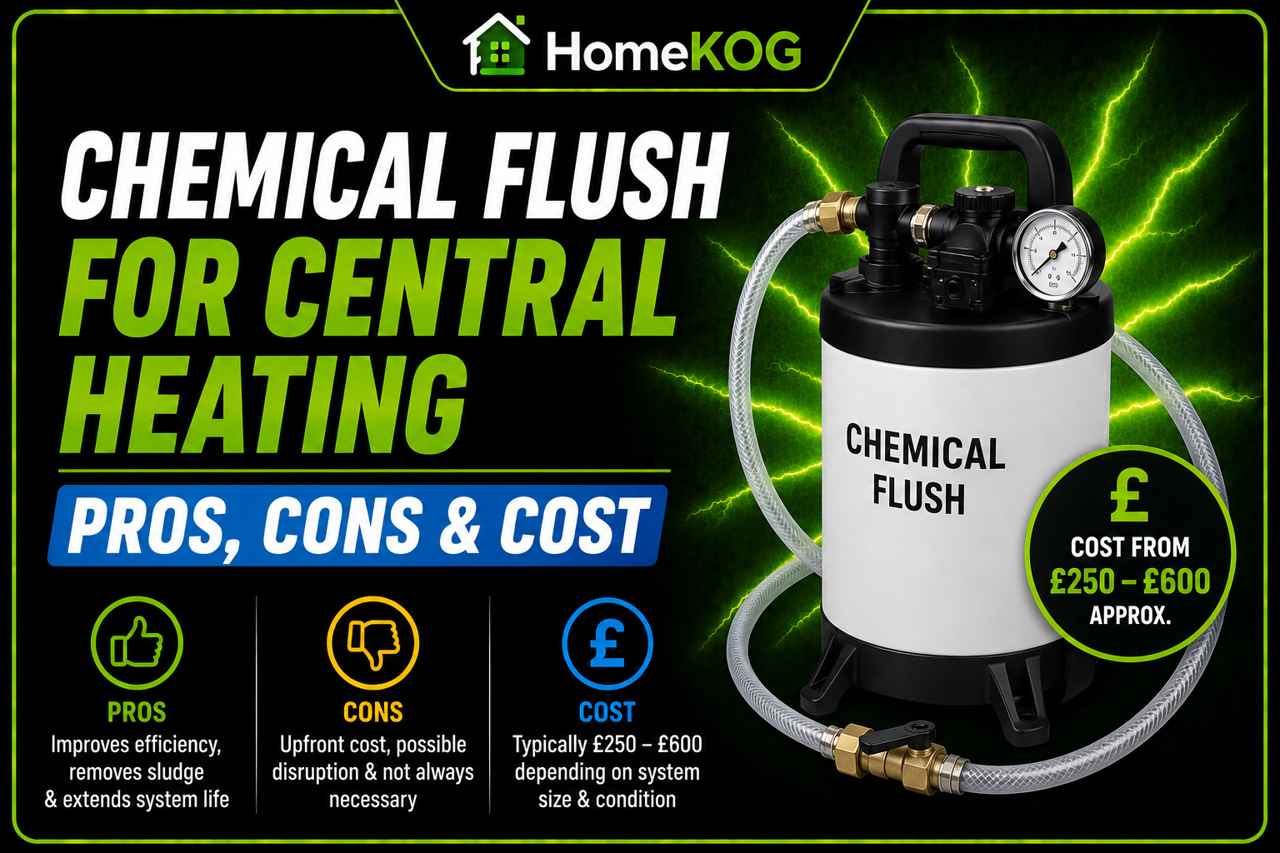
A professional chemical flush typically costs between £150 and £300, depending on the number of radiators, the system type, and the engineer’s rates in your area. This figure includes labour, the chemical cleaner, and inhibitor re-dosing. Larger systems or those requiring significant drain-down time will sit toward the top of that range.
The chemical products themselves — if purchased separately — typically cost £15–£40 for a full system dose. However, the labour and expertise involved in correctly draining, circulating, and refilling a sealed system is where the bulk of the cost lies.
Note that a chemical flush is not typically included in a standard annual boiler service or most boiler cover plans, though it is worth checking your specific policy.
Protecting the System After a Flush
Fitting a magnetic filter — such as an Adey MagnaClean or Fernox TF1 — is the single most effective step you can take after a chemical flush. Installed on the return pipe to the boiler, it uses powerful magnets to capture ferrous particles before they can re-contaminate the system. The filter should be cleaned annually at each service.
Combined with a correctly dosed inhibitor and an annual service, a magnetic filter can significantly extend the intervals between flushes and reduce the risk of premature pump or boiler failure.
Frequently Asked Questions
How long does a chemical flush take?
Most chemical flushes take between two and eight hours, depending on system size, the number of radiators, and how contaminated the system is.
Is a chemical flush as good as a power flush?
For routine maintenance and new boiler installations on reasonably clean systems, a chemical flush is usually sufficient. A power flush uses higher water velocity and is more effective at shifting severe, long-standing sludge. Your heating engineer can advise which is appropriate based on the condition of your system.
How much does a chemical flush cost in the UK?
Expect to pay between £150 and £300 for a professional chemical flush, including labour, cleaning chemicals, and inhibitor re-dosing. The exact price depends on system size and your location.
How often should I get a chemical flush?
Every five to six years is a reasonable baseline for most systems. If your system has a magnetic filter fitted and is correctly inhibited, you may go longer between flushes. Always carry out a flush when a new boiler is installed.
Does a chemical flush include re-dosing with inhibitor?
It should. A reputable heating engineer will re-dose the system with a corrosion inhibitor — such as Fernox F1 or Sentinel X100 — after flushing. Without inhibitor, a freshly cleaned system will begin to corrode again very quickly. Confirm this is included when booking.
Can I do a chemical flush myself?
It is not advisable. Draining and refilling a sealed central heating system requires the correct equipment and knowledge to avoid airlocks, pressure faults, and component damage. A Gas Safe registered engineer has the competence and tools to carry out the process safely.