

Boiler Relocation Cost UK 2026: How Much Does It Cost to Move a Boiler?
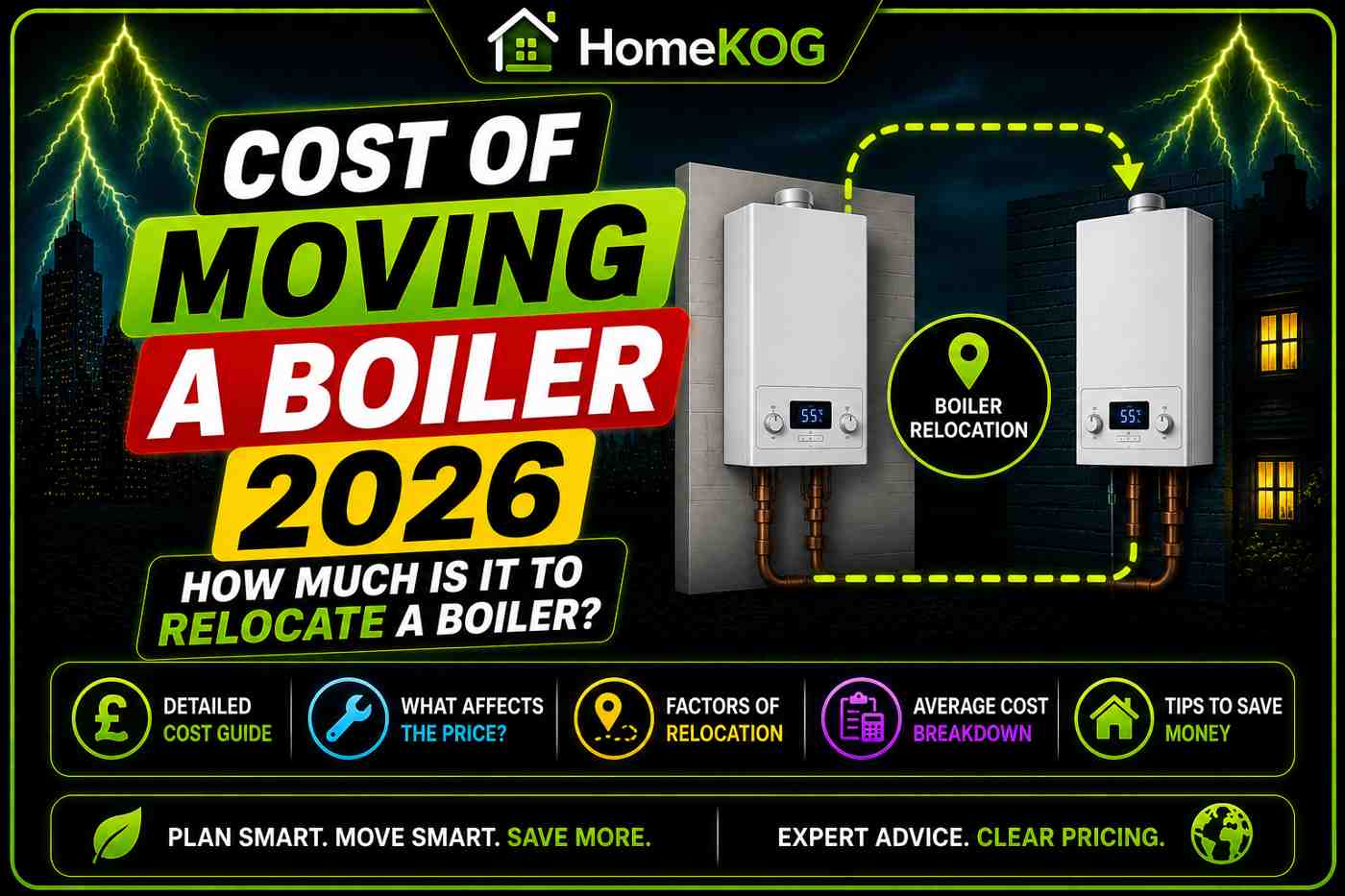
Quick Answer: Moving a boiler in the UK costs between £300 and £2,000 in 2026, depending on boiler type and how far it needs to move. Combi boilers are the cheapest to relocate. System and conventional boilers cost more due to additional components. All work must be carried out by a Gas Safe registered engineer.
Boiler relocation is one of those jobs that sounds straightforward until you look at the detail. Whether you want to free up kitchen space, make room for a renovation, or improve how your home flows day to day, moving a boiler is a significant piece of work that needs careful planning from the outset.
The total boiler relocation cost depends on the type of boiler you have, the distance of the move, the complexity of any pipework rerouting, and whether additional components — such as a new flue — are required. This guide walks you through everything you need to know before committing to a move.
Get a boiler quote online here >
Key Facts: Boiler Relocation Explained
Before diving into the numbers, it helps to understand how the main elements of a relocation connect and why costs vary as much as they do. Here are the core relationships to know:
- Gas Safe registered engineers are legally required to carry out all boiler relocation work in the UK.
- Combi boilers are the least expensive type to relocate, with costs typically starting from £300.
- System boilers require a separate hot water cylinder, which increases relocation costs compared to combi units.
- Conventional boilers include both a hot water cylinder and a cold water tank, making them the most complex and costly type to move.
- Modern condensing boilers must connect to a drain via a waste pipe, regardless of their new location.
- Boiler flues must maintain minimum clearance distances from windows, doors, and property boundaries.
- Attic boiler installations require dedicated lighting, a fixed walkway, and safe access in line with UK safety requirements.
- Labour costs represent the largest single component of any boiler relocation project.
- Boilers installed in garages, outbuildings, or sheds require frost protection and insulated pipework to prevent cold weather damage.
- Annual boiler servicing becomes easier and more affordable when the unit is positioned in a clearly accessible location.
- The Gas Safety (Installation and Use) Regulations 1998 govern all boiler relocation work carried out in the UK.
- Boilers that have been in service for more than ten years are generally more cost-effective to replace than to relocate.

How Much Does It Cost to Move an Existing Boiler?
Moving an existing boiler — rather than installing a new one at a different location — typically costs between £500 and £800. This covers labour and the key materials needed: copper pipe, fittings, a new flue where required, and wall brackets.
The total will climb if the new position is far from the original, if flooring needs to be lifted, or if pipework must run through walls or ceilings. A short-distance move within the same room remains the most affordable option for most households.
If your boiler is over ten years old, the cost of relocating it may begin to approach the cost of a new installation. In that situation, upgrading to a new energy-efficient model at the same time is often the smarter long-term decision.
Materials and Labour Cost Breakdown
Here is a breakdown of typical material and labour costs involved in a boiler relocation in 2026:
| Item | Estimated Cost |
|---|---|
| New Boiler Flue | £70 – £150 |
| Copper Pipe (per metre) | £10 – £20 |
| Fittings and Joints | £5 – £10 per fitting |
| Wall Brackets | £20 – £40 |
| Labour | £300 – £500 |
Labour is consistently the dominant cost in most relocations. A Gas Safe engineer will typically charge a day rate, and more complex moves — such as those requiring significant pipe rerouting or attic installations — will take longer and cost more accordingly.
How Much Does It Cost to Move a Combi Boiler?
Moving a combi boiler is the most affordable type of relocation available to UK homeowners. Because a combi unit heats water on demand without requiring a separate cylinder or tank, there is only one unit to move and connect. Costs typically fall between £300 and £800.
Many modern combi boilers are also compact enough to fit inside kitchen cupboards or utility room units, giving you flexibility when choosing a new position in the home.
How Much Does It Cost to Move a System Boiler?
System boilers work in conjunction with a separate hot water cylinder, so any relocation must account for moving or repositioning that cylinder as well. This additional work pushes costs up to between £500 and £1,000 or more.
Some homeowners use the opportunity to convert to a combi boiler at this stage, which simplifies the installation overall. However, removing the existing hot water cylinder does carry an additional cost that needs to be factored into the total.
How Much Does It Cost to Move a Conventional Boiler?
Conventional boilers — also called heat-only or regular boilers — are the most complex type to relocate. They include both a hot water cylinder and a cold water storage tank, both of which must be accounted for in the move. Relocation costs for this boiler type range from £800 to £2,000 or more.
If you are already considering switching from a conventional boiler to a combi, combining the upgrade with the relocation can reduce the overall spend compared to treating them as separate jobs.
Where Can You Move a Boiler?
The right new location depends largely on the type of boiler you have. Conventional boilers need adequate space for their associated tanks and cylinders, while compact combi boilers can be fitted into much tighter spaces without difficulty.
Common relocation destinations include utility rooms, kitchens, loft spaces, airing cupboards, bedrooms, bathrooms, and garages. Each carries its own requirements and cost implications, so discussing your options with a qualified engineer before deciding is always worthwhile.
Loft Installations
Moving a boiler into the loft is a popular choice for homeowners who want to free up ground-floor living space. However, loft installations must meet specific safety requirements. The space must be well-lit, fitted with a permanent walkway for access, and easy to reach for routine servicing and any future repairs.
Scaffolding may also be required to carry out the work safely, which adds to the overall project cost and should be discussed with your engineer upfront.
Garage and Outbuilding Installations
A garage or outbuilding can work well as a boiler location, particularly where internal space is at a premium. The primary consideration here is temperature. Boilers in unheated outbuildings must have frost protection fitted and pipes properly insulated to prevent cold-weather damage during typical UK winters.
Bathroom Installations
Modern condensing boilers can be installed in bathrooms, provided the space meets the relevant ventilation and safety requirements. The boiler must still be positioned to allow straightforward access for the annual service visit, so your engineer will assess this carefully before confirming the location is viable.
How Long Does It Take to Move a Boiler?
A straightforward combi boiler move within the same room can sometimes be completed in a single day. Moving a boiler to a different room or a different floor typically takes between two and four days in total.
The more pipework that needs to be rerouted, the longer the job will take. Moving a boiler to the opposite side of the house, or up into a loft space, will always involve considerably more time than a short-distance relocation within the same room or on the same floor.
Factors That Affect Boiler Relocation Costs
No two boiler relocations are identical. A range of variables can push the final cost up or down, and understanding them in advance will help you plan a realistic budget before any work begins.
Distance of the Move
The further a boiler moves from its original position, the more pipework will need to be extended, rerouted, or fully replaced. A move across the house or to a different floor involves significantly more labour and materials than a short-distance move within the same room.
Type of Flooring
If pipes need to run beneath floorboards, those boards will need to be lifted and refitted once the work is done. Tiled or stone floors are more complex to deal with, since pipes cannot be routed beneath them without major disruption. In these situations, pipework may instead need to run through walls or across ceilings.
New Flue Requirements
Every boiler requires a flue to exhaust combustion gases safely. If the chosen new location means the existing flue cannot be reused, a new one must be installed. Flue positioning is governed by strict clearance rules — it must sit a safe distance from windows, doors, and neighbouring property boundaries.
Compliance and Regulations
All boiler relocation work in the UK must comply with the Gas Safety (Installation and Use) Regulations 1998 and current building regulations. If any element of the installation needs to be updated to meet current standards — such as flue positioning or gas supply routing — this will add to the final cost.
Boiler Age and Condition
Older boilers that have been running for a decade or more are often better candidates for replacement than relocation. The expense of moving an aging unit may be significant relative to its remaining useful lifespan, and a new boiler will deliver improved energy efficiency and lower monthly running costs from day one.
The Pros and Cons of Moving Your Boiler
Boiler relocation can be a genuinely useful home improvement in the right circumstances, but it is not always the most cost-effective choice. Here is an honest look at both sides of the decision.
Advantages of Relocating a Boiler
Moving a boiler to a utility room, loft, or garage frees up space in more frequently used areas of the home — particularly valuable in smaller properties where every square metre counts. If a boiler is currently positioned in an awkward spot or creating noise near sleeping areas, relocation can meaningfully improve day-to-day comfort.
A better-positioned boiler is also easier and quicker to service each year. Engineers can access the unit more efficiently, which can reduce your annual boiler service cost. Moving the boiler closer to the main water source may also improve hot water pressure and flow rate throughout the property.
Disadvantages of Relocating a Boiler
The principal downside is cost. Where significant pipework modifications are needed — particularly if floors or walls must be opened up — the expense can be considerable. A new flue, wall drilling, and reinstating any disrupted flooring all contribute to the final bill.
For older boilers, the investment may simply not represent good value. If the unit is likely to need replacing within a few years regardless, spending heavily on relocation is difficult to justify. Temporary disruption to the household during a multi-day installation is also worth factoring in when making your decision.
Getting a Fixed Price for a New Boiler in a Different Location
If you are planning to install a new boiler and want it positioned somewhere other than where the old one sat, getting a fixed-price quote upfront is the most reliable way to understand the total cost. A reputable heating company should be able to provide a firm price covering both the boiler and any relocation work involved, with no unexpected additions on the day.
Speaking to a Gas Safe registered engineer who can assess your home and pipework in person will always give you the most accurate estimate for your specific situation.
Frequently Asked Questions
Can I move my boiler myself?
No. Moving a boiler yourself is illegal in the UK. All gas work must be carried out by a Gas Safe registered engineer, as required under the Gas Safety (Installation and Use) Regulations 1998. A DIY relocation creates serious risks including gas leaks, carbon monoxide exposure, and voided boiler warranties. It can also invalidate your home insurance policy. Always use a qualified professional for this type of work.
Do I need planning permission to move a boiler?
In most cases, planning permission is not required to move a boiler within your home, but the work must comply with current building regulations. If a new flue is needed, it must meet strict positioning rules regarding distance from windows and property boundaries. Those in listed buildings or leasehold properties may require additional consents. If you are unsure, check with your local planning authority before work begins.
How much does it cost to move a combi boiler in 2026?
Moving a combi boiler in 2026 typically costs between £300 and £800. As a self-contained unit with no separate cylinder or tank, a combi is the simplest and most affordable type to relocate. The final cost depends on the distance of the move, whether a new flue is required, and how much pipework needs to be extended or rerouted to reach the new position.
Is it worth moving an old boiler?
If a boiler has been in service for more than ten years, relocation is rarely the most sensible investment. The cost of moving it may be comparable to a significant portion of a new boiler installation, and an older unit will continue operating at reduced efficiency regardless of where it is placed. In most cases, replacing the boiler at the same time as relocating it offers much better long-term value.
How long does a boiler relocation take?
A simple move within the same room can be completed in a single day. Moving a boiler to a different room or a different floor typically takes two to four days. More involved jobs — such as relocating to a loft or rerouting pipes through multiple walls — may take longer still. Your engineer will be able to give a more precise timeframe once they have assessed the property in person.
What is the cheapest type of boiler to move?
Combi boilers are the least expensive to relocate, with costs starting from around £300. System and conventional boilers cost more because they involve additional components — a hot water cylinder for system boilers, and both a cylinder and a cold water storage tank for conventional models. Moving these extra components increases both the labour time required and the overall material costs.
Can a boiler be installed in a bathroom or bedroom?
Yes, modern condensing boilers can be installed in bathrooms and bedrooms, provided the space meets the relevant ventilation, clearance, and safety requirements. The boiler must remain accessible for annual servicing visits. A Gas Safe registered engineer will assess whether your chosen room is suitable and fully compliant with current regulations before confirming it as a viable location.
What regulations apply to boiler relocation in the UK?
All boiler relocation work in the UK is governed by the Gas Safety (Installation and Use) Regulations 1998. The work must be completed by a Gas Safe registered engineer. Any new flue must meet minimum clearance requirements from windows, doors, and property boundaries. Loft installations must additionally include adequate permanent lighting, a fixed walkway, and safe, unobstructed access for maintenance purposes.
Final Thoughts on Boiler Relocation Costs in 2026
Moving a boiler is a practical solution for many UK homeowners, but it is a project that deserves thorough cost planning before any work is agreed. Combi boilers remain the most affordable to relocate, with costs typically falling between £300 and £800. System and conventional boilers carry higher price tags due to their additional components, with complex moves potentially reaching £2,000 or beyond.
The distance of the move, the age and condition of the existing boiler, and the work involved in rerouting pipework or installing a new flue will all shape the final figure. For most homeowners, obtaining a fixed-price quote from a Gas Safe registered engineer — one that covers both labour and all materials — is the clearest way to avoid unexpected costs and ensure the job is completed safely, legally, and to a standard that protects your warranty and home insurance.