
What Are the Differences in Meaning and Solutions Between Viessmann F1 and F2 Fault Codes?
The differences between the Viessmann F1 and F2 fault codes lie mainly in their causes and implications for the heating system. While Viessmann F1 generally relates to ignition issues, F2 often indicates problems with airflow. Understanding these distinctions is crucial for effective viessmann f1 fault code troubleshooting steps to ensure optimal performance. In addition, an ideal f2 fault code explanation can assist homeowners in diagnosing issues more accurately. By recognizing the symptoms associated with F2 faults, users can take proactive measures to maintain their heating systems. This knowledge not only aids in troubleshooting but also enhances the longevity and efficiency of the system.
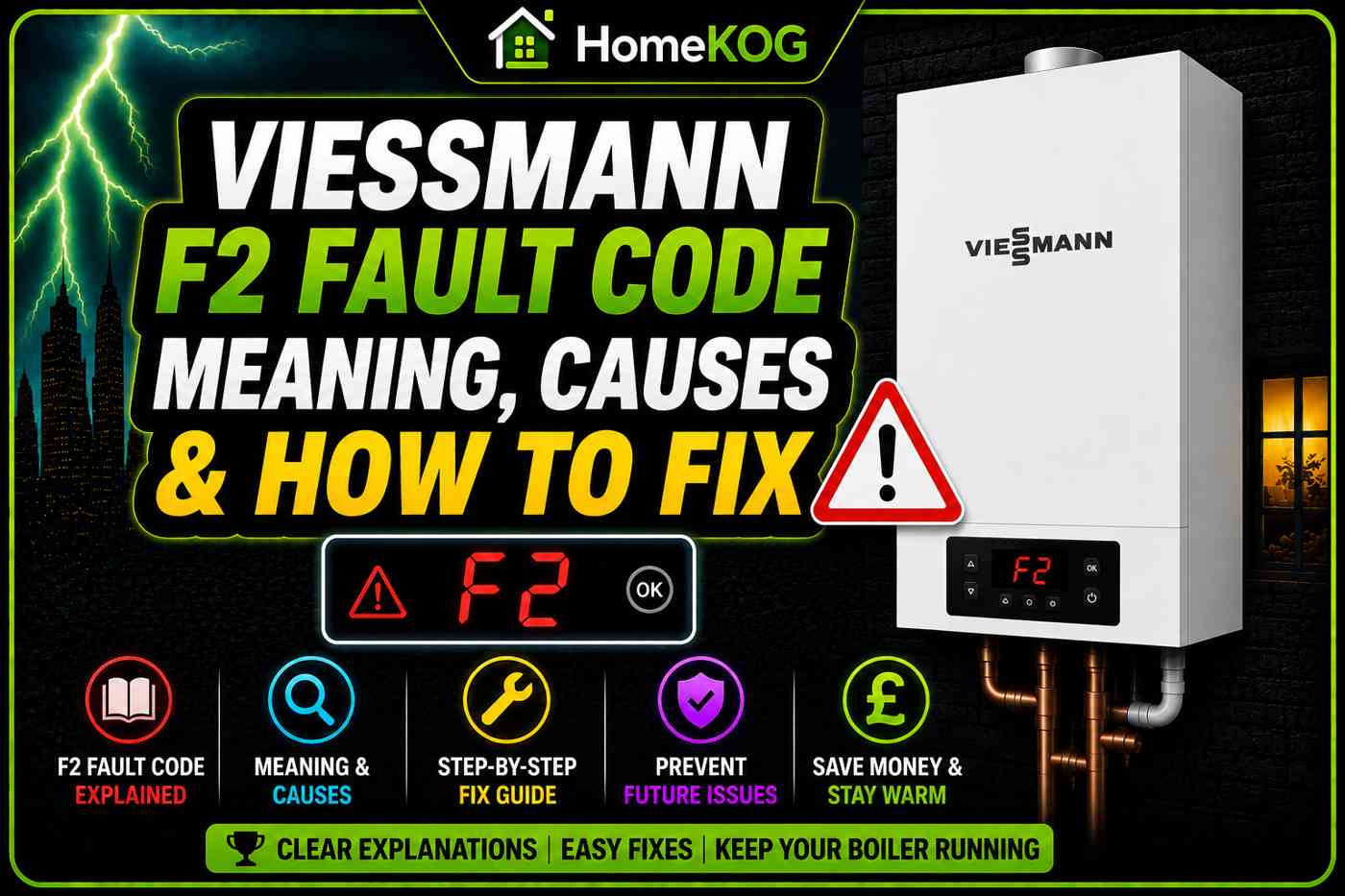
Viessmann Boiler F2 Fault Code: Meaning, Causes & How to Fix It in 2026
Quick Answer: The Viessmann F2 fault code indicates that the burner has stopped working, most commonly due to a faulty or blocked central heating pump, a frozen condensate pipe, heating sludge causing a blockage, or a pump airlock. A frozen condensate pipe can be resolved by the homeowner — all other F2 causes require a Gas Safe registered engineer. Pump replacement typically costs between £100 and £250.
The Viessmann F2 fault code is one of the more frequently seen error codes on Viessmann boilers across UK homes. Understanding what has triggered it — and whether there is anything you can safely check yourself before calling an engineer — can save both time and call-out costs. The viessmann f4 fault code specifics can often provide additional insight into the issues present with your boiler. Being aware of these specifics may help diagnose the problem more accurately, allowing for quicker repairs. It is advisable to consult the user manual or contact a specialist for the most effective troubleshooting methods. For those encountering the viessmann f5 fault code solutions, it’s essential to understand the significance of each fault and the potential implications for your heating system. Addressing these codes promptly can prevent further complications and ensure your home remains warm and comfortable. Familiarizing yourself with these solutions can empower you to troubleshoot effectively and determine whether a professional is truly necessary.
This guide covers every cause of the Viessmann F2 fault, what each repair involves, what it costs, and how to prevent it from recurring.
Get a new boiler quote online here >
Key Facts: Viessmann F2 Fault Code Relationships
- The Viessmann F2 fault code indicates a boiler lockout caused by the burner stopping, most commonly as a result of a central heating pump fault or a system blockage preventing correct water circulation.
- A central heating pump is the component responsible for circulating hot water from the Viessmann boiler through the heating system and back via the return pipe, and failure or obstruction of this pump is the primary cause of the F2 fault.
- A PCB (printed circuit board) is the control centre of the Viessmann boiler that monitors all component signals and triggers the F2 lockout when it detects the pump is not functioning or circulation has been disrupted.
- A frozen condensate pipe is the most common external cause of the F2 fault in cold weather, blocking the drainage of acidic wastewater from the condensing boiler and triggering a lockout.
- Heating sludge is a thick corrosive substance formed from rust and debris that accumulates in boiler pipework over time and can clog the pump shaft and bearings, disrupting water circulation and triggering the F2 code.
- A pump airlock occurs when trapped air prevents the pump impeller from rotating correctly, causing reduced or absent water circulation and triggering the F2 fault.
- A power flush is a high-pressure cleaning process carried out by a Gas Safe engineer using specialist chemicals to clear sludge and debris blockages from the heating system, typically costing £400 to £500.
- A magnetic filter is a device fitted to the heating system that captures metal debris and sludge particles before they can accumulate and damage the pump or other components.
- A Grundfos pump is an aftermarket central heating pump recommended by some engineers as a cost-effective and reliable alternative to a brand-specific Viessmann replacement pump.
- A flue guard is a protective fitting on the boiler flue terminal that prevents birds, leaves, and debris from entering and blocking the flue, which is one of the contributing causes of the F2 fault.
- A boiler lockout is the safety shutdown mechanism triggered by the PCB when the Viessmann boiler detects the F2 fault, preventing the boiler from operating while the underlying problem is present.
- Annual boiler servicing is the most effective preventative measure against the F2 fault and all other Viessmann fault codes, and must be carried out by a Gas Safe registered engineer.

What Does the Viessmann F2 Fault Code Mean?
The F2 fault code on a Viessmann boiler indicates that the burner has stopped working and the boiler has entered lockout. The PCB has detected that water is not circulating through the system correctly — or that a related safety condition has been triggered — and has shut the boiler down to prevent overheating or damage to internal components. Understanding the ideal f1 fault code explained is crucial for diagnosing issues related to boiler performance. This code typically signifies that a specific fault has been detected in the system, prompting a need for detailed troubleshooting. Addressing these errors promptly can help maintain the efficiency and longevity of the boiler.
If the boiler continues to fire without adequate water circulation, heat builds up rapidly in the heat exchanger, which can cause serious and expensive damage to internal components. The lockout triggered by the F2 fault is therefore a protective mechanism rather than a failure in itself.
The fault is associated most frequently with problems affecting the central heating pump, but a frozen condensate pipe, a blocked flue, or a sludge blockage in the system pipework can all produce the same code.
What Causes the Viessmann F2 Fault Code?
Frozen Condensate Pipe
In cold weather, the condensate pipe — the plastic drainage pipe that carries acidic wastewater from the boiler to an external drain — can freeze solid. When it does, wastewater backs up into the boiler and the PCB triggers a lockout, which often presents as an F2 fault code.
This is the one cause of the F2 fault that homeowners can address themselves without a Gas Safe engineer. If temperatures have dropped below freezing and the boiler has stopped working, check the condensate pipe before calling anyone out. The pipe is typically a white or grey plastic pipe visible on an outside wall, running from the boiler down to a drain.
To thaw the pipe, pour warm water — not boiling — directly over the frozen section. Repeat until you can hear or see water flowing freely again. Once clear, reset the boiler using the reset button and allow it to restart. If the boiler returns to normal operation, the frozen pipe was the cause. Insulating the external section of the pipe with waterproof lagging will prevent this from recurring in future cold spells.
Faulty or Blocked Central Heating Pump
The central heating pump circulates hot water from the boiler through the radiators and back via the return pipe. If the pump fails, is blocked, or is running at the wrong speed, water cannot circulate at the correct rate. The boiler overheats in response, and the PCB triggers the F2 lockout.
Pump failure can be caused by electrical failure, a seized impeller, incorrect installation orientation, or a wiring fault preventing power from reaching the pump. An engineer will test the pump’s electrical supply and mechanical function to determine which is the case.
If the pump is intact but running in the wrong direction due to incorrect installation, reorientation resolves the fault without requiring a replacement. If the pump has failed electrically or mechanically, replacement is typically the most cost-effective solution, as repaired pumps often develop recurring faults within a short period. A replacement pump costs between £100 and £250 depending on whether a Viessmann-branded component or an equivalent aftermarket model such as a Grundfos pump is used.
Heating Sludge Blockage
Heating sludge builds up over time as rust and debris break away from the internal surfaces of older pipework and radiators. This material circulates with the water and gradually accumulates in the boiler, with the pump being a particularly vulnerable collection point. Sufficient sludge accumulation can clog the pump shaft and bearings, preventing the impeller from spinning freely and causing a loss of water circulation that triggers the F2 fault.
If a visual inspection does not reveal an obvious blockage, a Gas Safe engineer can take a water sample from the system to test for sludge contamination. Where sludge is confirmed, a power flush is required to clear it. A power flush involves the use of specialist high-pressure equipment and cleaning chemicals to remove the contamination from across the entire heating circuit. Costs typically range between £400 and £500 for a standard system, with an additional £100 per radiator on larger installations.
Following a power flush, fitting a magnetic filter to the system prevents future sludge accumulation by capturing metal particles before they can coagulate. A magnetic filter costs less than £100 and is cleaned during the annual boiler service.
Pump Airlock
An airlock occurs when a significant volume of air becomes trapped in the pump, preventing the impeller from rotating correctly. This disrupts water circulation and can trigger the F2 fault. Airlocks are often accompanied by a knocking or banging noise from the pump area and may coincide with a drop in system pressure.
A Gas Safe engineer can release a pump airlock by venting it through the bleed screw — a process that allows the trapped air to escape and restores normal pump rotation. Once the airlock has been cleared and the water starts flowing from the bleed point, the boiler can be reset and restarted. If no other faults are present, this is one of the more straightforward and affordable F2 resolutions.
Blocked Flue
The flue is the duct through which combustion gases are expelled from the boiler. If the flue terminal becomes blocked — by debris, a bird’s nest, or ice in cold weather — the boiler cannot safely exhaust its gases and will trigger a lockout that can present as an F2 code. Checking the external flue terminal for visible obstructions is a quick preliminary check before arranging an engineer visit.
A flue guard fitted to the terminal prevents most common debris-related blockages and is a low-cost preventative measure worth discussing with the engineer at the next service.
Dirty Burner
If the boiler has not been serviced for an extended period, carbon deposits can accumulate on the burner and affect its performance. A dirty burner may cause erratic combustion that contributes to the F2 fault, particularly if other factors are also present. The engineer will clean the burner as part of the F2 investigation if contamination is found.
What Can You Fix Yourself?
The only F2 cause that most homeowners can resolve without a Gas Safe engineer is a frozen condensate pipe, using the warm water method described above. All other causes — pump faults, airlocks, sludge blockages, wiring issues, and flue blockages — require a qualified professional.
If the pressure gauge on the boiler reads below 1 bar, repressurising the system using the filling loop is also something homeowners can do safely. Low pressure on its own is unlikely to trigger the F2 fault, but restoring pressure and resetting the boiler is a straightforward check worth making before calling an engineer.
To repressurise the boiler, switch it off and allow it to cool fully. Locate the filling loop beneath the boiler and open both valves until the pressure gauge reads 1.5 bar, then close both valves. Restart the boiler and check that the pressure holds.
Viessmann F2 Fault Code Repair Costs in 2026
| Cause | Typical Repair Cost (2026) |
|---|---|
| Frozen condensate pipe | No cost — DIY fix |
| Pump airlock clearance | Call-out and labour charge |
| Pump replacement (Viessmann or equivalent) | £100–£250 plus labour |
| Gas valve replacement (if implicated) | Around £300 |
| Power flush (sludge removal) | £400–£500 plus £100 per radiator |
| Magnetic filter installation | Under £100 plus fitting |
| New Viessmann boiler installation | £1,500–£3,000 |
When to Consider Replacing the Viessmann Boiler
Viessmann boilers have an average working life of between 10 and 15 years. For boilers within this range that are regularly serviced and otherwise in good condition, repairing the F2 fault is the right course of action in most cases.
For boilers that are older, outside warranty, and have required multiple engineer call-outs in recent years, the economics shift. Repeated pump or sludge-related faults suggest that other components are also showing wear, and the cumulative cost of ongoing maintenance can approach or exceed the cost of a new installation within a relatively short period.
A new Viessmann boiler — such as the Vitodens 050-W, 100-W, or 111-W — brings improved efficiency, a full manufacturer warranty, and significantly lower risk of recurring faults. Getting a new boiler quote alongside the repair quote when the boiler is ageing and the F2 fault has appeared multiple times is a sensible approach before committing to further maintenance spend. the viessmann vitodens 222f features advanced technology that enhances energy efficiency and user control, making it a top choice for modern heating systems. Its compact design allows for easy installation in various spaces, ensuring compatibility with diverse home layouts. Additionally, with smart connectivity options, homeowners can monitor their heating systems remotely, further increasing convenience and efficiency.
Frequently Asked Questions
What does the Viessmann F2 fault code mean?
The Viessmann F2 fault code indicates that the boiler’s burner has stopped working and the unit has entered lockout. The most common cause is a problem with the central heating pump — either a failure, blockage, or airlock — preventing water from circulating correctly through the system. Other causes include a frozen condensate pipe, a sludge blockage, a dirty burner, a blocked flue, or a wiring fault. A Gas Safe registered engineer must diagnose and repair most F2 causes, with the exception of a frozen condensate pipe which can be thawed at home.
Can I fix the Viessmann F2 fault myself?
You can resolve an F2 fault caused by a frozen condensate pipe yourself by pouring warm water over the frozen section until it thaws, then resetting the boiler. You can also check and restore boiler pressure using the filling loop if the gauge has dropped below 1 bar. All other causes of the F2 fault — including pump faults, airlocks, sludge blockages, and wiring issues — require a Gas Safe registered engineer and must not be attempted as a DIY repair.
How much does it cost to fix a Viessmann F2 fault in 2026?
The cost depends on the cause. A pump replacement typically costs between £100 and £250 for the part, plus the engineer’s labour. A power flush to clear sludge costs between £400 and £500 for a standard system with additional charges per radiator. Simple fixes such as clearing a pump airlock or thawing a frozen condensate pipe cost only the engineer’s call-out and labour charge. If a gas valve replacement is also required, expect an additional cost of around £300.
What is the best way to prevent the Viessmann F2 fault?
Annual boiler servicing by a Gas Safe registered engineer is the most effective preventative measure. The engineer will clean the burner, check the pump, inspect the condensate pipe, and identify any developing issues before they trigger a fault code. Fitting a magnetic filter to the system captures metal debris before it accumulates into sludge, protecting the pump and heat exchanger. Insulating the external condensate pipe with waterproof lagging prevents freeze-related lockouts during cold weather.
Does sludge in the heating system cause the F2 fault?
Yes. Heating sludge — a thick substance formed from rust and debris in the pipework — can accumulate around the pump shaft and bearings, preventing the impeller from spinning correctly. This disrupts water circulation and triggers the F2 lockout. A power flush carried out by a Gas Safe engineer is the appropriate treatment, followed by the installation of a magnetic filter to prevent future build-up. A water sample test can confirm sludge contamination if it is not visible from a visual inspection.
Why does the Viessmann F2 fault appear in winter?
The F2 fault is more common in winter primarily because of frozen condensate pipes. When outdoor temperatures drop below zero, external sections of the condensate pipe can freeze solid, blocking wastewater drainage and causing the boiler to lock out. This is the most straightforward and inexpensive F2 cause to resolve. Insulating the external pipe before the cold season arrives prevents the fault from occurring. Winter also increases the demand placed on the pump and heating system, which can bring marginal component failures to a head sooner than they would otherwise develop.
When should I replace my Viessmann boiler instead of repairing the F2 fault?
If the boiler is more than ten years old, outside its manufacturer warranty, and has required multiple engineer call-outs in recent years, the case for replacement becomes stronger. Recurring F2 faults suggest that the pump or system is showing age-related wear that is likely to continue. A new Viessmann boiler provides improved efficiency, a full manufacturer warranty, and a significantly lower probability of recurring faults over the next decade. If the engineer identifies multiple worn components alongside the F2 fault, obtaining a new boiler quote before authorising the repair is a sensible precaution.
Conclusion
The Viessmann F2 fault code covers a range of causes from the straightforward — a frozen condensate pipe thawed in minutes at home — to the more involved, such as a failed pump or a system requiring a full power flush. Identifying which cause is responsible requires the kind of systematic diagnostic process that a Gas Safe registered engineer is trained to carry out efficiently and safely.
For most Viessmann boilers in regular use and properly maintained, the F2 fault is a manageable repair. For older boilers with a history of recurring faults, it is a useful prompt to consider whether the boiler has reached the point where continued maintenance is less cost-effective than a planned replacement.
Annual servicing, a magnetic filter, and insulated condensate pipework are the three most effective measures any Viessmann boiler owner can put in place to reduce the likelihood of the F2 fault appearing in the first place. Viessmann boiler advantages and features extend beyond just maintenance, as these systems are designed for energy efficiency and environmental sustainability. Owners can also benefit from advanced controls that optimize performance and enhance user experience. Additionally, the innovative design of Viessmann boilers ensures reliable operation with minimal noise, contributing to a more pleasant indoor atmosphere.