
Combi Boiler Flow Temperature: Best Settings & How to Lower It in 2026
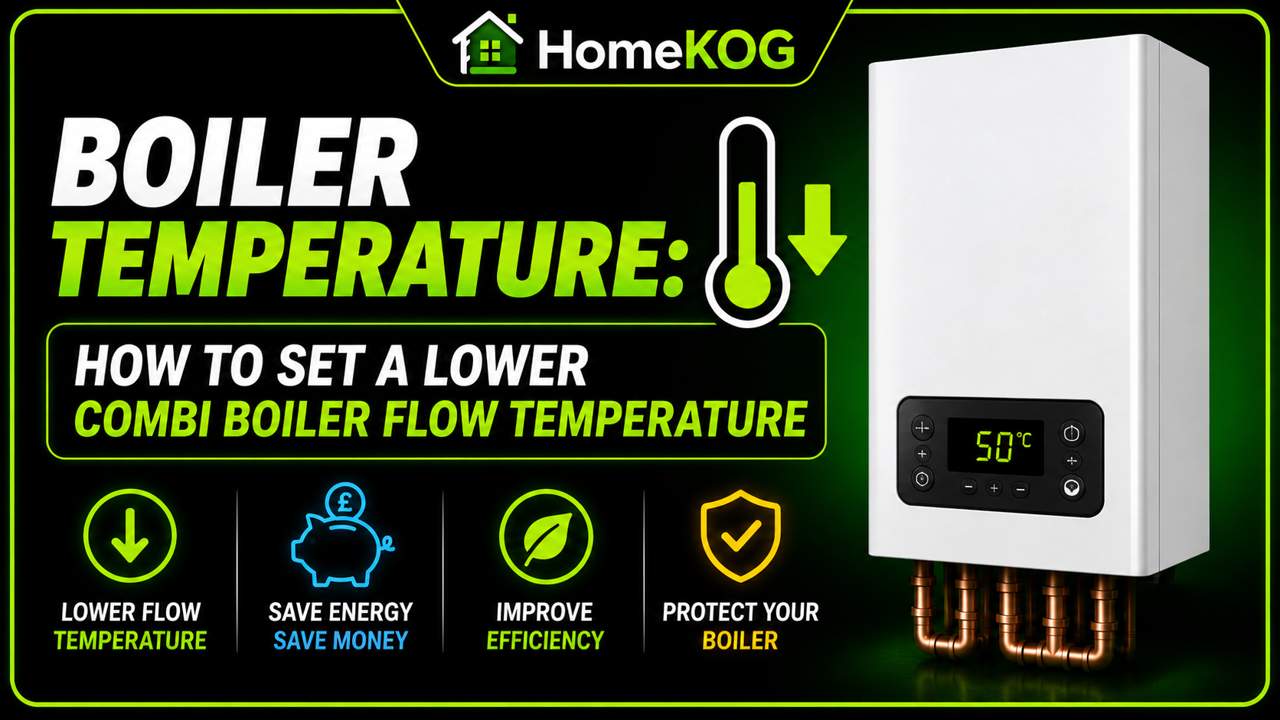
Quick Answer: The optimal flow temperature for a combi boiler is as low as your home can comfortably sustain — typically 60°C for homes built before 2010 and 50°C for newer properties. Most boilers are factory-set to run at 80°C, which prevents them from operating at full condensing efficiency. Lowering the flow temperature can reduce heating bills by 6 to 8% with no loss of comfort in most homes.
Adjusting the flow temperature on a combi boiler is one of the simplest and most effective changes a homeowner can make to reduce energy bills. It costs nothing, takes only a few minutes, and can meaningfully improve the efficiency of a boiler that is already A-rated on paper but underperforming in practice.
This guide explains what flow temperature means, what the optimal settings are for different home types, and exactly how to make the adjustment on the most common boiler control types.
Get a boiler quote online here >
Key Facts: Boiler Flow Temperature Relationships
- Boiler flow temperature is the temperature of the water as it leaves the boiler and enters the central heating circuit, before it travels to the radiators throughout the home.
- Return temperature is the temperature of the water when it comes back to the boiler after circulating through the radiators, and is typically around 20°C lower than the flow temperature.
- An 80/60 flow and return temperature is the default factory setting on most condensing combi boilers, where water leaves at 80°C and returns at 60°C.
- A condensing boiler achieves its highest efficiency when operating at lower flow temperatures, as this allows it to extract more latent heat from the flue gases before they are expelled.
- A-rated boiler efficiency of 90% or above cannot be achieved when the boiler is running at 80/60 flow and return temperatures, as the high temperatures prevent full condensing operation.
- The optimal combi boiler flow temperature is 45°C for maximum efficiency, though this is only achievable in well-insulated modern homes with large radiators.
- A flow temperature of 60°C is a practical target for homes built before 2010, while 50°C is typically achievable in homes built after 2010.
- Reducing boiler flow temperature can lower heating bills by 6 to 8% with no modification to the boiler or heating system required.
- A radiator with a larger surface area can deliver the same heat output at a lower flow temperature, which is why modern homes with large radiators are better suited to lower flow temperature settings.
- A system boiler with a hot water cylinder must maintain a minimum flow temperature of 70°C to ensure stored water reaches 60°C, preventing the growth of legionella bacteria.
- Weather compensation is a control system that automatically adjusts the boiler flow temperature in response to outdoor temperature, delivering the lowest possible flow temperature at any given time without manual intervention.
- A heat pump operates most efficiently at flow temperatures of 45°C or below, and a home that can run its heating system at this temperature may be suitable for a heat pump without significant system modifications.

What Is Boiler Flow Temperature?
Flow temperature is the temperature the water in your boiler reaches before it is sent out into the central heating circuit. As the water travels around the radiators it gives off heat to the rooms, and by the time it returns to the boiler it has cooled — typically by around 20°C. This cooler water is then reheated and the cycle continues.
Most condensing combi boilers leave the factory set to run at a flow temperature of around 80°C, which means the water returns at roughly 60°C. This 80/60 arrangement is the industry norm, but it is not the most efficient way to run a modern condensing boiler. In fact, running at these temperatures prevents the boiler from operating in full condensing mode, which is the mode in which it achieves its highest efficiency and its A-rated performance figures.
When the return temperature drops below around 55°C, the boiler enters condensing mode and begins to extract latent heat from the water vapour in its exhaust gases before they leave through the flue. This recovered heat is fed back into the system, increasing efficiency significantly. Running at 80/60 keeps the return temperature too high for this to happen consistently, meaning many boilers sold as A-rated are operating at only 75 to 85% efficiency in practice.
Can You Lower the Flow Temperature on Any Boiler?
Flow temperature adjustment applies specifically to condensing combi boilers. These boilers produce both central heating and domestic hot water from a single unit without a separate storage cylinder, and they are the most common boiler type installed in UK homes today.
If you are unsure whether your boiler is a condensing combi, there are three quick checks. If the boiler does not use a separate hot water cylinder, it is a combi. If there is a white plastic pipe running from the boiler to an indoor or outdoor drain, it is a condensing boiler. And if the boiler was installed within the last 16 years, it is almost certainly a condensing model, as non-condensing boilers were phased out of new installations by Building Regulations.
System and conventional boilers that use a hot water cylinder operate differently and cannot be lowered to the same flow temperatures as combi boilers. This is discussed separately later in this guide.
What Is the Optimal Flow Temperature Setting?
The most energy-efficient flow temperature is the lowest one your home can maintain comfortably. This depends on the insulation levels of the property, the size of the radiators, and the desired room temperature.
For maximum boiler efficiency, a flow temperature of 45°C is the theoretical ideal. At this temperature the boiler operates in deep condensing mode continuously, delivering its highest possible efficiency. However, 45°C is only achievable in well-insulated modern homes with large radiators — it is not practical for the majority of older UK properties. Homeowners may need to explore boiler finance options for homeowners to upgrade their heating systems. Investing in a new boiler can drastically improve energy efficiency, making it easier to achieve optimal flow temperatures. These financial solutions can help alleviate the burden of upfront costs, ensuring that more households can transition to modern, efficient heating solutions in line with current energy standards.
A more realistic target for most homeowners is as follows. For properties built before 2010, a flow temperature of 60°C is a good starting point. For properties built after 2010 — which tend to have better insulation and larger radiators as standard — 50°C is typically achievable without any loss of comfort.
If the home has cavity wall insulation, modern double glazing, and adequate loft insulation, lowering the flow temperature to 60°C or below is unlikely to result in the home feeling cooler. The radiators will feel less hot to the touch and may take slightly longer to warm the room, but the overall room temperature should remain comfortable at the same thermostat setting.
| Property Type | Recommended Flow Temperature |
|---|---|
| Built before 2010, standard insulation | 60°C |
| Built after 2010, good insulation | 50°C |
| Well-insulated, large radiators or underfloor heating | 45°C |
| System boiler with hot water cylinder | 70°C minimum |
How to Lower the Flow Temperature on a Combi Boiler
Flow temperature adjustment is made using the controls on the boiler itself — not the room thermostat. The room thermostat controls when the boiler fires, not how hot the water is when it does. The three most common boiler control types each require a slightly different approach.
Boilers with Dials
Most boilers have two dials on the front panel. One is marked with a tap or hot water symbol and controls the domestic hot water temperature. The other is marked with a radiator symbol and controls the central heating flow temperature. To lower the flow temperature, turn the radiator dial down to the target temperature — around 60°C for most homes.
Some Worcester Bosch boilers use a numbered scale of 1 to 6 rather than degrees Celsius. On these models, setting 3 roughly corresponds to 60°C. If your boiler uses a different numbering system, consult the manufacturer’s instruction manual to identify which number corresponds to your target temperature.
It is important to adjust only the radiator dial and not the hot water dial, as these control separate functions.
Boilers with a Digital Display and Dial
If your boiler has a digital display, you will be able to see the current flow temperature on the screen as you turn the radiator dial. This makes it straightforward to set a precise temperature rather than estimating from a numbered scale. Reduce the radiator dial until the display shows your target flow temperature, then leave the hot water setting unchanged.
Boilers with Digital Buttons Only
Newer boiler models may have a digital display with up and down arrows or plus and minus buttons rather than physical dials. Use the navigation buttons to access the heating temperature setting — distinct from the hot water setting — and reduce it to the target level. Refer to the boiler’s instruction manual if the menu structure is not immediately clear, as the layout varies between manufacturers and models.
What About System Boilers with a Hot Water Cylinder?
System and conventional boilers that use a separate hot water cylinder operate under a different set of constraints. The water stored in the cylinder must be maintained at a minimum of 60°C to eliminate the risk of legionella bacteria growth. Because some heat is lost during the transfer of hot water to the cylinder, the boiler’s flow temperature must be set to at least 70°C to ensure the stored water consistently reaches the required 60°C.
This means that system and conventional boilers cannot be run at the lower flow temperatures available to combi boilers, and as a result they cannot achieve the same condensing efficiency gains. Achieving separate temperature settings for the heating circuit and the hot water cylinder on these systems requires the input of a qualified heating engineer, who can configure the controls to manage both circuits independently.
As low-carbon heating solutions including heat pumps become more prevalent, the use of hot water cylinders will increase and the efficient management of system boiler temperatures will become more widely relevant.
Will You Need Professional Help?
Adjusting the flow temperature on a combi boiler is a task most homeowners can carry out themselves using the guidance above. The adjustment does not involve opening the boiler casing or any gas components, and there is no safety risk associated with making this change on a modern condensing combi boiler.
If the boiler’s control system is unclear, the manufacturer’s instruction manual — available online if the original has been lost — will provide model-specific guidance. Most manufacturers also operate a technical helpline that can walk homeowners through the adjustment process.
If there is any uncertainty, or if the boiler appears to have a fault that may be influencing its performance, asking a Gas Safe registered engineer to set the ideal flow temperature during the next annual service is a practical and straightforward solution.
Frequently Asked Questions
What is the best flow temperature for a combi boiler?
The best flow temperature for a combi boiler is the lowest one that keeps your home comfortably warm. For most properties built before 2010, a setting of 60°C is a practical and effective starting point. For newer, better-insulated homes, 50°C is typically achievable. The theoretical optimum is 45°C, which enables the boiler to operate in full condensing mode continuously, but this requires a well-insulated property with large radiators and is not achievable in most older homes without system modifications.
How much money will I save by lowering my boiler flow temperature?
Lowering the flow temperature of a combi boiler to the recommended level for your property type can reduce heating bills by between 6 and 8%. The saving comes from allowing the boiler to operate in condensing mode more consistently, recovering heat from the flue gases that would otherwise be wasted. The adjustment costs nothing and takes only a few minutes, making it one of the highest return-on-effort efficiency improvements available to homeowners.
Does lowering the flow temperature make the house colder?
In most cases, no. Lowering the flow temperature means the radiators will feel cooler to the touch and may take slightly longer to warm the room, but the overall room temperature achieved should remain the same at the same thermostat setting. If the house feels noticeably cooler after reducing the flow temperature, the setting should be raised slightly until comfort is restored. Homes with good insulation, cavity walls, double glazing, and adequate loft insulation are less likely to notice any difference in room temperature.
Can I adjust the flow temperature on any boiler?
Flow temperature adjustment as described in this guide applies to condensing combi boilers. If your boiler does not use a hot water cylinder, was installed in the last 16 years, and has a white plastic condensate pipe running to a drain, it is almost certainly a condensing combi and the adjustment can be made. System and conventional boilers with a hot water cylinder cannot be lowered to the same temperatures due to legionella prevention requirements, and separate adjustments for the heating and hot water circuits will require a qualified heating engineer.
What temperature should my home be set to?
The Energy Saving Trust recommends a home interior temperature of between 18 and 21°C during winter. The World Health Organisation recommends 18°C as the ideal room temperature during cold months, including overnight. Setting the room thermostat to 18°C and reducing the boiler flow temperature to the lowest comfortable level for your property is the combination most likely to deliver both comfort and energy efficiency simultaneously.
Is my home suitable for a heat pump if I can run at 45°C flow temperature?
Yes. If your central heating system can operate effectively at a flow temperature of 45°C or below, it is likely to be compatible with an air source heat pump without significant modifications. Heat pumps operate most efficiently at low flow temperatures, and homes that meet this threshold — typically those built in the last ten years, with underfloor heating, or with very good insulation — are well positioned for a heat pump installation. A heating engineer can assess your specific system and confirm whether modifications would be needed.
What is the ideal flow temperature setting for a Worcester Bosch boiler?
Worcester Bosch combi boilers that use a numbered dial rather than a degree scale typically correspond to approximately 60°C at setting 3. This is the recommended starting flow temperature for most homes built before 2010. For newer properties, setting 2 — which corresponds to approximately 50°C — may be more appropriate. Refer to your specific model’s instruction manual to confirm the temperature corresponding to each dial position, as this can vary slightly between models within the Worcester Bosch range.
Conclusion
Lowering your combi boiler flow temperature is one of the easiest, fastest, and most cost-effective ways to improve your heating system’s efficiency in 2026. A straightforward adjustment to the radiator temperature dial — taking no more than a few minutes — can reduce annual heating bills by 6 to 8% and allow the boiler to operate closer to its true condensing efficiency for the first time since installation.
For most homes, a flow temperature of 60°C is a good starting point. For newer, better-insulated properties, 50°C is achievable. If comfort is maintained at these settings, leaving them in place permanently is the simplest route to ongoing energy savings with no further action required.
If system or conventional boiler adjustments are needed, or if there is any uncertainty about the boiler’s controls or condition, a Gas Safe registered engineer can complete the adjustment as part of the annual service and confirm that the whole system is configured for maximum efficiency. Understanding the boiler flue installation requirements is essential to ensure safety and compliance with regulations. Properly installed flues are critical for the efficient operation of the boiler, helping to direct harmful gases away from the living space. It’s advisable to consult with the engineer during the service visit to address any questions about the installation and its impact on overall performance.