
Best Thermostatic Radiator Valves in 2026: Types, Benefits & Top Brands
Quick Answer: Thermostatic radiator valves (TRVs) are self-regulating valves fitted to radiators that control the temperature of individual rooms by adjusting hot water flow. They reduce gas consumption by up to 42% compared to uncontrolled systems and have been a legal requirement in all heated rooms during boiler replacements in England and Wales since June 2022. Top brands include Drayton, Honeywell, Hive, and Myson.
Keeping every room in your home at a comfortable temperature without wasting energy is one of the simplest and most cost-effective upgrades available to UK homeowners in 2026. Thermostatic radiator valves make this possible by giving each room its own independent temperature control, ensuring heat goes only where it is needed and only when it is needed.
Whether you are replacing an old boiler, upgrading your heating controls, or simply looking to reduce your energy bills, understanding how TRVs work and which models offer the best performance will help you make a well-informed decision. As you explore heating engineer responsibilities in your home, it’s essential to evaluate the installation and maintenance services they provide. A qualified heating engineer can guide you in choosing energy-efficient systems tailored to your specific needs. Investing in their expertise can lead to significant savings and a more comfortable living environment.

Key Facts: Thermostatic Radiator Valve Relationships
- A thermostatic radiator valve (TRV) is a self-regulating valve fitted to a radiator that controls the flow of hot water into that radiator based on the temperature of the surrounding room.
- A wax TRV uses a wax motor that expands and contracts in response to temperature changes, opening and closing the valve to regulate hot water flow through the radiator.
- A liquid TRV uses a clear liquid capsule that operates on the same expansion and contraction principle as a wax TRV but responds to temperature changes more quickly.
- A smart TRV is an electronically controlled thermostatic radiator valve that can be operated remotely via a smartphone app, voice control, or automated schedule, and works most effectively alongside a smart thermostat.
- A room thermostat is a heating control device that measures the temperature of a room and signals the boiler to switch on or off, and should not be installed in the same room as a TRV as the two controls will interfere with each other.
- Building Regulations in England and Wales have required TRVs to be fitted in all heated rooms during boiler replacements since June 2022, making them a legal requirement rather than a recommended practice.
- A central heating inhibitor is a chemical added to the heating system that protects components including TRV valves from corrosion and sludge damage.
- A Hive Smart Radiator valve is a smart TRV designed to work with the Hive Smart Thermostat system, enabling app-based and voice-controlled temperature management for individual rooms.
- The Drayton TRV4 is a widely specified thermostatic radiator valve with a liquid sensor, bi-directional flow capability, and a sensitivity of 0.22mm per degree Celsius.
- The Honeywell VT200E is a classic TRV with bi-directional flow, an adjustable tailpiece, and push-fit fitting designed to minimise pipework alterations during installation.
- The Myson TRV 2-Way is a bi-directional thermostatic radiator valve with positive shut-off technology that prevents water leakage when a radiator is removed.
- A sticking valve is the most common TRV fault and typically occurs when the valve is reopened after a period of inactivity, such as at the start of the heating season.
What Is a Thermostatic Radiator Valve?
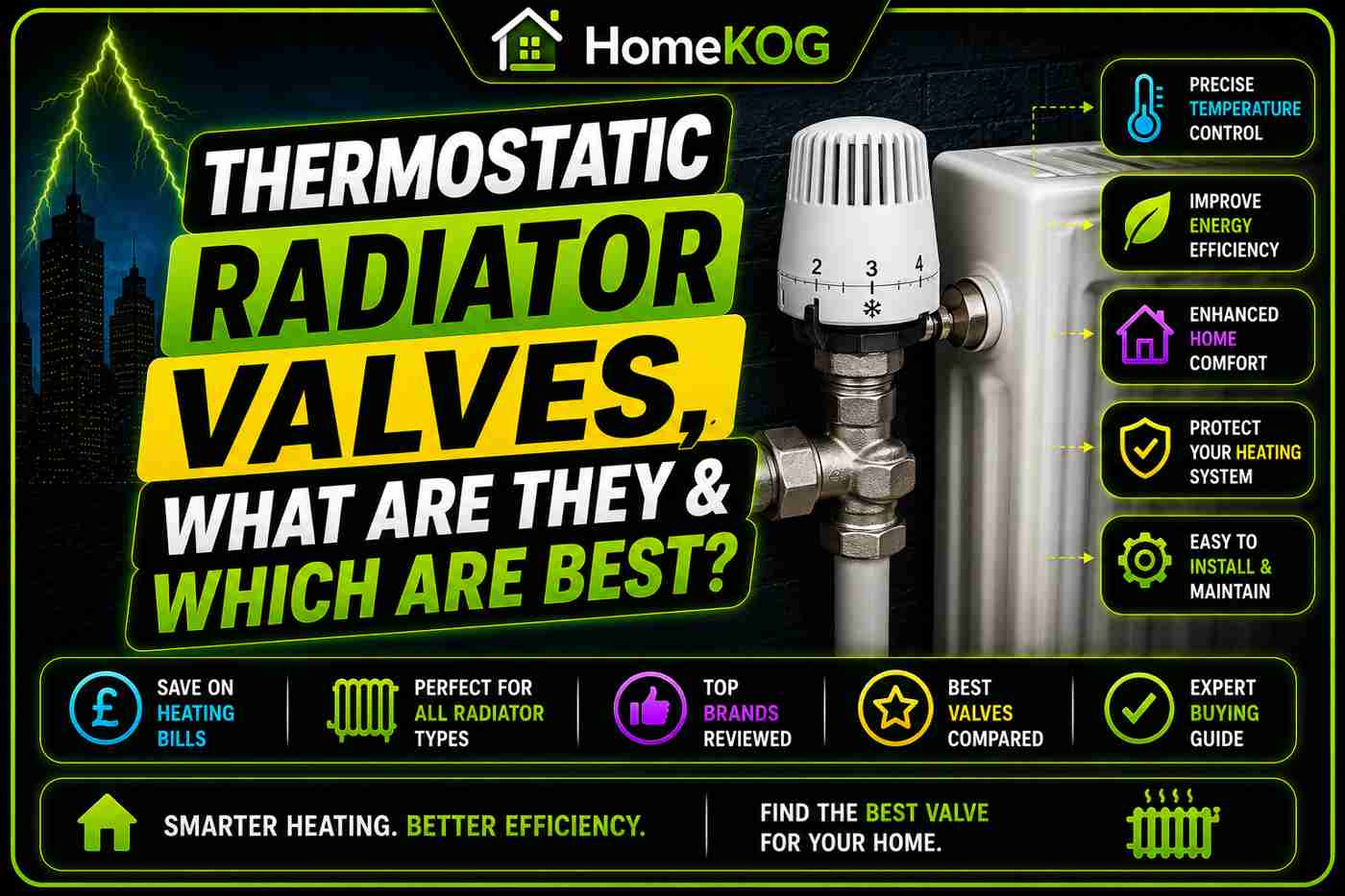
A thermostatic radiator valve is a valve fitted directly to the side of a radiator that automatically regulates how much hot water flows into that radiator based on the temperature of the room around it. As the room warms up, the valve head expands and begins to restrict the flow of hot water into the radiator. As the room cools down, the valve head contracts and allows more hot water through.
This self-regulating process happens continuously without any manual intervention, making TRVs one of the most hands-off and energy-efficient heating controls available for a domestic central heating system.
Research from Salford University found that a heating system fitted with TRVs consumes around 42% less gas than one without them. For UK homeowners dealing with elevated energy bills in 2026, that is a compelling case for fitting or upgrading TRVs across the home.
Types of Heating Controls
TRVs are one component within a broader set of heating controls available for central heating systems. Understanding how they sit alongside other controls helps clarify what each device does and where a TRV adds the most value.
A manual room thermostat is the most basic control — typically located in the hallway — that tells the boiler when to switch on and off based on a temperature the homeowner sets manually. A programmable room thermostat adds a built-in timer, allowing the heating to switch on and off automatically at different times of the day.
Smart thermostats go further still, connecting to the internet and allowing homeowners to adjust and schedule the heating system remotely via a smartphone app. TRVs complement all of these controls by adding room-level temperature management on top of the system-wide control that thermostats provide.
How Thermostatic Radiator Valves Work
Inside a TRV, a plug and valve respond to the ambient temperature of the room by physically expanding or contracting. The valve head sits on top of the body and regulates a pin within the valve body, which controls whether hot water flows through the radiator or is restricted.
When the room is warm enough, the expanding valve head pushes down on the pin and closes off the flow of hot water into the radiator. When the room cools below the set level, the contracting valve head lifts the pin and allows hot water to flow again. This cycle repeats automatically throughout the day.
Wax TRV vs Liquid TRV
TRVs are manufactured using one of two internal designs, each with its own characteristics worth understanding before purchasing.
A wax TRV contains a wax plug that forms a motor, expanding in volume when exposed to heat and contracting when the temperature drops. Wax models are the traditional choice, widely used across the industry and available in a wide range of designs and finishes. They offer a superior surface area to volume ratio and are non-flammable, making them a practical and safe choice for domestic installation. Many experienced heating engineers continue to prefer wax TRVs for their flexibility and broad compatibility.
A liquid TRV uses a sealed capsule of clear liquid that operates on the same expansion and contraction principle. The key difference is response time — liquid TRVs react more quickly to temperature changes, adjusting the water flow sooner than a wax model would. This faster response can improve comfort and efficiency, particularly in rooms where the temperature fluctuates quickly. The trade-off is cost, as liquid TRVs are generally more expensive than equivalent wax models.
TRV Settings Explained
Standard thermostatic radiator valves use a numbered dial rather than a direct temperature readout, which can cause some initial confusion. The numbers 1 to 5 correspond to approximate temperature thresholds at which the valve will begin to open.
| Setting | Approximate Temperature |
|---|---|
| 1 | 10–15°C (frost protection) |
| 2 | 15–17°C |
| 3 | 18–20°C |
| 4 | 21–22°C |
| 5 / Max | Valve fully open at all times |
The exact temperatures these settings correspond to vary slightly between manufacturers, so some trial and adjustment is normal when first setting up a new TRV. Setting 3 is a comfortable starting point for most living spaces. Bedrooms are typically set lower — between 1 and 2 — since a cooler sleeping environment is both more comfortable and more energy efficient.
The maximum setting should be used sparingly. Leaving the valve permanently open removes the self-regulating benefit of the TRV and means the radiator will run at full output regardless of room temperature.
Using TRVs with a Room Thermostat
TRVs and room thermostats work well together when used correctly, but there is one important rule to follow: do not install a TRV in the same room as the main room thermostat.
The reason is that the two controls will interfere with each other. If the TRV is set to a lower temperature than the thermostat, it will shut off the radiator in that room while the boiler continues to run trying to satisfy the thermostat’s demand. If both are set to the same temperature, they will compete for control and may cause the heating system to cycle erratically.
The room containing the main thermostat should have a lockshield valve on its radiator — a fixed valve that allows the engineer to balance the system — rather than a TRV. Every other heated room in the property can and should have a TRV fitted.
Smart TRVs: The Next Step in Room Control
Smart TRVs bring electronic control and remote access to the individual radiator level. Rather than using a numbered dial, smart TRVs connect to a hub or app and allow the homeowner to set precise temperature targets for each room, create schedules that change throughout the day, and make adjustments from anywhere via a smartphone or voice assistant.
The Hive Smart Radiator valve is one of the most capable options currently available and works most effectively when paired with the Hive Smart Thermostat. Through the Hive app, users can schedule heating by room, adjust temperatures on demand, and automate responses to changes in occupancy or time of day.
The main drawback of smart TRVs is their reliance on batteries. Most units are battery-powered rather than wired, and if the battery depletes without being replaced, the valve reverts to basic manual operation. Checking and replacing batteries periodically is a small but necessary maintenance task.
For homeowners who want to maximise the efficiency of a new energy-efficient boiler without the cost and disruption of a second boiler installation, smart TRVs combined with a smart thermostat can provide sophisticated zone-by-zone control at a fraction of the price.
Benefits and Drawbacks of Thermostatic Radiator Valves
Benefits
The energy efficiency case for TRVs is well established. By preventing rooms from being heated beyond their set temperature, they eliminate the energy waste that comes from a system heating every radiator to the same level regardless of how warm individual rooms already are.
TRVs also protect against two common property problems. In rooms that are rarely used, maintaining a low frost-protection setting prevents the temperature from dropping to a level where pipes could freeze or where condensation could encourage mould growth on walls and ceilings.
Room-by-room control also improves comfort throughout the home. Living spaces, bathrooms, bedrooms, and home offices all have different ideal temperatures at different times of day, and TRVs allow each room to be managed independently to suit how it is used.
Drawbacks
Standard TRVs use numbered settings rather than precise temperature readouts, which can require some initial experimentation to find the right level for each room. This is a minor inconvenience that most homeowners resolve within the first heating season.
Older TRVs can become unreliable over time. The internal components may degrade and the valve may lose its ability to accurately sense the room temperature, causing it to allow either too much or too little hot water into the radiator. Periodically checking that each TRV is responding correctly — particularly at the start of each heating season — keeps the system performing as intended.
Sticking valves are the most frequent TRV fault and most commonly occur when the valve is opened for the first time after a long period of inactivity. A small amount of lubricant such as WD-40 applied to the valve pin is usually sufficient to free a stuck valve without the need for a replacement.
The Best Thermostatic Radiator Valves to Buy in 2026
Drayton TRV4 — Best Overall
The Drayton TRV4 is one of the most widely specified TRVs in the UK and a consistent recommendation from heating engineers and plumbers. It uses a liquid sensor for accurate and responsive temperature detection, with a sensitivity of 0.22mm per degree Celsius and a response time of around 20 minutes.
The TRV4 is available in White, Classic, Chrome, and Anthracite finishes, giving it broad design compatibility across different interior styles. It has a 15mm straight angle for universal fit to the standard UK valve size and offers bi-directional flow, meaning it can be fitted on either the flow or return pipe without affecting performance. The setting range runs from 10 to 30°C across the standard 1 to 5 dial positions.
Honeywell VT200E — Best for Easy Installation
The Honeywell VT200E is a dependable and well-regarded classic TRV that prioritises straightforward installation and reliable long-term performance. Its adjustable tailpiece minimises the need for alterations to existing pipework during fitting, and push-fit connections make installation quicker and less disruptive.
The VT200E is suitable for 10mm connection sizes and features a bi-directional flow design, allowing it to be fitted either vertically or horizontally to achieve the best position for accurate temperature sensing. It includes frost protection to prevent the system from dropping to a damaging temperature when the property is unoccupied, and a decorator’s cap protects the valve head from paint splashes during redecoration — a practical detail that is easy to overlook.
Hive Smart Radiator Valve — Best Smart TRV
For homeowners who want room-by-room smart control, the Hive Smart Radiator valve is the standout choice, particularly for those already using the Hive ecosystem. Connected via the Hive Hub or Hub 360, it allows precise temperature scheduling and remote adjustment through the Hive app, with voice control support through compatible smart home devices.
The valve runs on alkaline batteries and requires an internet connection of at least 1.5Mbps to function as a smart device. It is not compatible with the original Hive Hub 1. When used alongside the Hive Smart Thermostat, it creates a fully integrated zone-control system that can deliver meaningful energy savings compared to a standard TRV setup.
Myson TRV 2-Way — Best for Versatility
The Myson TRV 2-Way is designed for maximum compatibility across central heating systems. Its patented bi-directional engineering ensures consistent performance regardless of which direction the water flows through the valve — a useful feature in older or more complex heating installations where flow direction may not be immediately obvious.
Available in 8mm, 10mm, and 15mm sizes, the Myson TRV covers a wide range of pipework configurations. Its positive shut-off technology is a standout feature, preventing water from leaking when a radiator is removed from the system — valuable during redecoration or radiator upgrades. It is A-graded for reliability and is compatible with all radiator types including towel warmers.
TRV Comparison at a Glance
| Model | Type | Flow Direction | Sizes Available | Best For |
|---|---|---|---|---|
| Drayton TRV4 | Liquid sensor | Bi-directional | 15mm | Best overall, wide design choice |
| Honeywell VT200E | Classic | Bi-directional | 10mm | Easy installation, retrofit |
| Hive Smart Radiator | Smart / electronic | Standard | Standard | Smart home integration |
| Myson TRV 2-Way | Classic | Bi-directional | 8mm, 10mm, 15mm | Versatility, leak protection |
Frequently Asked Questions
What does a thermostatic radiator valve do?
A thermostatic radiator valve controls the flow of hot water into an individual radiator based on the temperature of the room it is heating. As the room reaches the temperature set on the valve dial, the valve head expands and restricts the hot water flow, preventing the radiator from overheating the space. When the room cools below the set level, the valve opens again to allow more hot water through. This self-regulating process runs automatically without any manual input and reduces energy waste by ensuring each room is heated only to the level required. in addition to optimizing radiator performance, the heat exchanger functions in boilers plays a crucial role in maintaining overall system efficiency. By transferring heat from combusted fuel to water, the heat exchanger maximizes energy usage and minimizes losses, contributing to lower utility bills. This efficient transfer of heat ensures that the water is heated to the required temperature before circulating through the heating system, enhancing comfort throughout the space.
Are thermostatic radiator valves a legal requirement in the UK?
Yes, since June 2022, Building Regulations in England and Wales have required thermostatic radiator valves to be fitted in all heated rooms whenever a boiler is replaced. Previously, fitting TRVs was considered good practice but was not legally mandated. The regulation applies to boiler replacement installations and is designed to improve energy efficiency across the UK housing stock. Any Gas Safe registered engineer carrying out a boiler replacement will ensure TRVs are installed to meet this requirement.
What is the difference between a wax TRV and a liquid TRV?
Both types regulate hot water flow using the same principle of thermal expansion and contraction, but they differ in the material used and their response speed. A wax TRV uses a wax plug that expands when heated and contracts when cooled, and is the traditional choice — widely available, non-flammable, and compatible with a broad range of radiator designs. A liquid TRV uses a sealed capsule of liquid that responds to temperature changes more quickly than wax, providing faster adjustment of the water flow. Liquid TRVs tend to cost more than equivalent wax models.
Should I fit a TRV in every room?
TRVs should be fitted to radiators in every heated room with one important exception: the room containing the main room thermostat should have a lockshield valve rather than a TRV. Installing a TRV and a room thermostat in the same room causes the two controls to interfere with each other, leading to erratic boiler behaviour and reduced efficiency. In every other room, a TRV allows independent temperature control and prevents energy from being wasted heating spaces beyond their required temperature.
What setting should I use on my thermostatic radiator valve?
The right setting depends on how the room is used and who occupies it. For living rooms and kitchens, setting 3 — which corresponds to approximately 18 to 20°C — is a comfortable starting point for most households. Bedrooms are typically more comfortable at a lower temperature, making setting 2 — around 15 to 17°C — more appropriate. Rooms that are rarely used can be set to 1 for frost protection only. The maximum setting should be avoided as a permanent position, as it removes the self-regulating function of the valve entirely.
What is a smart TRV and is it worth upgrading to one?
A smart TRV is an electronically controlled thermostatic radiator valve that connects to a hub or app, allowing the homeowner to set precise temperatures, create time-based schedules, and adjust individual radiators remotely from a smartphone or via voice control. For homeowners who want granular, room-by-room control over their heating without the cost and complexity of a second boiler, smart TRVs offer a compelling upgrade. The main ongoing consideration is battery replacement, as most smart TRV units are battery-powered rather than wired.
What is the most common problem with thermostatic radiator valves?
The most common TRV fault is a sticking valve, which typically occurs when the valve is reopened after a period of inactivity — most often at the beginning of the heating season. A stuck TRV pin prevents the valve from opening fully, meaning the radiator receives little or no hot water and fails to heat up. In most cases, applying a small amount of lubricant such as WD-40 to the valve pin and working it back and forth manually will free the mechanism. If the valve continues to stick or fails to regulate temperature accurately, replacing the TRV head is usually straightforward and inexpensive.
Do thermostatic radiator valves work with any boiler?
Yes. Thermostatic radiator valves are compatible with any central heating system connected to a gas, oil, or LPG boiler. They are fitted directly to the radiator pipework and regulate water flow regardless of the boiler type or brand. When replacing an older TRV, the new valve must match the pipework connection size — typically 15mm in most UK homes — and the flow direction of the existing installation. Bi-directional models such as the Drayton TRV4 and Myson TRV 2-Way can be fitted in either flow direction, simplifying replacement in installations where the pipe orientation is unclear.
Conclusion
Thermostatic radiator valves are one of the most effective and cost-efficient heating upgrades available to UK homeowners in 2026. The combination of legal requirements, proven energy savings, and the growing availability of smart options makes TRVs an essential part of any well-managed central heating system.
The Drayton TRV4 stands out as the best all-round choice for most homes, combining liquid sensor accuracy with wide design availability and a universal fit. For smart home integration, the Hive Smart Radiator valve is the clear leader, particularly for existing Hive users. The Myson TRV 2-Way offers the greatest versatility for complex or older heating installations, while the Honeywell VT200E is the most installer-friendly option for straightforward retrofit projects.
Whichever model you choose, fitting TRVs correctly — with a lockshield valve in the thermostat room and TRVs on every other radiator — will help your boiler work more efficiently, reduce your energy consumption, and keep every room in your home at exactly the temperature you want it.