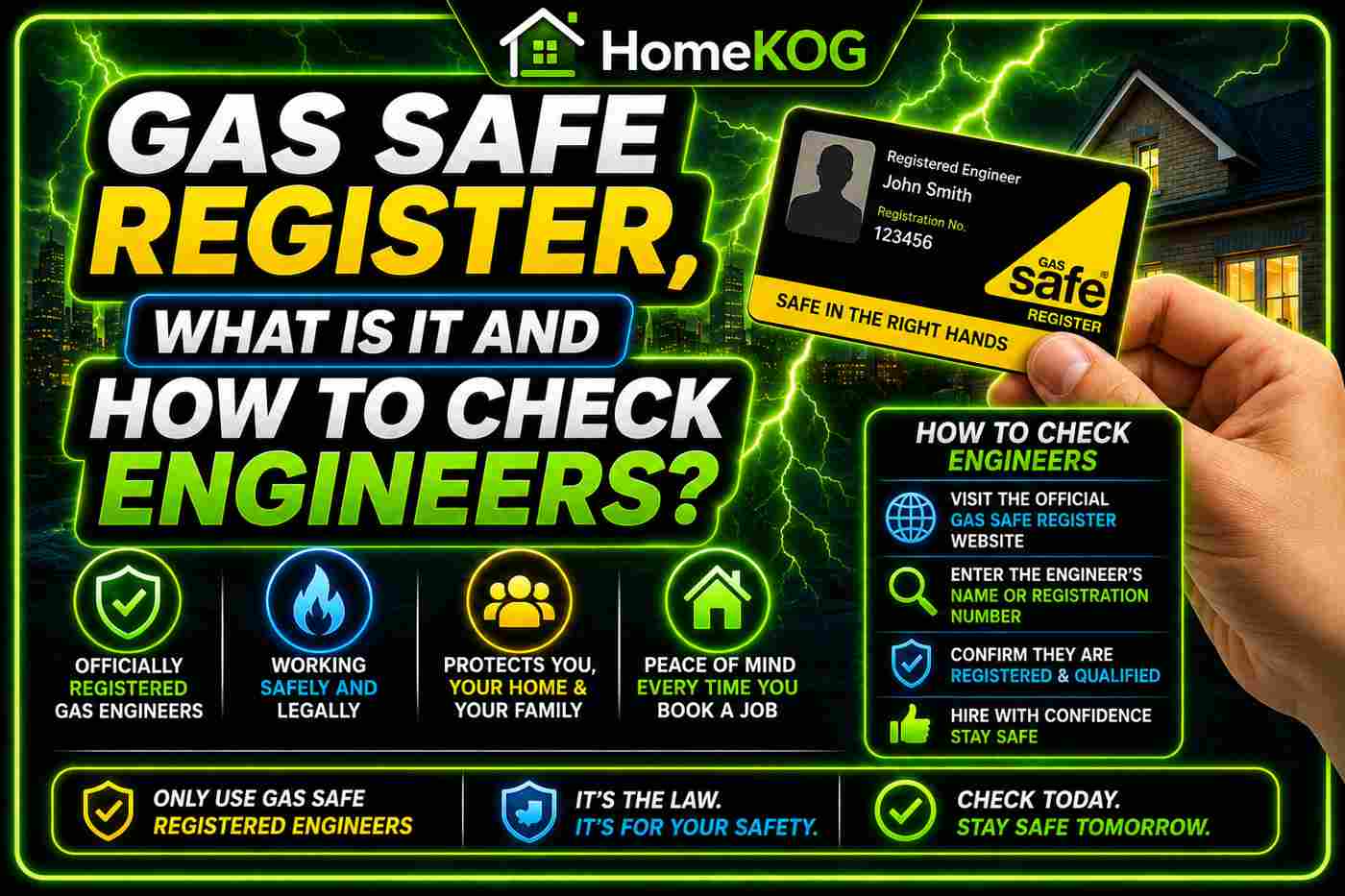

Gas Safe Register: What It Is & How to Check Engineers
Quick Answer: The Gas Safe Register is the official UK register of engineers and businesses legally permitted to work on gas appliances. It replaced CORGI in 2009 and is backed by the Health and Safety Executive. Before allowing any gas work in your home, always ask to see the engineer’s Gas Safe ID card and verify their registration number on the Gas Safe Register website.
Most homeowners arrange a boiler service or gas appliance repair without giving much thought to whether the engineer carrying out the work is legally qualified to do so. That oversight carries real risk. Unregistered gas work is not only illegal — it is directly responsible for fires, carbon monoxide incidents, and dangerous appliances across more than a million UK homes every year. Understanding what the Gas Safe Register is and how to use it takes minutes and could prevent something far more serious. boiler maintenance requirements for homeowners are essential for ensuring safety and efficiency. Homeowners should familiarize themselves with these requirements to avoid potential hazards. Regular checks and servicing can prolong the life of the boiler and protect against costly repairs down the line.
Gas Safe Register: Key Entity Relationships
- The Gas Safe Register is the official UK statutory register of individuals and businesses legally authorised to install, repair, and service gas appliances, established in 2009 as the replacement for CORGI under regulation by the Health and Safety Executive.
- CORGI — the Council for Registered Gas Installers — was the UK’s gas registration body prior to 2009, when it was superseded by the Gas Safe Register as the legally recognised authority for gas safety regulation in Great Britain.
- The Health and Safety Executive is the UK government body responsible for enforcing gas safety legislation, receiving reports of illegal or substandard gas work from the Gas Safe Register, and taking legal action against unregistered practitioners.
- A Gas Safe registered engineer holds a unique seven-digit licence number printed on an annually renewed ID card that specifies the types of gas work they are authorised to perform, including distinctions between natural gas, LPG, and domestic or commercial applications.
- Carbon monoxide is a colourless, odourless toxic gas produced by faulty or incorrectly installed gas appliances that displaces oxygen in the bloodstream and can cause headaches, unconsciousness, brain damage, or death depending on the level and duration of exposure.
- A CP12 certificate — also known as a Gas Safety Record — is the official document produced by a Gas Safe registered engineer following an annual inspection of gas appliances, required by law for all landlords and commercial property owners in the UK.
- A landlord is legally obligated under the Gas Safety Regulations to arrange an annual gas safety check by a Gas Safe registered engineer and to provide tenants with a copy of the resulting CP12 certificate within 28 days of the inspection.
- The Gas Safe Register website provides a publicly accessible checking tool that allows homeowners, tenants, and landlords to verify the registration status and authorised work types of any engineer or business by entering their licence or company number.
- Gas Safety Week is an annual public awareness campaign run by the Gas Safe Register to educate UK homeowners about the dangers of unregistered gas work and the importance of checking engineer credentials before allowing any gas appliance work.
- An immediately dangerous gas appliance is one assessed by a Gas Safe registered engineer as posing an active safety risk, resulting in disconnection of the appliance until it has been made safe — a status that applies to approximately one in five gas appliances inspected following unregistered work.
- A condemned boiler is a gas heating appliance assessed by a Gas Safe registered engineer as unsafe for continued operation, requiring either repair by a qualified engineer or full replacement before the property’s heating system can be brought back into service.
- Unlicensed gas work costs the British public millions of pounds annually in remedial repairs and carries penalties for the engineer or company responsible that include fines of up to £6,000 per appliance, prosecution, and potential imprisonment.

What Is the Gas Safe Register?
The Gas Safe Register is the official list of every engineer and business in the UK that is legally permitted to work on gas appliances. It is a statutory register — which means it is not a trade association or voluntary accreditation scheme, but a legal requirement established and overseen by the Health and Safety Executive.
Before 2009, the equivalent body was CORGI — the Council for Registered Gas Installers. When CORGI was succeeded by the Gas Safe Register, the fundamental principle remained the same: no engineer may install, repair, or service a gas appliance in a domestic or commercial property in the UK without first completing the required training and examinations and being added to the register.
The comparison to a driving licence is a useful one. Just as a person must pass a test and hold a valid licence before they are legally permitted to drive, an engineer must demonstrate competency, pass relevant assessments, and maintain their registration annually before they are legally permitted to work on gas. Allowing an unregistered person to carry out gas work in your home carries the same category of risk as allowing an unlicensed driver to take your car — and the legal consequences for the person doing the work are equally serious.
What Does the Gas Safe Register Do?
The Gas Safe Register performs two principal functions. The first is maintaining and enforcing the register itself — ensuring that only trained and qualified engineers are listed, that registrations are reviewed annually, and that engineers are only authorised for the specific types of gas work they have been assessed to carry out.
The second is consumer protection. The Register receives and investigates reports of illegal or substandard gas work, passing cases to the Health and Safety Executive for formal action. Engineers and businesses found to have carried out illegal gas work face significant fines, prosecution, and in serious cases, imprisonment. The Register also runs Gas Safety Week each year, an annual campaign specifically designed to raise public awareness of the risks of unregistered gas work and the practical steps homeowners can take to protect themselves.
The scale of the problem Gas Safe Register exists to address is significant. The most recent research from the organisation indicates that more than a million UK homeowners are put at risk every year by unlicensed gas work. Approximately one in five gas appliances inspected following unregistered work is found to be immediately dangerous and must be disconnected before it can be safely used again.
How to Check if an Engineer Is Gas Safe Registered
Verifying that an engineer is Gas Safe registered before allowing them to work on any gas appliance is straightforward and takes only a few minutes. There are several ways to do it.
The most reliable method is the checking tool available on the Gas Safe Register website. Entering the engineer’s seven-digit licence number or the company’s registration number returns their current registration status and confirms which types of gas work they are authorised to perform. This is worth doing before the engineer arrives, particularly when booking work through a company you have not used before.
When the engineer arrives at your property, ask to see their Gas Safe ID card before any work begins. Every registered engineer carries an annually renewed card that displays their photograph, full name, the company they work for, their seven-digit licence number, the start and end dates of their current registration, and security holograms. If an engineer is unwilling to show their card or cannot produce one, do not allow the work to proceed.
It is important to note that Gas Safe registration is not universal across all gas appliance types. An engineer registered for natural gas domestic work is not necessarily authorised to work on LPG systems, and an engineer licensed for residential properties may not hold authorisation for commercial premises. The ID card and the online register both specify the categories of work each engineer is permitted to carry out — it is worth checking that the authorisation covers the specific work you need done.
If you encounter an engineer or company whose credentials appear suspicious or who is carrying out gas work without registration, you can report them directly to the Gas Safe Register. This protects other homeowners and ensures the HSE can take appropriate action.
Why Gas Safety Matters
The consequences of poorly installed or inadequately maintained gas appliances range from inefficiency and appliance damage at the lower end through to fires, explosions, and carbon monoxide poisoning at the most serious. Understanding each of these risks explains why the regulatory framework exists and why working only with Gas Safe registered engineers is not merely a legal obligation but a direct matter of household safety. It is crucial to ensure that any malfunctions are addressed promptly, as issues like the viessmann f5 fault code solutions can lead to significant safety hazards if left unresolved. Homeowners should familiarize themselves with the common fault codes and seek professional help when necessary. Regular maintenance checks can mitigate these risks and ensure that gas appliances operate efficiently and safely.
Gas Leaks and Fire Risk
A gas appliance that is damaged, incorrectly installed, or inadequately maintained can develop leaks in the gas supply pipework or at connections within the appliance itself. Gas leaks create a risk of fire or explosion if the accumulated gas comes into contact with a spark or naked flame. Natural gas contains an added odorant specifically to make leaks detectable by smell — if you detect the distinctive sulphurous odour of gas in your home, the correct response is to avoid operating any electrical switches, leave the property, and call the National Gas Emergency Service.
Poorly maintained or incorrectly installed gas valves and other internal appliance components can also develop faults that create safety risks without producing a detectable smell. Annual servicing by a Gas Safe registered engineer is the most effective way to identify these issues before they develop into emergencies. Additionally, knowing the viessmann f4 fault code troubleshooting steps can empower homeowners to address minor issues promptly. Understanding these codes can help in identifying problems early, potentially preventing costly repairs and ensuring safety. Regular checks and familiarity with troubleshooting methods contribute significantly to the longevity and efficiency of your heating system.
Carbon Monoxide Poisoning
Carbon monoxide is produced when gas does not combust completely — a situation that arises from inadequate ventilation, a blocked flue, or an appliance that is poorly maintained or incorrectly installed. Unlike the odorant added to natural gas, carbon monoxide is completely odourless and colourless, making it undetectable without a dedicated CO alarm.
Even low-level exposure to carbon monoxide causes symptoms including headaches, nausea, and dizziness that are easily mistaken for other conditions. Sustained or higher-level exposure leads to unconsciousness, brain damage, and death. Fitting a carbon monoxide alarm in every room containing a gas appliance and having all gas appliances serviced annually by a Gas Safe registered engineer are the two most important practical steps any homeowner can take to guard against this risk.
Gas Safety Checks: What Is Inspected
When a Gas Safe registered engineer carries out a gas safety inspection, they follow a structured process that covers all safety-critical aspects of each appliance. The key elements assessed during a standard gas safety check include confirmation that each appliance is operating at the correct pressure and using the correct fuel-burning technique, verification that waste gases — including combustion products — are safely exiting the property through the flue, confirmation that the area around each appliance has adequate ventilation, and a full test of every built-in safety device.
Any appliance found to be immediately dangerous is disconnected at the time of the inspection and must not be used until a qualified engineer has made it safe. Appliances assessed as presenting an at-risk condition are clearly identified in the engineer’s report with guidance on the action required.
A comprehensive annual service goes beyond the safety inspection to include dismantling and cleaning internal components, assessing wear on parts that may need replacement, and evaluating the overall performance of the appliance against its operational specification.
Gas Safety Certificates and CP12 Records
A Gas Safety Certificate — formally known as a CP12 Gas Safety Record — is the official documentation produced by a Gas Safe registered engineer following a completed gas safety inspection. It records the details of every appliance tested, the findings of the safety checks, any identified issues and the action taken or required, and the engineer’s details, signature, and inspection date. gas safety certificate requirements explained are crucial for ensuring the safety and efficiency of gas appliances in your home or business. Understanding these requirements helps you maintain compliance with legal standards and protect the well-being of occupants. Regular inspections and timely issuance of certificates can prevent potential hazards associated with gas installations.
Who Needs a CP12 Certificate?
Landlords and commercial property owners are legally required to have all gas appliances they supply inspected annually by a Gas Safe registered engineer and to hold a current CP12 certificate for each property. The certificate must be provided to tenants within 28 days of the inspection, and new tenants must receive a copy before they move in. Copies must be retained for a minimum period as specified in HSE guidance for landlords and letting agents.
This legal obligation applies to all rental arrangements in which payment of any kind is received, including long-term residential lets, holiday rentals, student accommodation, caravans, and situations where accommodation is provided as part of an employment package.
The penalty for failing to obtain a gas safety check as a landlord is substantial. Fines of up to £6,000 per appliance can be imposed and are not subject to a cap, meaning a landlord with multiple non-compliant appliances faces correspondingly higher financial exposure. Prosecution and imprisonment are also possible outcomes in serious cases.
Homeowners who occupy their own property are not legally required to hold a CP12 certificate, but they can request a gas safety inspection at any time. Annual servicing by a Gas Safe registered engineer is strongly recommended regardless of legal obligation — the safety benefits are identical whether the property is owner-occupied or rented.
Gas Safety Certificates When Buying or Selling a Property
A Gas Safety Certificate is not a legal requirement when selling a residential property in England, Scotland, or Wales. This means that as a buyer, you may move into a property with no documented evidence of when the gas appliances were last professionally inspected.
Requesting a copy of the most recent CP12 certificate from the seller as part of the conveyancing process is a sensible step. If the seller cannot provide one, arranging for a Gas Safe registered engineer to carry out a full inspection before or shortly after moving in is strongly advisable — particularly in older properties or those where the appliances appear to be of some age. Once you are in the property, arranging annual gas appliance servicing from that point forward is the appropriate ongoing approach.
Gas Safety Certificate Costs
The cost of a gas safety certificate inspection varies according to the engineer, geographic location, and the number of appliances that need to be assessed. As a general guide, prices begin at around £30 for a basic inspection and can reach £150 or more for larger properties with multiple gas appliances. Obtaining two or three quotes from Gas Safe registered engineers before booking is a practical approach to ensuring fair pricing.
FAQ: Gas Safe Register
What is the Gas Safe Register and who runs it?
The Gas Safe Register is the official UK register of businesses and individuals legally authorised to work on gas appliances, overseen by the Health and Safety Executive. It replaced CORGI in 2009 as the statutory body responsible for gas safety regulation in Great Britain. Its primary purpose is to protect homeowners, tenants, and commercial property occupants from the risks of illegal or substandard gas work by ensuring only trained and assessed engineers are permitted to carry out gas-related installations, repairs, and servicing.
How do I check if an engineer is Gas Safe registered?
The most straightforward method is the verification tool on the Gas Safe Register website, where you can enter an engineer’s seven-digit licence number or a company’s registration number to confirm their current status and authorised work types. When the engineer arrives, ask to see their Gas Safe ID card, which displays their photograph, licence number, registration dates, the company they work for, and security holograms. If an engineer cannot or will not produce their card, do not allow them to proceed with any gas work.
What happens if I use an unregistered gas engineer?
Using an unregistered gas engineer creates several serious risks. The work carried out may be unsafe, potentially leading to gas leaks, fire, or carbon monoxide poisoning. It will also invalidate the warranty on any gas appliance involved, and any home insurance claim arising from damage caused by unregistered gas work is likely to be rejected. The engineer themselves faces fines, prosecution, and potential imprisonment. Approximately one in five appliances inspected following unregistered work is found to be immediately dangerous.
What is a CP12 Gas Safety Certificate?
A CP12 Gas Safety Certificate — also known as a Gas Safety Record — is the official document produced by a Gas Safe registered engineer after completing an annual gas safety inspection. It records details of every appliance inspected, the findings of each safety check, any issues identified, and the engineer’s details and signature. Landlords are legally required to hold a current CP12 for every property they rent out and must provide a copy to tenants within 28 days of the inspection.
How much does a gas safety certificate cost?
Gas safety certificate costs vary depending on the engineer, location, and number of appliances being inspected. Prices typically start from around £30 and can reach £150 or more for larger properties with several gas appliances. Getting two or three quotes from Gas Safe registered engineers before booking is a sensible way to identify a competitive price. The cost of a certificate is modest relative to the legal exposure a landlord faces for failing to obtain one — fines of up to £6,000 per appliance, prosecution, and potential imprisonment.
Do homeowners need a gas safety certificate?
Homeowners who occupy their own property are not legally required to hold a CP12 Gas Safety Certificate. The legal obligation applies specifically to landlords and commercial property owners who supply gas appliances to tenants. However, homeowners can request a gas safety inspection at any time and are strongly encouraged to have all gas appliances serviced annually by a Gas Safe registered engineer regardless of any legal requirement. The safety benefits — including early detection of carbon monoxide risks and gas leaks — apply equally to owner-occupied properties.
Is a gas safety certificate required when buying or selling a house?
A Gas Safety Certificate is not a legal requirement when selling a residential property in the UK. However, buyers are advised to request a copy of the most recent CP12 from the seller during the conveyancing process. If no certificate is available, arranging an inspection by a Gas Safe registered engineer before or shortly after moving in is strongly recommended, particularly in older properties. Once in the property, annual gas appliance servicing should be arranged as a matter of course.
What does a Gas Safe engineer check during a safety inspection?
During a gas safety inspection, a Gas Safe registered engineer checks that each appliance is operating at the correct pressure with the appropriate fuel-burning technique, that combustion waste gases are safely exiting the property through the flue, that adequate ventilation exists around each appliance, and that all built-in safety devices are functioning correctly. Any appliance found to be immediately dangerous is disconnected on the spot. A full service additionally covers internal cleaning, wear assessment, and component replacement where necessary.
Conclusion
The Gas Safe Register exists for a straightforward reason: gas work carried out by unqualified individuals puts lives at risk. More than a million UK homes are exposed to that risk every year, and the consequences range from invalid warranties and failed insurance claims through to carbon monoxide incidents and structural fires.
Checking an engineer’s Gas Safe registration before allowing any gas work to proceed is a simple, free, and two-minute step that removes that risk entirely. For landlords, annual gas safety inspections and current CP12 certificates are a legal obligation with serious financial and criminal consequences for non-compliance. For homeowners, annual servicing by a Gas Safe registered engineer is the most effective ongoing protection available for both the safety of the household and the longevity of the heating system.
If you are ever uncertain about the credentials of an engineer, the Gas Safe Register website provides instant verification — and if you suspect illegal gas work has been carried out, reporting it protects not only your own household but every other property that engineer may visit.