
Boiler Flue Replacement Cost, Prices & Installation Guide 2026
Quick Answer: A standard horizontal boiler flue installation costs around £200 including parts and labour. A vertical flue costs between £300 and £700 depending on length and complexity. Flue extension kits cost £30 to £80 per metre. When replacing a boiler, the flue cost is typically included in the overall installation price — it only becomes a separate cost if the boiler is being moved or a more complex installation is required.
A boiler flue is one of the most safety-critical components of any gas heating system. It is the pipe that carries harmful combustion gases — including carbon monoxide — safely out of the property. Replacing or extending a flue must always be carried out by a Gas Safe registered engineer, and the cost will vary depending on the type of flue, its length, and how accessible the installation point is.
This guide covers everything you need to know about boiler flue replacement costs in 2026, including horizontal and vertical flues, extension kits, and the factors that affect the final price. boiler repair costs explained simply can help homeowners understand what to expect when facing repairs. By breaking down common issues and their associated prices, you can better budget for maintenance and prevent unexpected expenses. Additionally, knowing the types of services available can aid in making informed decisions when selecting a contractor.
Key Facts: Boiler Flue Replacement Relationships
- A boiler flue is a pipe that carries waste combustion gases from the boiler safely out of the property, and is a legal requirement on all gas boilers and boilers burning fossil fuels.
- A horizontal flue is the most common flue type in the UK, exiting through the external wall adjacent to where the boiler is installed.
- A vertical flue is a flue that exits through the roof rather than a side wall, typically used when the boiler is installed in a position that does not have direct access to an external wall.
- A flue extension kit is an additional length of flue pipe used to extend the flue run when the boiler is not installed on or close to an external wall.
- A Gas Safe registered engineer is the only qualified professional legally permitted to install, replace, or modify a boiler flue in the UK.
- Boiler flue regulations govern the positioning, length, and termination point of a flue and must be adhered to during any new installation or replacement.
- Carbon monoxide is a colourless, odourless, and potentially fatal gas produced during combustion that the flue is responsible for safely expelling from the property.
- A condensing boiler is the standard type of gas boiler installed in UK homes today and requires a flue to expel both combustion gases and water vapour produced during the condensing process.
- A back boiler is an older boiler type built into a fireplace that can be converted to a modern combi boiler with a new flue, though this requires access to an external wall or a roof exit.
- Scaffolding or an access tower may be required for vertical flue installations or any flue work at height, adding £50 to £100 per day to the overall cost.
- An annual boiler service includes a check of the flue to confirm that gases are escaping correctly and that the flue terminal is unobstructed.
- Boiler relocation is a scenario in which a separate flue replacement cost is most likely to apply, as a new flue run will need to be installed to reach the new position.

Why Does a Boiler Flue Need Replacing?
When a boiler is replaced, the flue is almost always replaced at the same time. New boilers are typically not compatible with the flue from an older model, and even where there is physical compatibility, fitting a new boiler to an old flue is not recommended and may not comply with current regulations.
If the boiler is staying in the same position and backing onto an external wall, the flue replacement is a straightforward part of the installation and is included in the boiler installation price as standard. The cost only becomes a separate consideration when the boiler is being moved to a new location, when a more complex vertical flue is required, or when significant flue extensions are needed to reach a suitable exit point.
Boiler flue regulations set out specific requirements for where a flue can terminate — minimum distances from windows, doors, corners, and other openings must all be observed. In some properties these regulations can limit the available termination points and require a more complex or longer flue run, which increases both installation time and cost.
How Much Does a Horizontal Boiler Flue Cost?
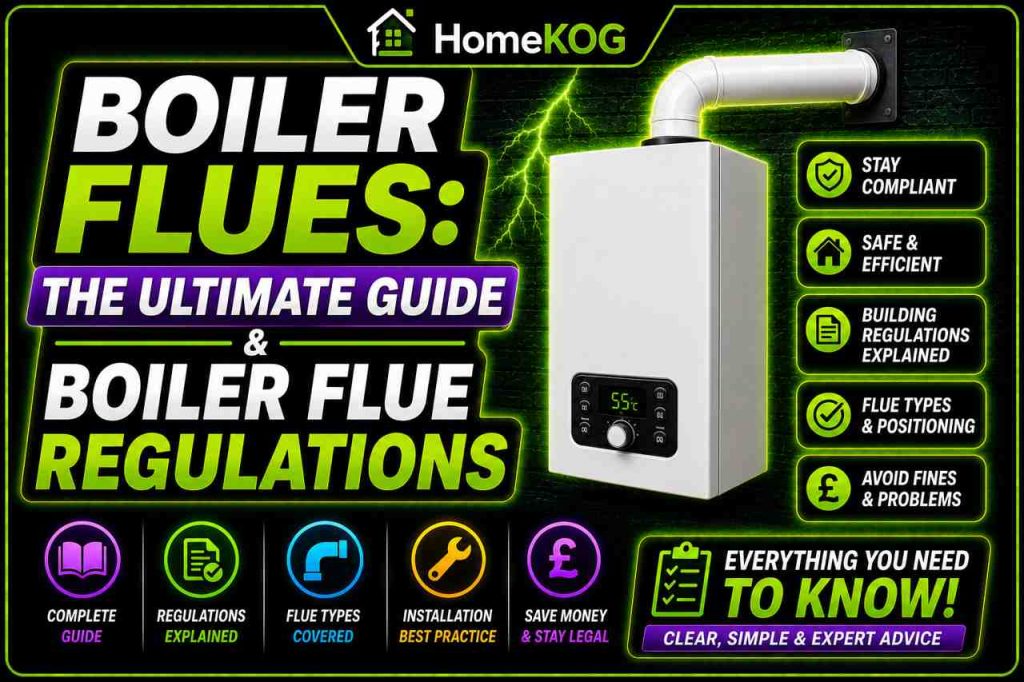
A horizontal flue is the standard and most cost-effective option for the majority of UK boiler installations. It exits through the external wall directly behind or adjacent to the boiler, making it the shortest and most straightforward flue run available.
The flue kit itself costs between £80 and £150 for a standard horizontal unit. When combined with labour — including drilling through brickwork, fitting the terminal, and making good the external wall — a complete horizontal flue installation costs around £200 in total.
Where an older square flue has been removed, some brickwork repair may be needed to fill the previous opening. Matching bricks can sometimes be difficult to source, though an experienced local installer will typically have some familiarity with this type of work and can advise on the options.
How Much Does a Vertical Boiler Flue Cost?
A vertical flue exits through the roof rather than a side wall and is used when the boiler is installed in a position that does not have convenient access to an external wall, or when flue regulations prevent a horizontal terminal from being positioned in the available external wall space.
Vertical flue installations cost between £300 and £700 depending on the length of the flue run, the number of bends required, and the complexity of the roof exit. A longer run through multiple bends and a tiled or slated roof takes considerably more time and materials than a short vertical run through a flat roof.
Working at height is a significant factor in vertical flue costs. Scaffolding or an access tower will be needed in most cases, adding between £50 and £100 per day to the overall cost of the job. This should be factored into any quotes received for vertical flue work.
How Much Does a Boiler Flue Extension Cost?
A flue extension kit costs between £30 and £80 per metre. Extensions are needed when the boiler is not positioned directly on or close to an external wall and the standard flue kit is not long enough to reach the termination point.
Most flue extension runs are relatively short, but the length varies depending on the specific boiler position and the layout of the property. Some boiler models are designed to accommodate extended flue runs of over 20 metres, though runs of this length are uncommon in standard domestic installations and each additional metre adds to the overall material and labour cost.
Boiler Flue Cost Summary
| Flue Type | Typical Cost (2026) |
|---|---|
| Horizontal flue (unit only) | £80–£150 |
| Horizontal flue (supply and install) | Around £200 |
| Vertical flue (supply and install) | £300–£700 |
| Flue extension kit | £30–£80 per metre |
| Scaffolding or access tower | £50–£100 per day |
| Flue included in new boiler installation | Included as standard |
Is Replacing a Boiler Flue Worth the Cost?
When replacing a boiler, the flue cost is simply part of the overall installation and should be included in any quote you receive. There is no separate decision to make — the flue must be replaced and it forms part of the job.
Where the question of cost becomes more relevant is when a boiler is being relocated, when a more complex vertical installation is required, or when significant extensions are needed. In those scenarios, understanding the additional cost involved helps you make an informed decision about whether relocation is worthwhile or whether keeping the boiler in its current position is the more practical choice.
The flue is just as important as the boiler itself when it comes to keeping your home safe. A correctly installed and regularly inspected flue ensures that carbon monoxide and other combustion gases are expelled safely from the property every time the boiler fires. Having the flue checked as part of every annual boiler service is a straightforward and important safety measure.
Frequently Asked Questions
Where is the boiler flue located?
The boiler flue is located either on an external wall or on the roof, depending on the type of installation. A horizontal flue exits through the wall adjacent to the boiler and is visible as a short pipe terminating on the outside of the property. A vertical flue exits through the roof. When the boiler is running, particularly in colder weather, you will typically see a small amount of steam rising from the flue terminal. The flue is wider than the condensate pipe — which is a separate, smaller plastic pipe — and should not be confused with it.
Does a flue replacement come included with a new boiler installation?
Yes, in the vast majority of cases. When a boiler is replaced in the same location, the flue replacement is included as standard in the installation price. It becomes a separate cost only if the boiler is being moved to a new position, if a vertical flue is required instead of a horizontal one, or if significant flue extensions are needed to reach a compliant termination point.
Do all boilers need a flue?
Only boilers that burn gas or other fossil fuels require a flue. Electric boilers do not produce combustion gases and therefore do not need one. The vast majority of UK homes have gas boilers, so most properties will have a flue. All modern condensing gas boilers must have a compliant flue installed by a Gas Safe registered engineer.
Is the flue checked during an annual boiler service?
Yes. Checking the flue is a standard part of an annual boiler service. The engineer will confirm that combustion gases are escaping correctly, that the flue terminal is unobstructed, and that the flue itself is in good condition with no signs of damage or corrosion. This is one of the reasons annual servicing is important — a blocked or damaged flue is a serious safety risk that may not be apparent from inside the property.
Can I replace a back boiler and install a new flue?
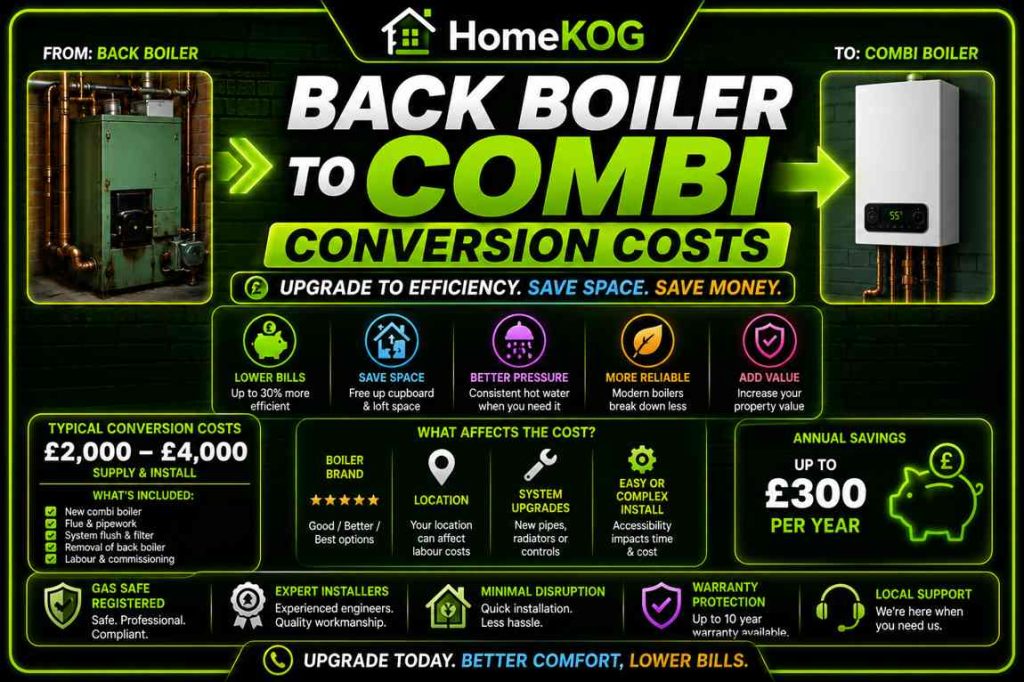
Yes. A back boiler can be replaced with a modern combi boiler, and this is a conversion that is widely recommended given the age and inefficiency of most back boilers still in use. The new boiler will require a flue to an external wall or through the roof. If the property has a suitable external wall nearby, a horizontal flue is the most straightforward and cost-effective option. If no external wall is accessible, a vertical roof exit will be needed, which adds to the overall cost of the conversion.
How long does a boiler flue last?
A well-installed boiler flue should last for the full working life of the boiler — typically ten to fifteen years or more — provided it is kept clear of obstructions and checked annually as part of the boiler service. Flue pipes themselves are durable, but the terminal fittings and seals can degrade over time and should be inspected during each service visit. If the flue shows signs of corrosion, physical damage, or poor sealing, it should be replaced promptly by a Gas Safe registered engineer.
What regulations apply to boiler flue installation?
Boiler flue installations must comply with current Building Regulations and manufacturer specifications. These regulations specify minimum distances that the flue terminal must maintain from windows, doors, air bricks, corners, and other openings to prevent combustion gases from re-entering the property. They also specify the maximum permissible flue length for different boiler models. A Gas Safe registered engineer will ensure that any new flue installation meets all applicable regulations. In some properties, the available termination points may be limited by these requirements, which can influence the type of flue needed and the overall installation cost.
Conclusion
Boiler flue replacement is a necessary and non-negotiable part of any new boiler installation in the UK. For most homeowners replacing a like-for-like boiler in the same position, the flue cost is simply included in the installation price and requires no separate consideration.
Where additional costs arise is when the boiler is being moved, when a vertical flue through the roof is required, or when the boiler position demands a longer flue extension run. In these situations, understanding the cost breakdown — horizontal installations from around £200, vertical installations from £300 to £700, and extensions at £30 to £80 per metre — allows you to budget accurately and make informed decisions about the scope of the work.
Always use a Gas Safe registered engineer for any flue installation or modification. The flue is the component that keeps harmful gases out of your home, and there is no aspect of its installation or maintenance where corners should be cut.