
Copper Pipe Cost UK 2026: Price per Metre, Boiler Installations & What to Expect
Quick Answer: Standard 15mm copper pipe costs around £3.50 per metre in the UK in 2026, though prices vary depending on supplier and quantity. Copper is the most widely used material for domestic plumbing and boiler installations due to its durability, corrosion resistance, and ease of installation. Most professional boiler installation quotes include copper pipe costs as standard — always confirm this before accepting a quote.
When budgeting for a new boiler, most homeowners focus on the cost of the unit and the installation labour. What often gets overlooked is the pipework — specifically, the copper piping that connects the boiler to the central heating circuit and water supply. Understanding what copper pipe costs and why it is used can help you ask the right questions and avoid unexpected additions to your final bill.
This guide covers current copper pipe prices in the UK, why copper remains the material of choice for plumbing and boiler work, and what to expect when pipework is involved in a boiler replacement.
Key Facts: Copper Piping and Boiler Installation Relationships
- Copper pipe is the most widely used material for domestic plumbing and boiler installation pipework in the UK, valued for its durability, corrosion resistance, and ease of installation.
- 15mm copper pipe is the standard diameter used for most domestic hot and cold water pipework inside UK homes and costs approximately £3.50 per metre in 2026.
- A boiler installation often requires new copper pipework to connect the replacement unit to the existing central heating and water supply circuits, particularly when the boiler is relocated or the system configuration changes.
- Copper is a non-permeable material, meaning it does not absorb contaminants from surrounding soil or building materials, protecting the water supply from external contamination.
- Soldering and brazing are the two primary methods used to join copper pipe sections and fittings, producing leak-resistant connections that are reliable and long-lasting when carried out correctly.
- Ductility is a property of copper that allows it to be shaped and bent without fracturing, reducing the need for additional joints and elbows in a pipe run and lowering both material and installation costs.
- Corrosion resistance is a key advantage of copper over iron and steel pipework, and means copper pipes do not require painting or protective coating to maintain their integrity over time.
- Lead pipe was widely used in UK homes before the mid-twentieth century and has since been identified as a significant health hazard, making copper the safe modern replacement wherever lead pipework is still found.
- Plastic pipework is an alternative to copper for some domestic plumbing applications and carries a lower material cost, though copper remains preferred for boiler connections and high-temperature applications.
- A Gas Safe registered engineer is the qualified professional who carries out boiler installation work including the connection of copper pipework to gas and water circuits.
- A fixed-price boiler installation quote should include all copper pipe costs needed to complete the installation, and homeowners should confirm this is the case before work begins.
- Copper fittings add value to a property by contributing to the long-term integrity and appearance of the plumbing system, which is a positive factor for prospective buyers when a home is sold.

How Much Does Copper Pipe Cost in the UK in 2026?
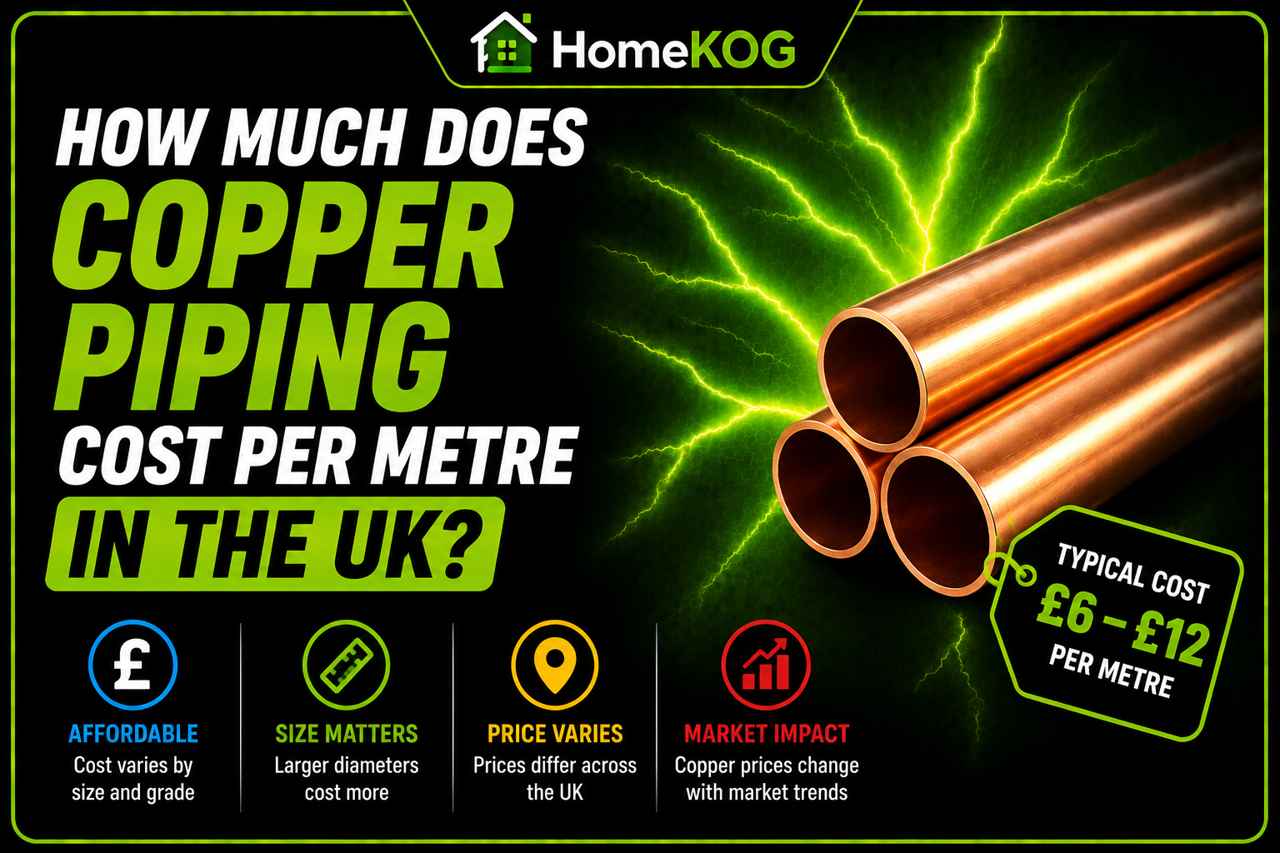
Standard 15mm copper pipe — the diameter used for the majority of domestic hot and cold water pipework in UK homes — costs approximately £3.50 per metre. Prices can vary depending on the supplier, the quantity purchased, and fluctuations in the underlying copper commodity price, which is traded globally and can shift meaningfully over time.
For larger diameter pipe used in central heating flow and return circuits, such as 22mm or 28mm, the cost per metre increases accordingly. Trade suppliers and plumbing merchants typically offer lower prices per metre for bulk purchases, which is why a professional installer will generally source pipework at a lower unit cost than a homeowner buying a short length from a DIY retailer.
The table below provides a general guide to copper pipe pricing by diameter in 2026.
| Pipe Diameter | Typical Use | Approximate Cost per Metre |
|---|---|---|
| 15mm | Hot and cold water, radiator connections | £3.50 |
| 22mm | Central heating flow and return, mains supply | £5.50–£7.00 |
| 28mm | High-demand supply runs, commercial applications | £8.00–£11.00 |
These figures are for the pipe itself. Fittings — elbows, tee pieces, stop ends, and compression or solder joints — add to the total material cost and vary in price depending on the fitting type and diameter.
Is Copper Pipe Cost Included in a Boiler Installation Quote?
This is one of the most important questions to ask before accepting any boiler installation quote. Many professional installers include a standard allowance for copper pipework in their fixed price quotes, covering the pipe and fittings needed to connect the new boiler in a straightforward replacement scenario.
However, if the installation involves relocating the boiler, removing a hot water cylinder as part of a conversion from a regular or system boiler to a combi, or making significant changes to the pipework configuration, additional copper will be needed beyond the standard allowance. In these cases, the extra material cost should be itemised clearly in the quote. When assessing the project, it’s also important to consider average costs for water tank removal, as this can significantly impact the overall budget. Homeowners should obtain detailed estimates from multiple contractors to ensure they are receiving competitive pricing. Additionally, understanding the labor and disposal fees associated with this process can help in making an informed decision.
Always ask for written confirmation of exactly what is included in a boiler installation price before work begins. A transparent, fixed-price quote that covers parts, labour, and all required pipework removes the risk of unexpected costs appearing once the engineer is on site. In addition to a clear quote, consider exploring boiler finance options for homeowners to help manage the costs more effectively. Many companies offer flexible payment plans that can make the initial outlay more manageable. This way, you can ensure that you have the right heating solution without it putting a strain on your finances.
Why Is Copper the Standard Choice for Boiler and Plumbing Pipework?
Safety and Non-Toxicity
The safety of the materials used in domestic plumbing is a fundamental concern, given that those pipes carry the water used for drinking, cooking, and bathing. Copper has a long and well-established track record of safe use in domestic water systems.
It is non-toxic and does not leach harmful substances into the water supply under normal operating conditions. This is in stark contrast to lead pipework, which was widely installed in UK homes built before the 1970s and has since been conclusively identified as a serious health hazard. Where lead pipes are still found in older properties, replacing them with copper is standard practice.
Copper is also non-permeable — it does not absorb contaminants from the soil or surrounding building materials. In a domestic heating and plumbing circuit, this means the water supply is protected from external contamination throughout the life of the pipework.
Corrosion Resistance
Copper outperforms iron and most steel alloys in terms of resistance to corrosion. Iron pipes corrode from the inside when water is present, eventually producing rust that contaminates the water supply and weakens the pipe structure. Copper develops a stable surface layer over time that actually provides additional protection against further corrosion rather than accelerating it.
This corrosion resistance means copper pipework does not require painting, coating, or any other form of protective treatment to maintain its integrity. In a central heating circuit, this contributes to a cleaner system with less debris circulating through the boiler and radiators — one of the contributing factors to the long service life that well-maintained copper plumbing delivers.
Ease of Installation
Copper’s ductility — its ability to be shaped and bent without fracturing — is a practical advantage that directly affects installation costs. A ductile pipe can be formed around obstacles and corners without requiring additional fittings at every change of direction, reducing both the number of joints in a pipe run and the time needed to complete the installation.
Where joints are required, copper can be connected using either solder fittings — in which the joint is made by heating the fitting and applying solder — or compression fittings, which are tightened mechanically and do not require heat. Both methods produce reliable, long-lasting connections when carried out correctly by a qualified plumber or Gas Safe engineer.
Fewer joints in a system mean fewer potential leak points and a more structurally sound installation overall. This is one reason why, despite the lower material cost of some plastic alternatives, copper remains the preferred choice for boiler connections and other high-temperature applications.
Durability and Low Maintenance
Copper pipe can withstand the thermal cycling — the repeated expansion and contraction caused by water alternately heating and cooling — that occurs every time a central heating system runs through a cycle. It maintains its strength and shape at the operating temperatures found in domestic heating systems and does not degrade over time in the way that some plastic alternatives can when subjected to sustained heat.
Because copper does not corrode and does not require any form of protective treatment, ongoing maintenance requirements are minimal. Once installed correctly, copper pipework in a well-maintained central heating system can last for several decades without requiring any intervention.
Should You Consider Replacing Copper Pipework When Getting a New Boiler?
If the existing copper pipework in the system is in good condition, there is generally no need to replace it when fitting a new boiler. A Gas Safe engineer will inspect the pipework as part of the installation process and advise on whether any sections are deteriorated, undersized for the new boiler’s requirements, or in need of replacement.
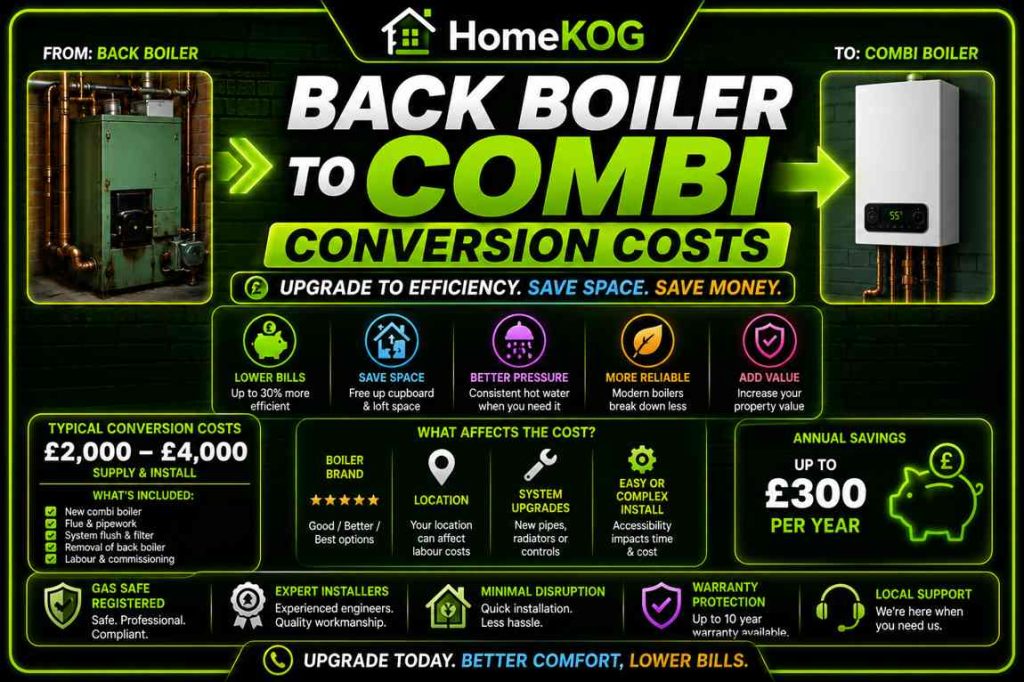
Where a boiler is being converted from a regular or system configuration to a combi, some existing pipework will need to be capped off or removed — specifically the pipes that previously ran to and from the hot water cylinder and cold water tank. This work is typically included in the scope of a conversion installation, and the cost should be reflected in the quote.
If the property has older pipework — particularly if any sections are 22mm or smaller on the main heating circuit, or if lead pipe is identified anywhere in the system — the installation is a good opportunity to address those issues while the engineer is on site. The marginal additional cost of replacing a short section of substandard pipework during a boiler installation is almost always lower than the cost of a separate call-out at a later date.
Copper vs Plastic Pipework: Which Is Better?
Plastic pushfit pipework has become increasingly common in domestic plumbing over the past two decades and offers a lower material cost and faster installation for certain applications. However, copper retains clear advantages for boiler and central heating work specifically.
| Factor | Copper Pipe | Plastic Pipe |
|---|---|---|
| Material cost (15mm) | ~£3.50 per metre | ~£1.50–£2.50 per metre |
| Heat resistance | Excellent — suitable for all heating applications | Limited — some types not suitable for high-temperature use |
| Corrosion resistance | Excellent | Good — not affected by water corrosion |
| Installation speed | Moderate | Fast — pushfit connections require no heat |
| Longevity | 50+ years with correct installation | 25–50 years depending on type and conditions |
| Preferred for boiler connections | Yes | Less common — copper generally preferred |
| Adds value to property | Yes | Neutral to modest |
For the connections immediately around a boiler — where temperatures are highest and the reliability of joints is most critical — copper remains the preferred material among heating engineers. Plastic pushfit systems may be used for longer pipe runs elsewhere in the property where temperature and pressure conditions are less demanding.
Frequently Asked Questions
How much does 15mm copper pipe cost per metre in the UK in 2026?
Standard 15mm copper pipe costs approximately £3.50 per metre in the UK in 2026. This is the diameter most commonly used for domestic hot and cold water pipework and radiator connections. Prices vary between suppliers and can fluctuate with the global copper commodity price. Trade suppliers typically offer lower per-metre costs than DIY retailers, particularly for larger quantities. Most professional boiler installation quotes include a standard allowance for copper pipework as part of the fixed price.
Why is copper used for boiler installations rather than plastic?
Copper is the preferred material for boiler connections and central heating pipework because it handles high operating temperatures reliably, offers excellent corrosion resistance, and produces durable joints through soldering or brazing. Some plastic pipework systems are not rated for the temperatures found in central heating circuits, and joints in plastic systems under sustained heat can be more vulnerable than soldered copper connections. Copper’s combination of thermal durability, longevity, and resistance to corrosion makes it the standard choice for professional heating engineers.
Is copper pipe cost included in a boiler installation quote?
It depends on the installer. Many professional boiler installation companies include a standard allowance for copper pipework in their fixed-price quotes, covering the material needed for a straightforward replacement installation. If the job involves relocating the boiler, converting from one boiler type to another, or making significant changes to the system layout, additional pipework will be needed and this should be clearly itemised in the quote. Always confirm exactly what is included in a boiler installation price before agreeing to the work.
How long does copper pipe last in a central heating system?
Copper pipe installed correctly in a well-maintained central heating system can last 50 years or more. The key factors that influence longevity are the quality of the water treatment and inhibitor concentration maintained in the system, the quality of the original installation — particularly the integrity of soldered joints — and whether the system is serviced annually to keep internal debris and corrosion levels under control. Copper’s inherent corrosion resistance means it outlasts iron and many other metals in domestic plumbing applications under normal conditions.
Is it worth replacing old copper pipework when getting a new boiler?
If the existing copper pipework is in good condition, there is no need to replace it when fitting a new boiler. A Gas Safe engineer will inspect the pipework during the installation and advise on any sections that need attention. Where lead pipe is identified anywhere in the system, replacing it is strongly advisable given the well-documented health risks associated with lead in the water supply. Short sections of deteriorated or undersized pipe are most cost-effectively addressed during a boiler installation rather than as a separate job.
What is the difference between 15mm and 22mm copper pipe?
The key difference is the diameter and therefore the volume of water each pipe can carry. 15mm copper pipe is the standard size for most hot and cold water connections within a domestic property, including radiator connections and domestic hot water feeds. 22mm pipe is used for the main central heating flow and return circuits and for mains water supply connections where higher flow rates are required. 28mm pipe is used for particularly high-demand supply runs. A Gas Safe engineer will specify the correct pipe diameter for each section of the installation based on the flow rate requirements of the system.
Can I use plastic pipe instead of copper for a boiler installation?
Plastic pushfit pipe can be used for some sections of domestic plumbing where operating temperatures and pressures are within the rated limits of the specific plastic system. However, for the connections immediately around a boiler — where temperatures are highest — copper remains the standard choice among heating engineers and is generally preferred by boiler manufacturers. Using unsuitable plastic pipe near boiler connections can create reliability issues over time and may affect the validity of the boiler warranty. Always confirm with your Gas Safe engineer what pipework specification is appropriate for your installation.
Does copper pipework add value to a property?
Copper plumbing is generally viewed positively by surveyors and prospective buyers when a property comes to market. It signals a higher quality installation than plastic alternatives in some buyers’ minds, and the long service life of well-installed copper pipework means the plumbing system is unlikely to need attention in the near term. While it is not the primary driver of property value, a property with well-maintained copper plumbing throughout is likely to fare better in a survey than one where older, deteriorated, or mixed-material pipework is identified as a concern.
Conclusion
Copper pipe is a modest but important line item in the overall cost of a boiler installation, and it is one that is easy to overlook when focusing on the headline price of the boiler and the installation labour. At around £3.50 per metre for standard 15mm pipe, the material itself is not expensive — but the volume needed to complete a system change or boiler relocation can add up, and knowing whether it is included in your quote matters. As homeowners plan for upcoming renovations, it’s essential to keep in mind the heat pump installation costs for 2026, which may differ significantly based on material choices and labor availability. Additionally, as technology advances, the efficiency of heat pumps is expected to improve, potentially affecting the overall return on investment. Therefore, it’s crucial to budget accordingly and consult with professionals to ensure all aspects of the installation are factored into the final quote.
More importantly, copper is not used simply because it is traditional. Its non-toxicity, corrosion resistance, thermal durability, and longevity make it the most practical and reliable material for domestic boiler and heating pipework in most circumstances. A properly installed copper system, maintained with annual servicing and correct inhibitor treatment, can function effectively for 50 years or more.
When getting a new boiler, ask your Gas Safe registered engineer to confirm exactly what pipework is included in the price and whether any existing sections need to be replaced. A clear answer upfront will prevent any surprises when the work is complete.