
Faulty Boiler Diverter Valve: Causes, Signs & How to Fix It
Quick Answer: A faulty diverter valve on a combi boiler is one of the most common boiler faults in UK homes. It typically causes lukewarm water, heating that won’t come on, or hot water that only works when the heating is running. Repairs cost between £250 and £350 in 2026, though replacement may be more sensible for older boilers.
A diverter valve fault might not sound serious, but it can make daily life genuinely uncomfortable — cold showers, radiators that won’t heat up, and a boiler that seems to be working but isn’t delivering. If any of that sounds familiar, the diverter valve is likely the place to start.
This guide explains what the diverter valve does, how to recognise when it has failed, and what your repair or replacement options look like in 2026.
Key Facts: Boiler Diverter Valve Relationships
- A diverter valve is a component found in combi boilers that controls whether heated water is directed to the central heating circuit or to the domestic hot water supply.
- A combi boiler is a combination boiler that provides both central heating and hot water from a single compact unit without the need for a separate cylinder or tank.
- Domestic hot water is prioritised by the diverter valve over central heating whenever a tap or shower is turned on, redirecting flow automatically.
- A stuck diverter valve is the most common diverter fault and occurs when the valve fails to move freely between its heating and hot water positions.
- A Gas Safe registered engineer is the only qualified professional legally permitted to diagnose and repair diverter valve faults on gas boilers in the UK.
- A diaphragm is the internal seal within the diverter valve that most commonly wears out first and may be replaced independently of the full valve unit.
- Boiler warranty terms typically cover diverter valve replacement during the warranty period, with the homeowner responsible only for labour costs.
- A plate heat exchanger is a secondary component within a combi boiler that transfers heat directly to the domestic hot water supply on demand.
- Heating sludge is a corrosive debris that circulates through the central heating system and can accelerate wear on moving components including the diverter valve.
- A combi boiler fault diagnosis must be carried out by a qualified engineer to distinguish diverter valve failure from other components sharing the same symptoms.
- Boiler age is a key factor in deciding whether to repair a faulty diverter valve or invest in a full boiler replacement.
- Labour costs for diverter valve repairs vary by region in the UK, with engineers in London and other metropolitan areas typically charging more per hour than those in other parts of the country.

What Is a Diverter Valve?
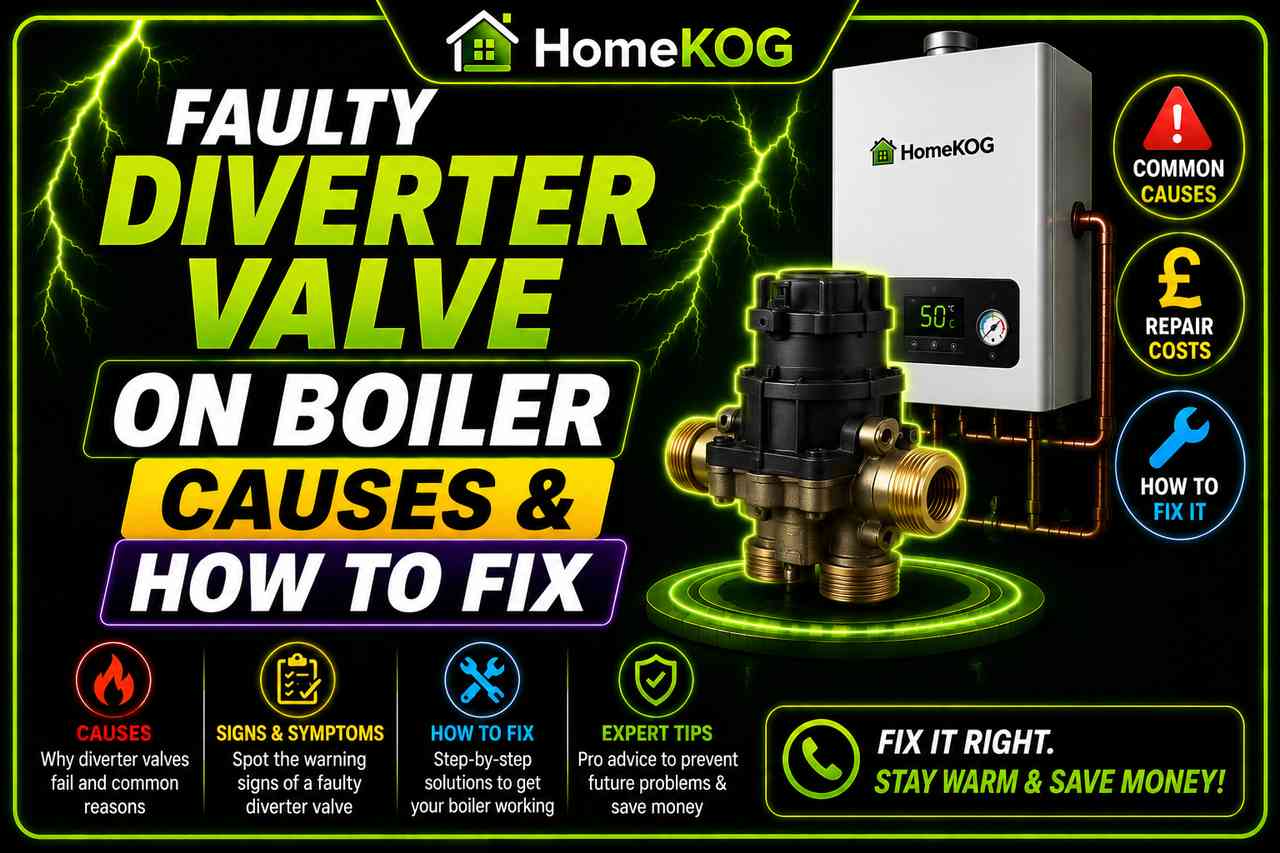
A diverter valve is a critical moving component found inside combi boilers. Its job is to manage the flow of heated water between two destinations: the central heating circuit that feeds your radiators and towel rails, and the domestic hot water circuit that supplies your taps and showers.
When everything is working correctly, the valve opens and closes automatically in response to demand. If you turn on a hot tap, the valve shifts to direct water to the domestic supply. When the tap is switched off, it moves back to allow the heating circuit to resume.
Because the diverter valve is constantly in motion whenever the boiler is in use, it is subject to more mechanical wear than most other boiler components. Over time — particularly in older boilers — it can begin to stick, seize, or fail entirely.
What Is a Combi Boiler and How Does It Work?
A combi boiler, short for combination boiler, integrates all the components of a central heating system into a single unit. Unlike system or regular boilers, it does not require a separate hot water cylinder or cold water tank in the loft.
When your home calls for heating or hot water, the gas burner inside the boiler ignites. Heat from the flame passes through the main heat exchanger to warm the central heating circuit. When hot water is needed at a tap, a separate plate heat exchanger transfers heat directly to the incoming mains water on demand.
Most modern combi boilers also include a pre-heat function, where a small volume of water is kept at temperature inside the boiler so that hot water is available almost immediately when a tap is opened.
The Advantages of a Combi Boiler
Combi boilers are the most widely installed boiler type in UK homes, and for good reason. They heat water only when it is needed rather than storing it in advance, which reduces energy waste and lowers heating bills over time.
The absence of a separate cylinder or tank also makes them more compact. The entire system is controlled from one appliance, which simplifies installation and reduces the number of components that can develop faults.
Modern condensing combi boilers recover latent heat from flue gases that older boilers simply expelled into the atmosphere. This process allows them to achieve efficiency ratings above 90%, which is a significant improvement over the older non-condensing models still in use in some UK homes.
The Limitations of a Combi Boiler
Combi boilers do have constraints that make them less suitable for some properties. Because they draw water directly from the mains, hot water flow can drop noticeably if multiple taps or showers are running at the same time.
For larger households where simultaneous demand for hot water is common, a system boiler with a separate hot water cylinder may be a more practical choice. The cylinder stores a volume of pre-heated water that can meet higher simultaneous demand more effectively than a combi boiler working on demand alone.
Signs of a Faulty Diverter Valve on a Combi Boiler
A failing diverter valve produces a set of recognisable symptoms. Being able to identify them early can save you from prolonged disruption and more expensive follow-on damage.
You Have Hot Water but No Central Heating
This is one of the clearest indicators of a diverter valve stuck in the open position for domestic hot water. The valve is directing all heated water away from the radiators, so your taps and showers work as normal but your radiators stay cold regardless of the thermostat setting.
Heating Must Be On to Get Hot Water
If you switch off your central heating and notice that hot water at the taps becomes unavailable or drops significantly in temperature, the diverter valve is likely stuck in the heating position. Turning the heating on restores the temperature because the heated water in the circuit is partially redirected, but it is not a normal or efficient way for the system to operate.
Lukewarm Water at Taps and Showers
Consistently lukewarm water is one of the most frequently reported diverter valve symptoms. A partially stuck valve allows some heat to escape into the heating circuit when it should be fully directed to the hot water supply, resulting in water that never quite reaches the temperature it should.
This symptom can sometimes be confused with a failing heat exchanger or a low gas pressure issue, which is one reason a professional diagnosis is always the right starting point.
How to Fix a Faulty Diverter Valve on a Boiler
Boiler repairs of any kind should always be carried out by a Gas Safe registered engineer. Working on a gas appliance without the correct qualifications is illegal in the UK and potentially dangerous for everyone in the property.
When an engineer attends to investigate a suspected diverter valve fault, they will first carry out a full diagnostic check to confirm the valve is genuinely at fault. Several other boiler components can produce similar symptoms, so a thorough diagnosis prevents unnecessary parts being replaced.
Once a diverter valve fault is confirmed, the engineer will assess whether the valve can be cleaned and refitted or whether it needs to be replaced. In some cases, only the internal diaphragm has failed, and replacing this component alone is sufficient to restore normal function.
However, replacing just the diaphragm can sometimes prove a false economy. If the valve body itself is worn, it may begin sticking again within a relatively short period, requiring the engineer to return and carry out a more extensive repair. Replacing the full valve unit at the outset is often the more cost-effective approach when the component is significantly aged.
While the boiler is open for the repair, it is a good opportunity to have the engineer inspect other components for signs of wear. Catching a developing fault at this stage can avoid a separate call-out charge later.
When Repairing the Diverter Valve Does Not Make Sense
For boilers approaching or beyond ten years of age, a diverter valve fault is often a signal that other components are reaching the end of their working life too. Older boilers are not as energy efficient as current models, and the cost of repeated repairs can quickly exceed the cost of a new installation.
If the engineer’s inspection reveals additional wear alongside the diverter valve fault, the financial case for replacing the boiler rather than continuing to repair it becomes much stronger. A new combi boiler comes with a manufacturer warranty typically lasting between five and ten years, which covers parts and labour for any faults that arise during that period.
How Much Does It Cost to Fix a Faulty Diverter Valve in 2026?
The total cost of repairing a faulty diverter valve depends on the cost of the part itself and the engineer’s labour rate in your area.
| Cost Component | Typical Range (2026) |
|---|---|
| Diverter valve replacement part | £80–£200 |
| Gas Safe engineer labour | £100–£200 |
| Total repair cost | £250–£350 |
| Diaphragm replacement only (part and labour) | £100–£180 |
| Full boiler replacement (new combi) | £1,500–£3,000 |
Labour rates vary across the UK. Engineers working in London and other major cities typically charge more per hour than those based in rural or lower-cost areas, and this regional difference can add up to around £70 to the total cost of the repair.
The complexity of the replacement also influences the final price. If the diverter valve is easily accessible within the boiler casing, the job will be quicker and therefore less expensive. In models where the valve is more deeply integrated, additional time and labour costs apply.
If your boiler is still within its manufacturer warranty period, the cost of the replacement part is usually covered. You would pay only for the engineer’s time, making early repair significantly more affordable.
Frequently Asked Questions
What does a diverter valve do on a combi boiler?
A diverter valve controls the direction of heated water inside a combi boiler. It switches flow between the central heating circuit, which supplies radiators and towel rails, and the domestic hot water circuit, which supplies taps and showers. Combi boilers are designed to prioritise hot water demand, so when a tap is opened, the valve automatically diverts flow away from the heating circuit until the tap is closed again.
What are the symptoms of a faulty diverter valve?
The three most common symptoms are: radiators that stay cold even though the boiler appears to be running normally, hot water at taps that only works when the central heating is switched on, and water from taps or showers that is consistently lukewarm rather than genuinely hot. Any one of these symptoms warrants a professional inspection, as they can also indicate faults with other boiler components.
Can I fix a faulty diverter valve myself?
No. Any repair or replacement work on a gas boiler must be carried out by a Gas Safe registered engineer. Attempting to work on gas appliances without the correct qualifications is illegal under UK law and can create serious safety risks. A qualified engineer will also ensure the repair is carried out in a way that keeps your boiler warranty valid, if it is still active.
How much does it cost to replace a diverter valve in 2026?
Replacing a diverter valve typically costs between £250 and £350 in total, covering the cost of the part and the engineer’s labour. The valve itself costs between £80 and £200 depending on the boiler model, with labour making up the remainder. Regional labour rates vary, and jobs in London or other cities can cost more than equivalent work carried out elsewhere in the UK.
Is it worth repairing a diverter valve on an old boiler?
If the boiler is under ten years old and otherwise in good condition, repairing the diverter valve is usually worthwhile. For boilers older than ten years, particularly those that have developed other faults, the cost of repair may not represent good value. An engineer’s inspection will help determine whether the rest of the boiler is sound. If several components show signs of wear, replacing the boiler as a whole is often the more sensible financial decision.
How long does a diverter valve last?
There is no fixed lifespan for a diverter valve, as wear depends on how heavily the boiler is used and how well the system has been maintained. In general, boilers that are serviced annually tend to have components that last longer, as the engineer can identify early signs of wear before they develop into a full failure. Problems with diverter valves are most commonly seen in boilers that are more than eight to ten years old.
Can a dirty heating system cause diverter valve problems?
Yes. Sludge and debris circulating through the central heating system can accelerate wear on moving components including the diverter valve. Particles carried in the water can cause the valve to stick or become partially blocked, leading to the symptoms described above. Fitting a magnetic system filter and maintaining the correct inhibitor concentration in the system are effective ways to reduce the risk of sludge-related component damage.
What happens if a faulty diverter valve is left unrepaired?
Leaving a faulty diverter valve in place puts additional strain on other boiler components, particularly the heat exchanger, which may have to work harder to compensate for incorrect water flow. Over time, this can cause secondary faults that are more expensive to address. In some cases, continuing to run a boiler with a known fault can also affect your warranty or home insurance cover, so arranging a repair promptly is always advisable.
Conclusion
A faulty diverter valve is one of the most common combi boiler faults in UK homes, and it is also one of the more straightforward to resolve when caught at an early stage. The symptoms are recognisable, the repair is well understood, and the cost is manageable for a boiler that is otherwise in good health.
For older boilers or those with multiple developing faults, the same repair cost begins to look less attractive when set against the benefits of a new installation — better efficiency, lower running costs, and a full manufacturer warranty from day one.
Whatever you decide, always use a Gas Safe registered engineer for any work on your boiler. It is a legal requirement, and it is the surest way to protect both the safety of your home and the validity of any existing warranty.