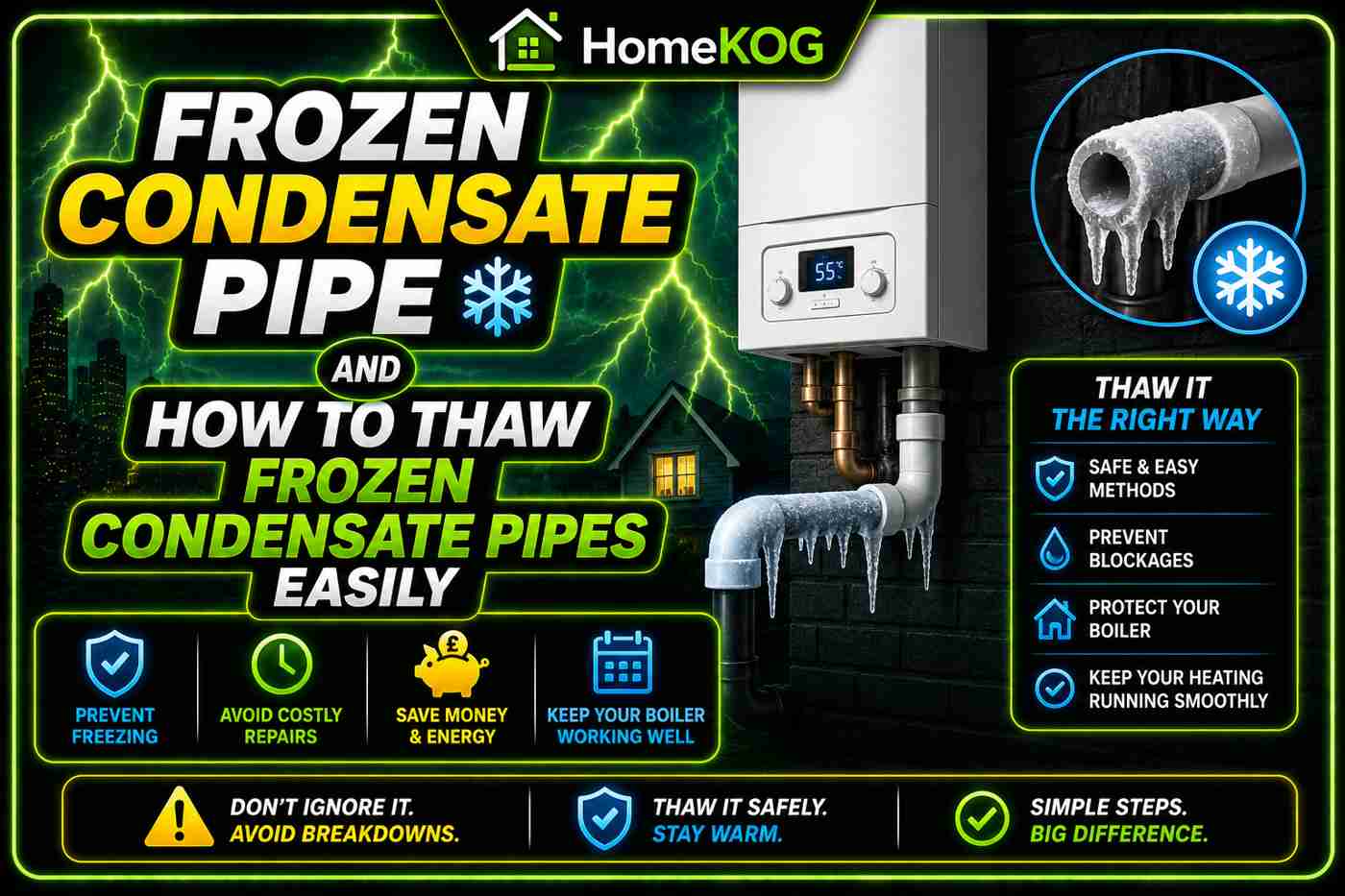

Frozen Condensate Pipe: What It Is and How to Fix It 2026
Quick Answer: A frozen condensate pipe causes the boiler to lock out and display a fault code — stopping heating and hot water. To fix it, heat water in a kettle, allow it to cool slightly from boiling, then carefully pour it from a jug over the frozen external section of the pipe. Alternatively, place a hot water bottle against the frozen section. Once thawed, reset the boiler. Never use a hairdryer or other electrical appliance on the frozen pipe. Prevent recurrence by wrapping the external pipe in foam lagging — a simple DIY job that takes five minutes.
A frozen condensate pipe is one of the most common boiler problems in the UK during cold snaps — affecting hundreds of thousands of homes each winter. It is also one of the few boiler problems with a genuinely straightforward DIY fix that requires no Gas Safe engineer, no specialist tools, and no technical knowledge beyond the ability to boil a kettle safely. This guide explains exactly how to identify the problem, thaw the pipe safely, and prevent it from happening again.
What is a Condensate Pipe?
All modern condensing boilers produce condensate — acidic liquid water formed when the water vapour in flue gases cools and condenses in the secondary heat exchanger. This condensate must be drained away continuously as the boiler operates. In most UK installations, it is drained via a plastic pipe — typically 22mm white or grey plastic — that runs from the base of the boiler to a drain point. disguising a boiler in your home can enhance the aesthetic appeal of the space while ensuring the functionality of the heating system remains intact. Many homeowners opt for creative solutions, such as building cabinetry around the unit or using decorative screens to conceal it effectively. This approach not only masks the utilitarian nature of the appliance but also integrates it seamlessly into the overall home design.
Where the condensate pipe can be routed to an internal drain — a soil pipe, an indoor waste pipe, or a nearby sink waste — it remains inside and at room temperature, making freezing impossible. However, many UK boiler installations route the condensate pipe to an external drain, soakaway, or gully. In cold weather, the section of plastic pipe exposed to outdoor temperatures can freeze.
When the condensate pipe freezes, the blockage prevents condensate from draining. The condensate backs up into the boiler, triggers a safety sensor, and causes the boiler to lock out. The boiler displays a fault code and stops firing until the blockage is cleared.

How to Tell If Your Condensate Pipe is Frozen
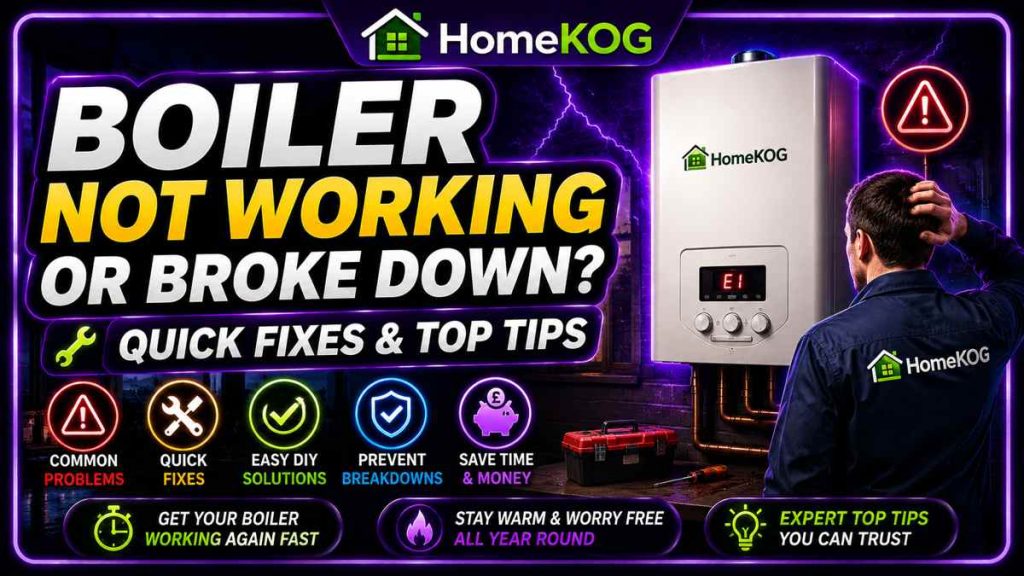
The combination of sub-zero temperatures and a boiler that suddenly stops working is the clearest indicator of a frozen condensate pipe rather than a mechanical fault. The boiler will typically display a fault code indicating a pressure or ignition problem, but the underlying cause is the frozen condensate rather than a fault with the boiler’s components.
Gurgling or bubbling noises from the boiler — as condensate attempts to drain against an ice blockage — often precede the lockout by a few hours. If the boiler has been running and then stops in cold weather, making gurgling sounds before shutting down, the condensate pipe is almost certainly frozen.
Fault Codes Caused by a Frozen Condensate Pipe
| Boiler Brand | Fault Codes Caused by Frozen Condensate |
|---|---|
| Worcester Bosch | EA, EA 227, EA 224, EA 229 |
| Viessmann | F2 |
| Vaillant | F28, F29 |
| Ideal | L2 |
These codes indicate ignition failure or pressure issues — symptoms that arise because the boiler cannot operate correctly when condensate cannot drain. If any of these codes appear during cold weather, check the external condensate pipe before investigating any other potential fault.
Where to Find the Condensate Pipe
The condensate pipe is a plastic pipe — usually white, grey, or black — that exits the boiler casing at the bottom and runs to a drain point. In most installations, the pipe exits through an external wall near the boiler location and terminates at a gully, soakaway, or soil pipe outside.
Do not confuse the condensate pipe with the overflow pipe from the pressure relief valve — the overflow pipe is typically copper and terminates at low level on the external wall, while the condensate pipe is plastic and has a visible fall angle toward the drain point.
Where the Pipe is Most Likely to Freeze
Ice forms most readily at two points in the condensate pipe:
At joints and elbows, where water collects as it changes direction and is exposed to the longest contact time with the cold pipe surface. A 90-degree elbow that faces into cold wind is particularly vulnerable.
At the terminal end where condensate exits the pipe into the drain — the continuous small drip of acidic condensate meeting cold air can form a growing ice plug at the pipe opening that progressively extends back up the pipe.
Visual inspection of these two points first will identify the blockage location in most cases.
How to Safely Thaw a Frozen Condensate Pipe
Method 1 — Warm Water from a Jug or Watering Can
This is the fastest and most effective method. The key is to use warm rather than boiling water — boiling water can crack the plastic pipe or cause burns if it splashes.
- Heat water in a kettle to boiling point, then allow it to cool for 3 to 5 minutes until it is hot but not boiling — approximately 70 to 80°C.
- Pour the warm water into a jug, watering can, or similar container that can be carried outdoors safely.
- Take the container outside and gently pour the warm water along the frozen section of the pipe — starting at the joint or elbow where ice is most likely present, then along the pipe length and at the exit point.
- Continue pouring until you hear the boiler’s condensate trap clear — often a noticeable drainage sound or change in the boiler’s operational noise.
- Go inside and reset the boiler following the manufacturer’s reset procedure — typically pressing and holding the reset button for 3 to 5 seconds. The boiler should restart normally.
Method 2 — Hot Water Bottle
A hot water bottle is the appropriate method where the frozen section is difficult to reach with a poured liquid, or where the person completing the task is uncomfortable pouring hot water outdoors.
- Fill a hot water bottle with hot water from the tap or kettle.
- Press the hot water bottle firmly against the frozen section of the pipe and hold it in place.
- Work along the pipe from joint to exit, allowing the heat to transfer through the pipe wall to the ice inside.
- Once the condensate can flow, reset the boiler.
This method is slower than pouring warm water directly — particularly effective for single frozen points but less efficient for a pipe frozen along a longer section.
What Never to Do
Never use a hairdryer, heat gun, or any other electrical appliance to thaw the frozen pipe. Using electrical equipment in wet, cold, outdoor conditions creates a serious electrocution risk. The short path from the electrical appliance to the wet ground is exactly the scenario that causes fatal electrical accidents.
Never cut or modify the condensate pipe. The condensate pipe is a component of the boiler’s drainage and flue system — cutting or modifying it affects the boiler’s safe operation and its compliance with Building Regulations. Any physical repair or modification to the condensate pipe must be carried out by a Gas Safe engineer.
How to Reset the Boiler After Thawing
After the condensate pipe has been cleared, the boiler will not restart automatically — it must be manually reset. The reset procedure varies by boiler brand and model but typically involves pressing and holding a dedicated reset button on the boiler front panel for 3 to 5 seconds. The boiler manual provides the specific reset procedure for the model.
After resetting, the boiler will attempt a new ignition sequence. Allow 1 to 2 minutes for the ignition cycle to complete before concluding whether the reset has been successful. If the same fault code reappears after resetting, the condensate pipe has not fully cleared or there is a separate fault — check the pipe again before calling an engineer. Once everything appears to be functioning correctly, it’s important to ensure optimal performance by checking various parameters. One key consideration is how to check glow worm pressure to maintain efficiency and prevent any potential issues. If the pressure is outside the recommended range, make necessary adjustments to avoid compromising the boiler’s operation.
How to Prevent a Frozen Condensate Pipe
Insulate the External Pipe — Most Effective Preventive Measure
Foam pipe lagging — available at any DIY store for a few pounds — wrapped around the external section of the condensate pipe insulates it from the cold air, maintaining the pipe temperature above freezing even in cold snaps. This is a simple DIY task that takes five minutes and is the most reliable and cost-effective long-term prevention.
Measure the external pipe length from where it exits the building to the drain point, purchase the appropriate diameter foam lagging, and cut it to length. Split lagging simply wraps around the pipe and holds in place with the adhesive strip or tape. Waterproof pipe lagging specifically rated for outdoor use is the appropriate product — standard foam insulation degrades quickly in outdoor conditions.
Increase the Boiler’s Flow Temperature
Increasing the boiler’s heating circuit flow temperature increases the heat input to the condensing process, raising the temperature of the condensate produced and reducing the likelihood of it freezing in the pipe before it reaches the drain. This is a useful backup measure but not a reliable primary prevention method — extremely cold conditions will still freeze the pipe if it is uninsulated. Homeowners should also consider their boiler finance options for homeowners to ensure they can invest in the necessary insulation or upgrades. This investment can significantly increase energy efficiency, ultimately saving money on heating bills. Additionally, exploring various financing avenues can make it easier for homeowners to manage such expenses during the colder months.
Re-route the Pipe to an Internal Drain
The most permanent solution is to route the condensate pipe to an internal drain point — a nearby soil pipe, kitchen sink waste, or bathroom waste — so that no section of the pipe is exposed to outdoor temperatures. This eliminates the freezing risk entirely. Re-routing requires a Gas Safe engineer to modify the pipework and is not a DIY task, but for properties in cold regions that experience repeated condensate freezing each winter, the one-off cost of re-routing may be justified.
Increase the Pipe’s Fall Angle
A condensate pipe installed at a steeper fall angle drains condensate more rapidly, reducing the volume of liquid in the pipe at any given time and the time it is exposed to cold temperatures. A gas engineer can adjust the fall angle during a service visit. This is a useful complementary measure but less effective as a standalone solution than lagging.
FAQ
Can I fix a frozen condensate pipe myself?
Yes. Thawing a frozen condensate pipe with warm water or a hot water bottle is a safe DIY task that does not require Gas Safe registration or specialist knowledge. The only tools needed are a kettle, a container for the water, and a hot water bottle as an alternative method. The job is genuinely straightforward and is completed in under 10 minutes in most cases.
Why does my condensate pipe keep freezing?
Repeated freezing indicates that the pipe is insufficiently insulated for the outdoor temperatures in the area. The most common cause is an unlagged or poorly lagged external pipe. Adding foam lagging to the full external length of the pipe prevents recurrence in virtually all cases. Repeated freezing despite lagging may indicate the pipe has an inadequate fall angle, allowing condensate to pool and freeze — a Gas Safe engineer can assess and correct the fall angle.
Which boiler fault codes indicate a frozen condensate pipe?
On Worcester Bosch boilers: EA, EA 227, EA 224, EA 229. On Viessmann boilers: F2. On Vaillant boilers: F28 and F29. On Ideal boilers: L2. These codes appear because the condensate backup causes ignition or pressure failures that the boiler interprets as its own fault. Once the condensate pipe is thawed and the boiler reset, these codes clear and the boiler operates normally.
How long does it take to thaw a frozen condensate pipe?
Pouring warm water directly on the frozen section takes 1 to 3 minutes for most standard freezes. A hot water bottle takes considerably longer — typically 20 to 30 minutes for a short frozen section. Warm water poured directly from a jug is the faster and more effective method where the frozen section is accessible.
Conclusion
A frozen condensate pipe is one of the most common winter boiler problems in the UK and one of the simplest to fix. Warm water from a jug poured over the frozen section clears the blockage in minutes, after which a boiler reset restores normal operation without any engineer attendance required.
The investment of five minutes and a few pounds in foam pipe lagging after the first freeze eliminates the problem from recurring in future cold snaps — the most straightforward and cost-effective prevention measure available. For properties in cold regions or those with long external condensate pipe runs, considering re-routing the pipe to an internal drain is a permanent solution worth discussing with a Gas Safe engineer at the next annual service visit.