
Hydrogen Boiler Guide: What Is a Hydrogen Ready Boiler?
Quick Answer: A hydrogen-ready boiler is a gas boiler that can operate on natural gas today and, with minimal modification, be converted to run on a hydrogen-blend gas supply containing up to 20% hydrogen. All new gas boilers installed in the UK from 2026 are hydrogen-ready to this 20% blend standard. A 100% hydrogen boiler — one that burns pure hydrogen — is a separate technology still in development and not yet available for domestic installation at scale.
Get a new boiler quote online here >
Introduction
Hydrogen boilers are among the most discussed topics in UK home heating — and among the most misunderstood. The phrase “hydrogen boiler” is used to describe two distinct things: the hydrogen-ready boilers available today, which burn natural gas now and can accommodate a hydrogen blend in the future, and the 100% hydrogen boilers currently under development, which would burn pure hydrogen and produce only water vapour as a combustion byproduct.
Understanding the difference between these two technologies — and where the UK’s hydrogen heating roadmap currently stands — is essential for any homeowner making a boiler purchase decision in 2026 and beyond. It affects which boiler you should buy now, whether you need to do anything specific to be “hydrogen ready,” and how much weight to give the hydrogen heating narrative in long-term planning.
This guide explains both technologies, what hydrogen-ready means in practice, the UK government’s hydrogen heating strategy, how hydrogen compares to heat pumps as a low-carbon heating alternative, and what the whole picture means for a homeowner buying a boiler today.

Understanding Hydrogen Boilers: The Core Relationships
Hydrogen boiler technology involves a network of interconnected components, fuel types, and regulatory timelines — understanding each one clarifies what is available now and what remains in development.
- A hydrogen-ready boiler is a gas boiler designed to operate on natural gas (methane) in its current configuration and to be converted with a simple component change to run on a gas supply containing up to 100% hydrogen. All new UK gas boilers from 2026 must be hydrogen-ready, with a minimum standard of at least a 20% hydrogen blend.
- A 20% hydrogen blend is a gas supply mixture of 80% natural gas and 20% hydrogen by volume — this is the blend ratio planned for the UK gas network’s initial hydrogen transition phase and requires no boiler modification to operate safely on a hydrogen-ready boiler.
- A 100% hydrogen boiler burns pure hydrogen rather than natural gas, producing only water vapour as a combustion byproduct and zero direct carbon dioxide emissions — this technology is currently undergoing large-scale trials in the UK and is not yet commercially available for domestic installation.
- Hydrogen gas (H₂) has approximately one-third the energy density of natural gas (methane) by volume, meaning a hydrogen boiler requires a larger volume of gas to produce the same heat output — this is accommodated in hydrogen-ready boiler designs through modified burner and valve configurations.
- A hydrogen gas network would distribute pure or blended hydrogen through the existing UK gas infrastructure — National Grid and Cadent are conducting trials to assess the feasibility of converting sections of the gas grid to a hydrogen supply.
- The HyDeploy project is a UK trial that successfully tested a 20% hydrogen blend in the gas network at Keele University, demonstrating that existing hydrogen-ready appliances can operate safely on a blend without modification.
- Decarbonisation of home heating is a UK government objective under the Climate Change Act 2008, which commits to reaching net zero carbon emissions by 2050 — hydrogen heating is one of the proposed pathways, alongside heat pumps, heat networks, and direct electrification.
- A heat pump is the primary low-carbon heating alternative to gas boilers currently available at scale — it transfers heat from outdoor air or ground sources into the central heating circuit using electricity, producing zero direct combustion emissions.
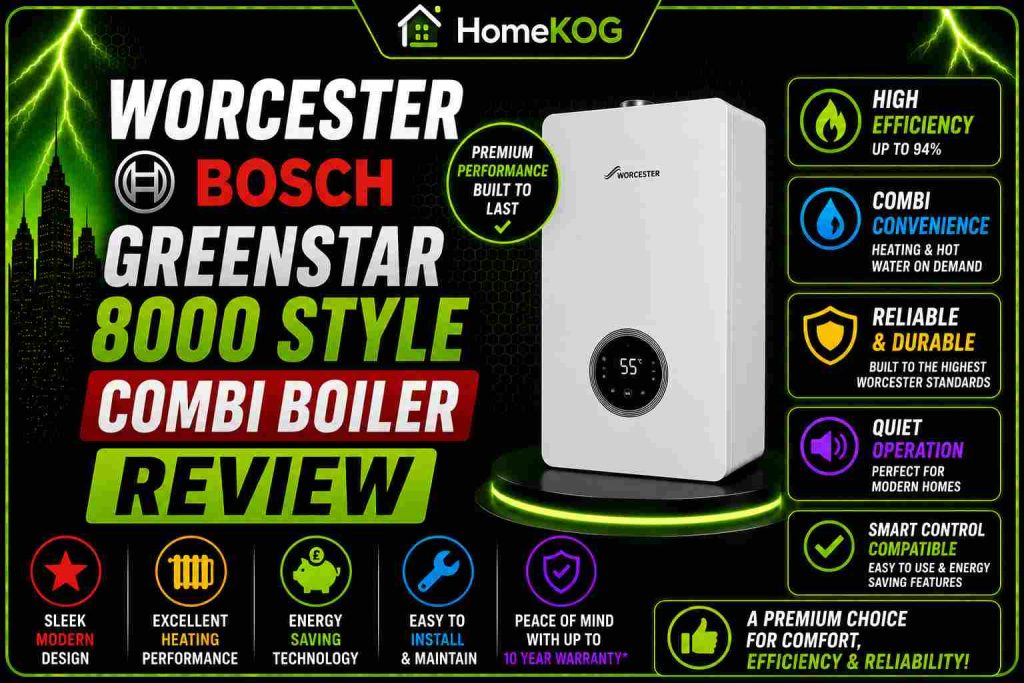
- Worcester Bosch, Viessmann, Vaillant, Baxi, and Ideal all manufacture hydrogen-ready boilers to the 20% blend standard as their standard product offering for the UK market in 2026 — no separate “hydrogen-ready model” selection is required, as all new boilers from these brands already meet the standard.
- The Boiler Upgrade Scheme provides grant funding of up to £7,500 toward the installation of an air source heat pump, positioning the heat pump as the government’s preferred low-carbon domestic heating solution in the near term.
- A Building Regulations Compliance Certificate confirming hydrogen-ready status is issued by the Gas Safe engineer on completion of any new boiler installation in England under current Boiler Plus requirements.
- Carbon dioxide (CO₂) is the primary greenhouse gas produced by burning natural gas in a conventional boiler — a 20% hydrogen blend reduces CO₂ emissions by approximately 6% to 7% compared to 100% natural gas combustion; 100% hydrogen combustion produces zero CO₂.
What Is a Hydrogen-Ready Boiler?
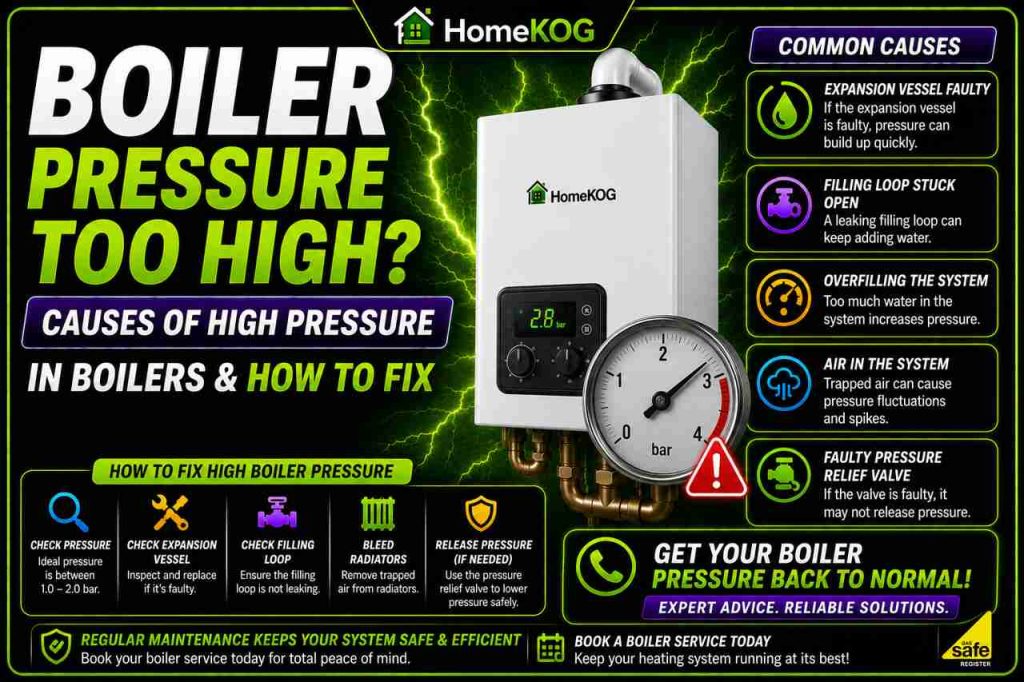
A hydrogen-ready boiler is a standard gas condensing boiler that has been designed and manufactured to operate on natural gas today, with the additional capability of being converted — typically by a Gas Safe engineer replacing a small set of internal components such as the burner, injectors, and gas valve — to run on a pure hydrogen supply when it becomes available through the gas network. Understanding pressure release valve functionalities explained is crucial when considering the safety and efficiency of any hydrogen-ready system. These valves play a vital role in preventing excessive pressure build-up, ensuring that the boiler operates within safe limits. Proper maintenance and functionality of the pressure release valves are essential for both the longevity of the equipment and the safety of the users.
The key distinction is that a hydrogen-ready boiler does not currently burn hydrogen. It burns natural gas exactly like any other modern condensing boiler. The “hydrogen-ready” designation indicates that it is engineered to be compatible with hydrogen fuel in the future, protecting the investment against the planned transition of the UK gas network.
All new gas boilers installed in the UK from 2026 must be hydrogen-ready to a minimum 20% hydrogen blend standard. This is not a premium feature or optional extra — it is a baseline requirement incorporated into all current boiler models from all major manufacturers. When a Gas Safe engineer installs a new Worcester Bosch, Viessmann, Vaillant, Baxi, or Ideal boiler in 2026, it is already hydrogen-ready without any special selection being required.
What Does “20% Hydrogen Blend Ready” Actually Mean?
A 20% hydrogen blend means the boiler can safely and efficiently operate on a gas supply that is 20% hydrogen and 80% natural gas by volume, without any modification. If and when the UK gas network begins distributing a 20% hydrogen blend, existing hydrogen-ready boilers would continue to operate normally without any homeowner action required.
A 20% hydrogen blend reduces carbon dioxide emissions from combustion by approximately 6% to 7% compared to 100% natural gas — a modest but meaningful reduction at grid scale across millions of homes.
What About 100% Hydrogen?
A 100% hydrogen boiler — one that operates on pure hydrogen — is a different and more significant technological step. Burning pure hydrogen requires different burner technology, different gas valve configurations, and potentially different heat exchanger materials than burning natural gas or a 20% blend. It also requires the gas grid to distribute pure hydrogen rather than the natural gas it currently carries — a fundamental infrastructure change.
Current hydrogen-ready boilers are designed with the ambition of being convertible to 100% hydrogen with a moderate component change, but this conversion has not yet been validated at a commercial scale with all current models. The industry and government are working toward this capability, but the timeline remains uncertain.
The UK Hydrogen Heating Roadmap
The UK government has identified hydrogen as a potential long-term low-carbon heating fuel alongside heat pumps and heat networks. Its hydrogen strategy does not commit to a specific timeline for transitioning the gas network to hydrogen but outlines a series of milestones and trials leading toward a potential decision point.
Current Status (2026)
The 20% hydrogen blend trial at Keele University (HyDeploy) was successfully completed, demonstrating that a blend can be distributed safely through existing gas infrastructure and burned in hydrogen-ready appliances without modification. This was a significant proof of concept.
Larger-scale hydrogen village trials — including the H100 Fife project in Scotland, which is supplying 100% hydrogen to a small community of homes — are underway to gather real-world data on 100% hydrogen domestic heating before any broader network transition decision is made.
No date has been set for the transition of the main gas grid to a hydrogen blend or to 100% hydrogen. The government has stated that it will not mandate a specific heating technology for existing homes and that hydrogen, heat pumps, and heat networks will each play a role in decarbonising home heating depending on local conditions.
What This Means for Homeowners
The honest answer is that the timeline for hydrogen reaching most UK homes through the gas network remains genuinely uncertain. The more probable near-term pathway is that homes in specific geographic areas may be connected to hydrogen pilot networks, while the majority of UK homes continue on natural gas for the foreseeable future.
Buying a hydrogen-ready boiler today is prudent future-proofing — and given that all new boilers already are hydrogen-ready, it requires no additional cost or decision. It does not, however, guarantee that hydrogen fuel will reach your home within the operational life of the boiler.
Hydrogen Boilers vs Heat Pumps
The most significant low-carbon heating decision UK homeowners face in 2026 is not between hydrogen-ready and non-hydrogen-ready boilers — all new boilers are already hydrogen-ready. The more meaningful choice is between retaining a gas boiler system and transitioning to a heat pump.
| Feature | Hydrogen-Ready Gas Boiler | Air Source Heat Pump |
|---|---|---|
| Current fuel | Natural gas | Electricity |
| Carbon emissions (current fuel) | CO₂ from gas combustion | Near-zero (from grid electricity) |
| Carbon emissions (future fuel) | Zero (100% hydrogen) | Near-zero |
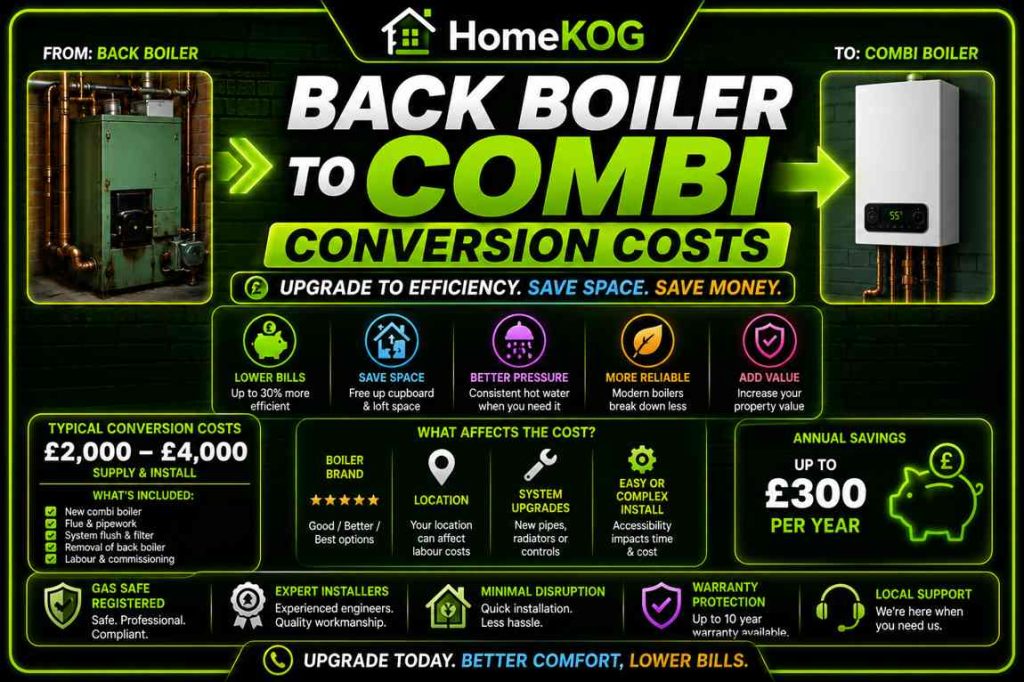
| Installation cost | £2,000 – £4,000 | £8,000 – £15,000 (after grant) |
| Boiler Upgrade Scheme grant | Not applicable | Up to £7,500 |
| Compatibility with existing radiators | Yes | Requires larger radiators in some homes |
| Hot water storage required | No (combi) or yes (system) | Usually yes (cylinder) |
| Running cost (current) | Lower (gas cheaper per kWh) | Higher (electricity more expensive per kWh) |
| Running cost (future) | Dependent on hydrogen price | Improving as grid decarbonises |
| Best suited to | Most existing UK homes | Well-insulated properties |
Heat pumps produce near-zero direct carbon emissions when powered by grid electricity, and the carbon intensity of UK grid electricity continues to fall as renewable generation increases. They are supported by the £7,500 Boiler Upgrade Scheme grant and are the government’s preferred near-term low-carbon heating solution.
Gas boilers — including hydrogen-ready models — continue to produce carbon emissions from natural gas combustion until hydrogen fuel is available. They are significantly cheaper to install, compatible with existing radiator systems in most homes without modification, and remain the practical heating solution for the majority of UK homes in 2026.
The right choice depends on a home’s insulation level, the cost of the installation, the availability of the grant, and the household’s timescale for decarbonising its heating. A well-insulated home that can access the grant may find a heat pump financially viable now. Most older, less insulated homes will find a hydrogen-ready gas boiler to be the more practical solution for the current decade.
Do All New Boilers Have to Be Hydrogen Ready?
From 2026, all new gas boilers installed in the UK must be hydrogen-ready to a minimum 20% hydrogen blend standard as a condition of their ErP efficiency certification and compliance with current building regulations. This requirement was implemented progressively by manufacturers ahead of the regulatory deadline, and all current models from leading manufacturers already meet it.
There is no action required from homeowners to ensure their new boiler is hydrogen-ready — any new gas boiler installed by a Gas Safe engineer in 2026 will be hydrogen-ready by default. The hydrogen-ready designation will be confirmed on the product specification sheet, and the Building Regulations Compliance Certificate will be issued on installation.
What Will It Cost to Convert a Hydrogen-Ready Boiler to Run on Hydrogen?
When 100% hydrogen becomes available through the gas network, the conversion of a hydrogen-ready boiler is intended to be a straightforward process involving the replacement of a small set of internal components — primarily the burner, gas injectors, and gas valve — by a Gas Safe engineer. The cost of this conversion has not yet been formally established, but industry estimates suggest it would be in the range of £100 to £200 for parts and labour.
This conversion is intended to be subsidised or funded by the government at the point of network transition, based on the principle that homeowners should not bear the full cost of a network infrastructure change. The exact funding mechanism has not been confirmed.
Frequently Asked Questions
What is a hydrogen-ready boiler?
A hydrogen-ready boiler is a gas boiler that operates on natural gas today and has been designed to be converted — with a straightforward component change — to run on a hydrogen gas supply in the future. All new gas boilers installed in the UK from 2026 will be hydrogen-ready, with a 20% hydrogen blend as the minimum standard. No special selection is required — any new boiler from a leading manufacturer is already hydrogen-ready as standard.
Are all new boilers hydrogen-ready?
Yes — all new gas boilers sold in the UK from 2026 are hydrogen-ready to a 20% blend standard as a baseline requirement. This applies to all combi, system, and regular gas boilers from all major manufacturers, including Worcester Bosch, Viessmann, Vaillant, Baxi, and Ideal. Hydrogen readiness is not a premium feature or optional extra — it is incorporated into the standard product specification of every new boiler currently available in the UK market.
When will hydrogen boilers be available in the UK?
100% hydrogen boilers — boilers that burn pure hydrogen — are currently undergoing large-scale trials in the UK, including the H100 Fife project in Scotland. They are not yet commercially available for standard domestic installation. No date has been set for the transition of the main UK gas network to hydrogen. The government has indicated that a decision on the hydrogen heating pathway will follow the completion of current trials, but no specific timeline for the mainstream adoption of hydrogen domestic heating has been confirmed.
How much does a hydrogen boiler cost?
Hydrogen-ready boilers — which are all new gas boilers currently available — cost the same as equivalent non-hydrogen-ready models would, as hydrogen readiness is incorporated into the standard product. A new hydrogen-ready combi boiler costs between £2,000 and £4,000 installed, depending on the brand, output size, and installation complexity. When 100% hydrogen becomes available through the gas network, converting a hydrogen-ready boiler is estimated to require a component change costing approximately £100 to £200.
Is a hydrogen boiler better than a heat pump?
Hydrogen boilers and heat pumps represent two different pathways to low-carbon home heating. A heat pump produces near-zero direct emissions now, using electricity from an increasingly decarbonised grid, and is supported by a government grant of up to £7,500. It costs significantly more to install (£8,000 to £15,000 after grant) and works best in well-insulated homes. A hydrogen-ready gas boiler is cheaper to install and compatible with existing heating systems but continues to produce carbon emissions until hydrogen fuel is available. The right choice depends on the property’s insulation level, available budget, and access to the Boiler Upgrade Scheme grant.
Does a hydrogen-ready boiler cost more than a regular gas boiler?
No — hydrogen-ready boilers do not cost more than equivalent non-hydrogen-ready models. Because all new UK gas boilers are hydrogen-ready by standard, there is no price premium associated with the designation. The cost of buying and installing a new gas boiler in 2026 is the same regardless of hydrogen readiness, as it is a baseline specification across the entire market rather than a premium feature.
What is the difference between a hydrogen-ready boiler and a 100% hydrogen boiler?
A hydrogen-ready boiler burns natural gas today and is designed to be converted to run on hydrogen in the future — all new gas boilers sold today fall into this category. A 100% hydrogen boiler burns pure hydrogen and produces only water vapour, with zero direct carbon dioxide emissions — this technology is currently in trial phases in the UK and is not yet commercially available for domestic installation. The two technologies represent different stages of the hydrogen heating transition, and the 100% hydrogen boiler is a future development rather than a current product.
Conclusion: All New Boilers Are Already Hydrogen Ready — Act on What Matters Now
The hydrogen boiler story is genuinely important for the long-term future of UK home heating. But for a homeowner replacing a boiler in 2026, there is almost no specific action required — every new gas boiler available from any reputable manufacturer is already hydrogen-ready by default.
What matters now is the same as it has always been: choosing the right boiler type and output size for your property, selecting a brand with a strong record of reliability and warranty, having it installed by a Gas Safe-accredited engineer, and having it serviced annually.
The longer-term decision — whether to remain on gas with a hydrogen-ready boiler or to transition to a heat pump — is a genuine consideration for homeowners who are eligible for the Boiler Upgrade Scheme grant and live in a well-insulated property. For the majority of UK homes in 2026, a hydrogen-ready gas boiler installed to current standards is the practical, cost-effective, and future-proof heating solution for the next decade.