

Viessmann Boiler Error Codes: Full Guide to Causes and Fixes 2026
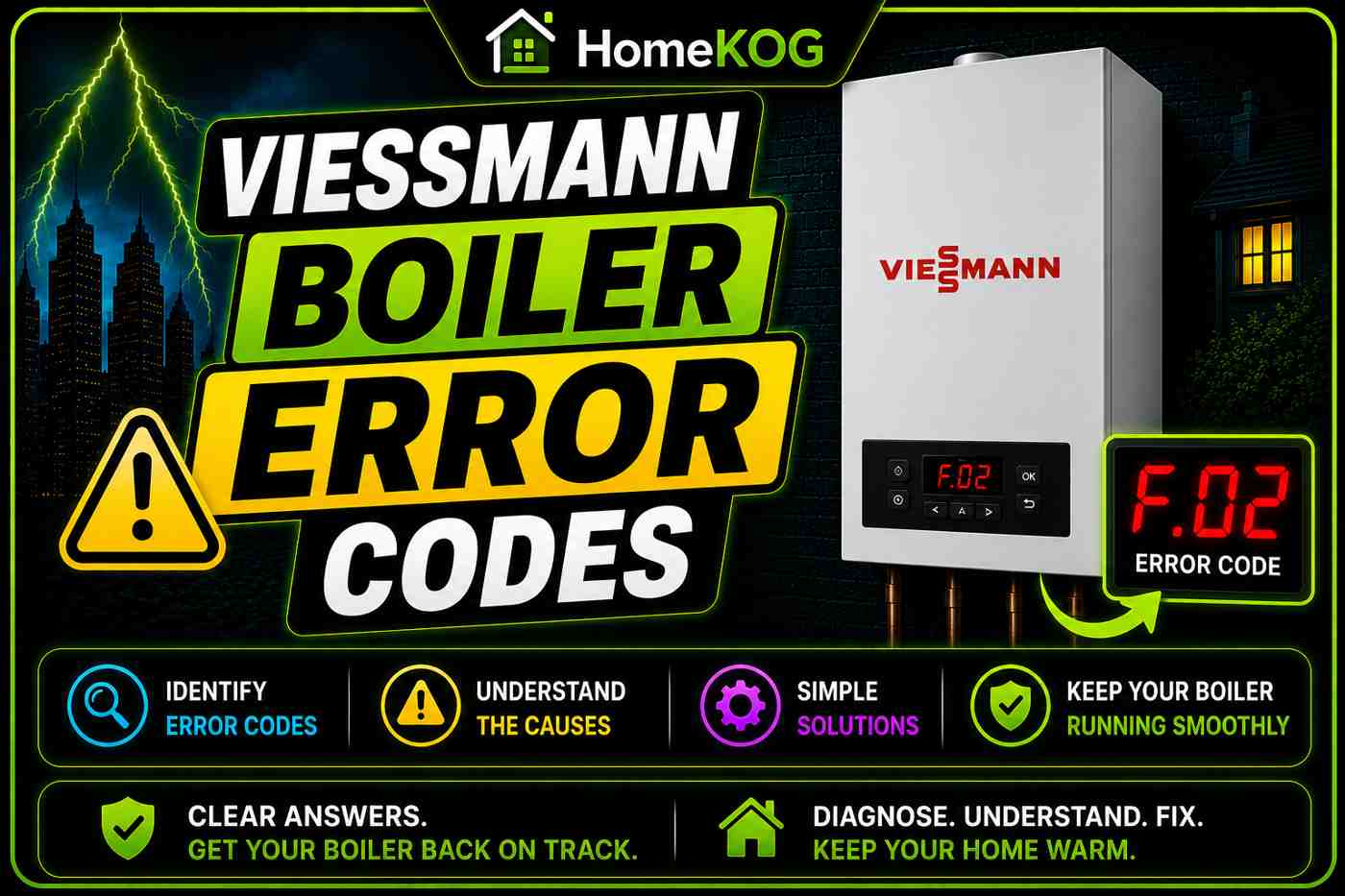
Quick Answer: The most common Viessmann boiler error codes are F1 (burner fault/high flue temperature), F2 (burner lockout), and F4 (no flame detected). F2 can sometimes be resolved by thawing a frozen condensate pipe in cold weather. All other fault codes on this list require inspection and repair by a Gas Safe registered engineer. Viessmann uses a consistent fault code system across most of their range including the Vitodens 050-W, 100-W, and Vitotronic 300. When encountering these issues, it is crucial to consult the appropriate viessmann f5 fault code solutions to diagnose the problem accurately. A thorough understanding of these codes can assist homeowners in determining whether they need to schedule a maintenance visit or perform a simple reset themselves. Proper troubleshooting techniques can potentially save on repair costs while ensuring that the heating system remains efficient and reliable.
Viessmann boilers have an outstanding reputation for reliability and build quality, but even the best-made boiler will develop a fault over time. When something goes wrong, the error code displayed on the control panel is the fastest way to identify the source of the problem and determine whether an engineer’s visit is needed or whether a straightforward DIY check will restore normal operation. This guide covers all Viessmann fault codes in a clear reference format alongside detailed explanations for the three most commonly reported faults. as homeowners plan for future upgrades, it’s important to stay informed about the viessmann boiler price overview for 2026. Understanding the pricing landscape can help in budgeting for potential replacements or new installations. Additionally, consumers should consider the long-term savings associated with energy-efficient models when evaluating their options.
Does the Fault Code System Apply to All Viessmann Boilers?
Yes. Viessmann uses a consistent fault code system across most of their residential boiler range, including the Vitodens 050-W, 100-W, 111-W, 200-W, and Vitotronic 300 control variants. If a code appears on the control panel that is not listed in this guide, the full Viessmann fault code reference document can be downloaded directly from the Viessmann website, or a Gas Safe registered engineer familiar with Viessmann products should be consulted.

Common Viessmann Boiler Error Codes
F2 — Burner Lockout
The F2 error code indicates that the burner has locked out and the boiler has shut itself down as a safety precaution. The burner is the component responsible for producing the flame that heats the water for central heating and hot water supply. When it locks out, no heat or hot water will be produced until the underlying cause has been identified and resolved.
The F2 is one of the more frequently seen Viessmann fault codes and is often caused by a problem elsewhere in the system rather than a fault with the burner itself. If the pump that circulates water around the heating circuit fails or runs poorly, the burner detects a risk of overheating and locks out as a protective response. Other common causes include a frozen condensate pipe during cold weather, a blocked flue, a system blockage or airlock, or contamination within the burner itself.
The frozen condensate pipe is the one cause of an F2 fault that homeowners can often resolve without a Gas Safe engineer. The condensate pipe carries acidic water produced during condensing operation from the boiler to an external drain, and in very cold weather this pipe can freeze solid and cause the boiler to lock out. If temperatures have been below freezing and the F2 code has appeared, locate the condensate pipe — usually a white plastic pipe exiting the boiler and running through or along an external wall — and pour warm (not boiling) water gently along its length to thaw the blockage. Once thawed, press the reset button to attempt a restart.
For all other causes of the F2, a Gas Safe registered engineer should carry out a full inspection before the boiler is returned to service.
Can you fix it yourself? Partially — check for a frozen condensate pipe in cold weather and thaw if present. All other causes require a Gas Safe engineer.
F4 — No Flame Detected
The F4 fault code means the boiler’s flame detection system cannot confirm that a flame is present after the ignition sequence has been initiated. Without confirmed flame detection, the boiler enters lockdown mode to prevent unburned gas from accumulating in the combustion chamber, which would create a safety hazard.
The causes of an F4 are almost always component-level faults that require professional diagnosis. Electronic faults within the boiler’s control system, a failed spark generator, a faulty gas valve, or a damaged flame detection electrode can all produce this code. In some cases a temporary interruption to the gas supply — for example during meter work by the gas network — will trigger an F4, and a single reset attempt after confirming the gas supply is restored is worth trying before calling an engineer.
Can you fix it yourself? Check the gas supply is active and attempt one reset. If the fault persists, a Gas Safe engineer is required.
F1 — Burner Fault / Maximum Flue Gas Temperature Exceeded
The F1 code indicates a problem with the burner, most commonly triggered by the system exceeding the maximum permitted flue gas temperature. It may indicate an active fault or a fault that has already occurred and caused a lockout. When the boiler produces more heat than the system can dissipate — due to low system pressure, a closed or blocked radiator valve, or a circulation problem — flue gas temperatures can rise beyond the permitted limit and trigger the F1 safety shutdown.
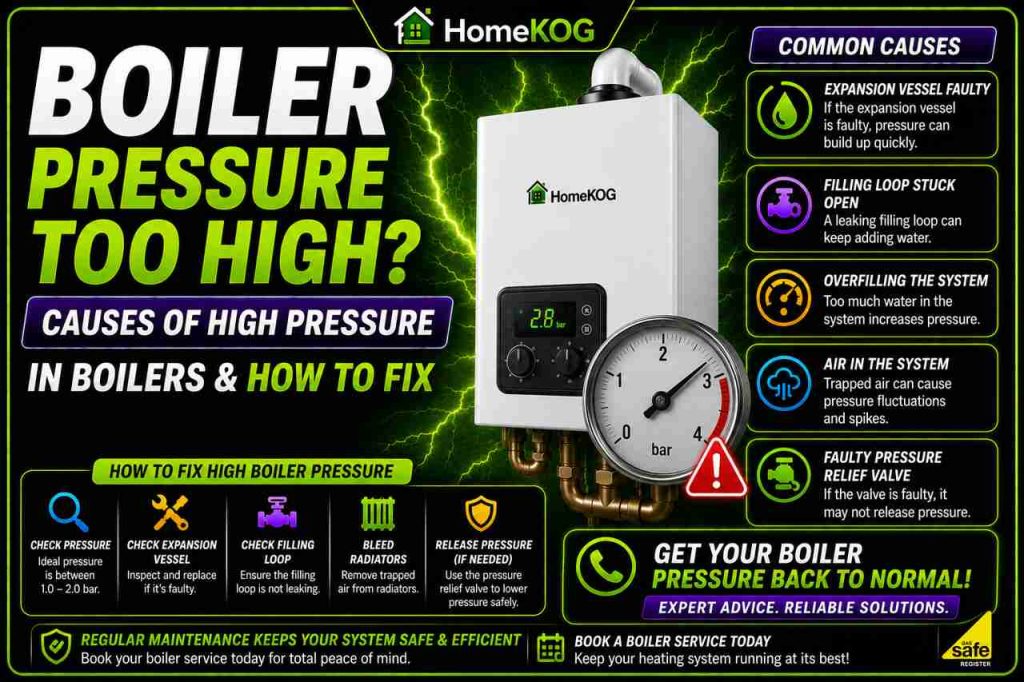
The first check when an F1 appears is the system pressure gauge on the front of the boiler. If the pressure is below 1 bar, repressurising the system via the filling loop to between 1 and 1.5 bar is the correct first step and may resolve the fault without any further action. If the pressure is within the correct range and the F1 persists after a reset attempt, a Gas Safe engineer should investigate the flue gas temperature, heat exchanger condition, and circulation system before the boiler is restarted.
Can you fix it yourself? Check and restore system pressure to 1 to 1.5 bar and attempt a reset. If the fault persists, a Gas Safe engineer is required.
Full Viessmann Boiler Error Code Reference
| Code | Fault Description | Engineer Required? |
|---|---|---|
| F1 | Burner fault / maximum flue gas temperature exceeded | Check pressure first, then yes |
| F2 | Burner lockout | Check condensate pipe first, then yes |
| F4 | No flame detected | Check gas supply first, then yes |
| 02 | Safety chain activation | Yes |
| 04, 05, 06, 08 | Fan speed fault | Yes |
| 07, 09 | Air pressure not at correct level | Yes |
| 0A / 0D | Fan speed fault (variant) | Yes |
| 1A, 1B | Flow sensor 1 or 2 faulty | Yes |
| 1F | Differential flow rate fault | Yes |
| 25 | Emissions test switch held in hand position for over 30 minutes | Reset switch position |
| 26 | Maximum or minimum rated input active for over 30 minutes | Yes |
| 35 | Reset button pressed during emissions test with switch at hand symbol | Reset switch position |
| A2 | KM-BUS fault to Vitocom | Yes |
| A5 | Short circuit or open circuit | Yes |
Fault Code Detail: Secondary Codes
Code 02 — Safety Chain Activation
This code indicates that one of the boiler’s internal safety devices has tripped, triggering a safety chain shutdown. The specific device that has activated will need to be identified by an engineer before the boiler can safely be restarted.
Codes 04, 05, 06, 08 — Fan Speed Faults
These codes all relate to the combustion fan operating outside its expected speed parameters. The fan controls the air supply to the burner and the exhaust of flue gases, and a fan running too fast, too slow, or erratically will trigger a lockout. Fan motor failure, wiring faults, or a faulty fan control board are the most common causes. An engineer should inspect and replace the fan or associated components as required.
Codes 07, 09 — Air Pressure Fault
These codes indicate that the air pressure within the boiler is not at the correct level for safe combustion. This can be caused by a blocked flue, a faulty air pressure switch, or a problem with the combustion air supply pathway. A Gas Safe engineer should inspect the flue and air pressure system before the boiler is restarted.
Codes 0A / 0D — Fan Speed Fault (Variant)
These are variant codes for fan speed issues on certain Viessmann control board configurations, with the same causes and resolution as codes 04 through 08 above.
Codes 1A, 1B — Flow Sensor Faults
These codes indicate that one of the boiler’s flow sensors is either faulty or reading outside its expected parameters. Flow sensors monitor the temperature of water entering and leaving the heat exchanger, and a faulty sensor can cause the boiler to overheat or shut down unnecessarily. Sensor replacement is typically straightforward for an engineer and is not a particularly expensive repair.
Code 1F — Differential Flow Rate Fault
The 1F code indicates a problem with the differential between the flow and return water temperatures, which can indicate a circulation fault, a failing pump, or a heat exchanger problem. An engineer should assess the full heating circuit to identify the source of the differential flow rate issue.
Code 25 — Emissions Test Switch Held Too Long
This is a non-critical code that appears when the emissions test switch has been held in the hand position for more than 30 minutes. It does not indicate a boiler fault — it is a reminder that the boiler has been in test mode for an extended period. Returning the switch to its normal operating position will clear the code.
Code 26 — Rated Input Limit Active Too Long
The 26 code indicates the boiler has been operating at maximum or minimum rated input for more than 30 minutes without achieving the required system condition. This can indicate a sizing mismatch, a circulation fault, or a control system issue. An engineer should assess the cause rather than simply resetting the boiler.
Code 35 — Reset During Emissions Test
Like code 25, this is a procedural code rather than a fault. It appears when the reset button is pressed while the emissions test switch is in the hand position. Returning the switch to its normal position will resolve the code without any engineer involvement.
Code A2 — KM-BUS Communication Fault
The A2 code indicates a communication failure between the boiler and a connected Vitocom remote monitoring or control device. This is typically caused by a wiring fault, a failed communication module, or a software issue. An engineer with Viessmann system experience should diagnose and resolve the communication fault.
Code A5 — Short Circuit or Open Circuit
The A5 code indicates an electrical fault — either a short circuit or an open circuit — within the boiler’s wiring or control system. This requires an engineer to trace and repair the electrical fault before the boiler can safely be restarted.
FAQ
What does the Viessmann F2 fault code mean?
The Viessmann F2 fault code means the burner has locked out. It is triggered when the boiler detects a condition that could lead to overheating, and the most common causes are a failed pump, a frozen condensate pipe, a blocked flue, a system airlock, or contamination within the burner. A frozen condensate pipe during cold weather is the one cause homeowners can address themselves by applying warm water to the external condensate pipe. All other causes of an F2 require a Gas Safe registered engineer to diagnose and repair before the boiler is restarted.
What causes the Viessmann F4 error code?
The Viessmann F4 error code means the boiler cannot detect a flame after the ignition sequence has been initiated. Common causes include a failed spark generator, a faulty gas valve, a damaged flame detection electrode, or an electronic fault in the boiler’s control system. An interruption to the gas supply during network maintenance work can also trigger an F4, in which case confirming the gas supply has been restored and attempting a single reset is the first step. If the fault persists after one reset, a Gas Safe registered engineer should carry out a full inspection.
How do I fix a frozen condensate pipe on a Viessmann boiler?
A frozen condensate pipe is one of the most common causes of a Viessmann F2 lockout during cold weather. To thaw it, locate the condensate pipe — usually a white plastic pipe running from the boiler through or along an external wall — and pour warm water slowly along its length until the blockage thaws. Do not use boiling water as this can damage the plastic pipe. Once thawed, press the reset button on the boiler to attempt a restart. Lagging the external section of the condensate pipe with foam pipe insulation prevents future freezing and is a worthwhile precaution in properties where the pipe runs through an exposed area.
Can I reset a Viessmann boiler fault myself?
Yes, attempting a single reset is appropriate for most Viessmann fault codes as a first step after checking for any obvious cause — such as low pressure for an F1 or a frozen condensate pipe for an F2. The reset button is located on the boiler’s control panel. If the fault code returns after one reset, continued resetting without identifying the cause is not recommended and a Gas Safe registered engineer should be called. Repeatedly resetting a boiler with an unresolved fault can mask a developing problem and potentially cause more serious and expensive damage.
Do Viessmann fault codes apply to all boiler models?
Yes, Viessmann uses a consistent fault code system across most of their residential boiler range including the Vitodens 050-W, 100-W, 111-W, 200-W, and models with the Vitotronic 300 control interface. The codes and their meanings are standardised across the range, which means the same code on a Vitodens 050-W and a Vitodens 100-W indicates the same fault. If a code appears that is not listed in this guide, the full Viessmann fault code reference documentation can be downloaded from the Viessmann website. Viessmann Vitodens 222F features advanced technology designed for efficiency and reliability. Its compact design makes it an ideal choice for smaller homes, while still providing powerful heating capabilities. Additionally, the integrated smart controls allow for easy temperature management and can enhance energy savings throughout the year.
When should I consider replacing my Viessmann boiler instead of repairing it?
A Viessmann boiler under 10 years old with a single straightforward fault is almost always worth repairing. For boilers over 10 to 12 years old with multiple recurring faults, or where a single repair — particularly heat exchanger replacement — costs more than 50% of a new boiler installation, replacement is likely the more economical long-term decision. A Gas Safe engineer familiar with Viessmann products can give an honest assessment of the boiler’s condition and the likely cost of keeping it operational versus the cost and efficiency benefits of a new installation. When considering viessmann boiler efficiency ratings, it’s important to note that newer models typically offer superior performance and lower energy consumption. Additionally, these efficiency ratings can influence long-term savings on energy bills, making a new installation more appealing for homeowners. A thorough evaluation of the existing system’s efficiency compared to current models can provide valuable insights for making the right choice.
What is the KM-BUS fault on a Viessmann boiler (code A2)?
The Viessmann A2 fault code indicates a communication failure on the KM-BUS, which is the data connection between the boiler and connected Viessmann devices such as the Vitocom remote monitoring system or external control modules. The fault typically points to a wiring problem between the connected devices, a failed communication module, or a software fault on the Vitocom unit. A Gas Safe engineer with Viessmann system experience should diagnose and resolve the communication fault, as incorrect wiring or module replacement can affect the boiler’s control and monitoring functions.
Conclusion
Viessmann’s fault code system is one of the clearest and most informative in the UK residential boiler market, giving homeowners and engineers an immediate starting point for diagnosis when something goes wrong. For the three most common codes — F1, F2, and F4 — there are straightforward initial checks that homeowners can carry out themselves before calling an engineer, which in some cases will restore the boiler to operation without any professional involvement.
For the majority of fault codes, however, a Gas Safe registered engineer with Viessmann product experience is the right call. Annual servicing remains the most effective way to prevent fault codes from appearing in the first place — keeping the burner clean, the pressure correct, the condensate pipe clear, and all sensors functioning correctly throughout the boiler’s operational life. A Viessmann boiler that is properly maintained should provide 10 to 15 years of reliable operation with minimal unplanned downtime.