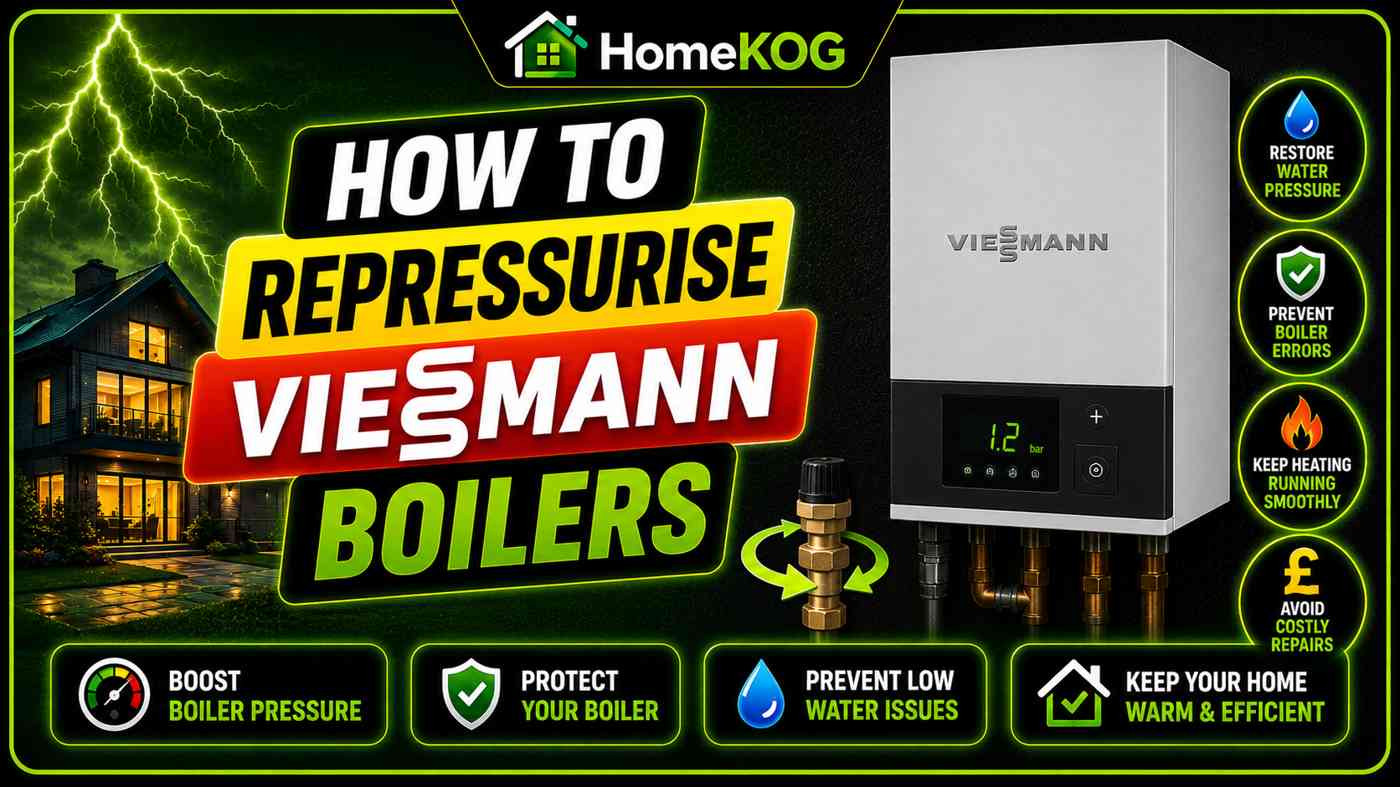

How to Repressurise a Viessmann Boiler: Step-by-Step Guide
Quick Answer: To repressurise a Viessmann boiler, turn off the power, locate the filling loop beneath the boiler, turn both handles to open and listen for water entering the system, watch the pressure gauge until it reads between 1 and 1.5 bar, then close the handles and turn the power back on. If pressure keeps dropping after repressurising, a leak in the system is the likely cause.
Low boiler pressure is one of the most common issues reported by owners of Viessmann boilers, and it is also one of the easiest to fix without the need for an engineer call-out. Understanding what causes pressure to drop, how to spot it early, and how to restore it correctly keeps the boiler running efficiently and avoids unnecessary disruption to heating and hot water.
When Does a Viessmann Boiler Need Repressurising?
The correct operating pressure for a Viessmann boiler is between 1 and 1.5 bar when the system is cold and at rest. Most Viessmann boilers display a pressure gauge on the front fascia, and the indicator should sit within the green zone on the dial or display. A reading below 1 bar means the system is under-pressurised and the boiler will not fire reliably until the pressure is restored.
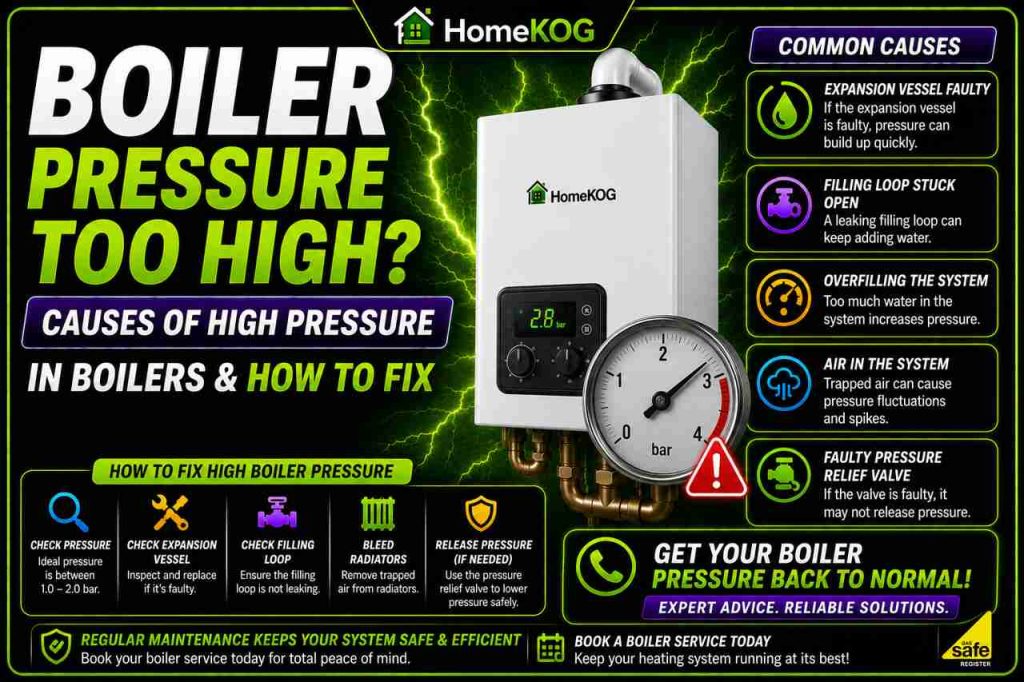
When the heating is running, system pressure will naturally rise slightly as water expands with heat. This is normal behaviour and the pressure should not climb by more than 1 bar above the cold reading during normal operation. If it does, or if the pressure gauge is reading above 2.75 bar at any point, high pressure rather than low pressure is the issue and a different approach is needed.
The most common trigger for a drop in pressure is bleeding the radiators, which releases a small amount of water from the system alongside the air. After bleeding any radiator it is good practice to check the pressure gauge and repressurise if the reading has fallen below 1 bar.

What Causes Low Pressure in a Viessmann Boiler?
A small leak somewhere in the central heating system is the most common underlying cause of persistent low pressure. Leaks can occur at radiator valves, pipe joints, the heat exchanger, or the pressure relief valve, and they are often so minor that no visible drip or damp patch is apparent. The only sign is a gradual and repeated drop in system pressure over days or weeks.
If the Viessmann boiler loses pressure only occasionally — once or twice a year after radiator bleeding — there is nothing to be concerned about and repressurising as needed is all that is required. If the pressure drops frequently without any obvious cause, a Gas Safe registered engineer should inspect the system to locate and repair the leak rather than the homeowner continuing to top up the pressure indefinitely.
Is Low Boiler Pressure Dangerous?
Low pressure in a Viessmann boiler is not a safety risk. It will not cause damage to the boiler’s internal components and does not create a hazardous situation for the household. The main consequence is a loss of heating and hot water efficiency — a boiler operating below the correct pressure works harder to circulate water around the system, which increases gas consumption and energy bills while delivering less effective heat output.
High pressure is a more serious concern than low pressure. Sustained high pressure can cause leaks, damage seals, and in extreme cases lead to component failure. If the pressure gauge ever reads significantly above 2.75 bar, the issue should be addressed promptly rather than left to resolve itself.
Viessmann Boiler Models Most Commonly Affected
Low pressure can occur on any gas boiler over time, but the models most frequently reported by Viessmann owners as needing repressurising are the Vitodens 050-W combi boiler, the Vitodens 100-W, and the Vitodens 111-W. All three are among the best-selling Viessmann models in the UK and the repressurising process is essentially identical across all of them. Viessmann boiler efficiency ratings explained are crucial for homeowners to understand how their heating systems operate. High efficiency in these boilers not only reduces energy bills but also has a positive impact on the environment. By comparing different models, users can make informed decisions about which Viessmann boiler best suits their needs.
How to Repressurise a Viessmann Boiler: 5 Steps
Before starting, check the boiler manual to confirm the specific pressure recommendation for the model in question. Viessmann manuals can be downloaded from the Viessmann website if the original is not available. Having a second person present to watch the pressure gauge while the filling loop is operated is helpful but not essential. Understanding the nuances of Viessmann heat pump pricing analysis can aid in making informed decisions about installation and maintenance costs. It’s beneficial to compare these prices with other brands to evaluate value for money. Additionally, investigating seasonal promotions or incentives may yield significant savings.
Step 1 — Find the filling loop. The filling loop is located beneath the boiler unit. It consists of a short flexible or rigid connection between the mains water supply and the heating circuit, with two handles or taps to control the flow. The handles will be positioned at a 90-degree angle to the pipe when in the closed position, indicating no water is flowing.
Step 2 — Turn off the boiler power. Switch the boiler off at the mains before opening the filling loop. This ensures no power is running through the system while water is being added, which is an important safety precaution and also allows for a more accurate cold pressure reading once the process is complete.
Step 3 — Open the filling loop handles. Turn both handles so that they run parallel to the pipe rather than perpendicular to it. As the handles open, water will begin to flow from the mains supply into the heating circuit and you should be able to hear it entering the system. Open the handles slowly and in small increments to maintain control over the rate at which pressure rises.
Step 4 — Watch the pressure gauge. Monitor the pressure gauge continuously as water enters the system. The target reading is between 1 and 1.5 bar on a cold system. As soon as the gauge reaches this level, close both filling loop handles firmly, returning them to the 90-degree closed position. Do not allow the pressure to climb beyond 1.5 bar before closing the loop.
Step 5 — Turn the power back on. Restore power to the boiler at the mains and allow it to go through its normal startup sequence. Keep an eye on the pressure gauge for the first few minutes of operation to confirm the pressure remains stable at the correct level and does not climb excessively as the system heats up.
What to Do If Viessmann Boiler Pressure Is Too High
If the pressure gauge reads above 2.75 bar after repressurising or at any other point, excess water needs to be released from the system before the boiler will operate safely. The two most common causes of high pressure are an overfilled system following repressurising and a filling loop that has not been closed fully after topping up.
The first step is to check that both filling loop handles are fully closed and no water is still entering the system. If the handles are correctly closed and pressure remains high, bleeding a radiator is the most straightforward way to release the excess. Use a radiator bleed key to open the bleed valve on any radiator, allow water to escape until the gauge drops to approximately 1.3 bar, then close the valve firmly. Be prepared for hot water to follow the initial burst of air and have a cloth ready to avoid damage to flooring or decoration.
If pressure climbs again after being bled down, a faulty expansion vessel or pressure relief valve is the likely cause and a Gas Safe registered engineer should be called to investigate rather than repeatedly bleeding the system as a temporary measure.
Does Repeatedly Losing Pressure Mean the Boiler Needs Replacing?
Not necessarily — repeated pressure loss most commonly indicates a leak in the system rather than a fundamental failure of the boiler itself. Locating and repairing the leak is often a straightforward and relatively inexpensive job for a Gas Safe engineer, and once the source of water loss is sealed the pressure should stabilise without further intervention.
However, if the Viessmann boiler is older and multiple faults are developing alongside the pressure issues, it is worth asking an engineer to give an honest assessment of the boiler’s overall condition. An ageing boiler that requires repeated repairs may cost more to maintain over the next few years than the investment in a modern replacement that will run efficiently and with full warranty cover for the decade ahead.
FAQ
What pressure should a Viessmann boiler be set to?
A Viessmann boiler should be pressurised to between 1 and 1.5 bar when the heating system is cold and at rest. This is the standard recommended range for the Vitodens 050-W, 100-W, and 111-W models and most other Viessmann residential boilers. During normal operation with the heating running, pressure may rise slightly as water expands with heat, but should not increase by more than 1 bar above the cold reading. If pressure rises above 2.75 bar at any point, the system needs to be bled down to a safe level. viessmann vitodens 222f features advanced condensing technology that maximizes efficiency and minimizes energy costs. Additionally, this model includes a comprehensive user interface for easy operation and management of heating settings. Users can expect a quiet performance, ensuring that their comfort is maintained without disturbing the peace of their home.
Can I repressurise a Viessmann boiler myself?
Yes, repressurising a Viessmann boiler using the filling loop is a safe task that most homeowners can carry out without professional assistance. It does not require Gas Safe registration and is one of the few boiler maintenance tasks explicitly recommended for owners to handle themselves. The process involves turning off the power, opening the filling loop handles slowly, watching the pressure gauge until it reaches 1 to 1.5 bar, then closing the handles and restoring power. If pressure cannot be restored or drops again quickly, a Gas Safe engineer should investigate.
Why does my Viessmann boiler keep losing pressure?
A Viessmann boiler that repeatedly loses pressure almost always has a slow leak somewhere in the central heating system. Leaks can occur at radiator valves, pipe joints, the expansion vessel, or the pressure relief valve, and many are small enough to leave no visible evidence of water escaping. A Gas Safe registered engineer can carry out a systematic inspection to locate the source of the leak, which once repaired will allow the system pressure to remain stable without repeated topping up.
Is low pressure in a Viessmann boiler dangerous?
No, low boiler pressure is not a safety hazard. It will not cause damage to the boiler or create a risk for the household. The main practical consequence is that the boiler will be less efficient than it should be, working harder to circulate water and using more gas to achieve the same heat output, which increases energy bills. Restoring the correct pressure resolves the efficiency loss immediately and returns the boiler to normal operation.
How do I know if my Viessmann boiler pressure is too low?
The pressure gauge on the front of the boiler is the most reliable indicator. A reading below 1 bar, or an indicator outside the green zone on the display, confirms the system is under-pressurised. The boiler may also stop firing entirely and display a fault code on the control panel. Checking the gauge first before assuming a more serious fault is always the recommended starting point when the boiler loses heating or hot water without obvious reason.
What should I do if my Viessmann boiler pressure is too high?
First check that the filling loop handles are fully closed and no water is continuing to enter the system. If the handles are correctly closed and pressure remains above 2.75 bar, bleed a radiator using a bleed key until the gauge drops to approximately 1.3 bar, then close the valve. If high pressure recurs after being corrected, a faulty expansion vessel or pressure relief valve is the most likely cause and a Gas Safe engineer should inspect the system before the fault causes damage to other components.
How often should a Viessmann boiler be repressurised?
There is no fixed schedule — the boiler should simply be repressurised whenever the gauge drops below 1 bar or a low pressure warning appears on the display. A slight drop in pressure once or twice a year, typically following radiator bleeding or minor natural system loss, is entirely normal and requires no investigation beyond topping up. Pressure dropping more frequently than this, or dropping without a clear cause, warrants an engineer’s inspection to identify whether a leak is present in the system.
Conclusion
Repressurising a Viessmann boiler is a quick and straightforward task that most homeowners can handle confidently without any specialist knowledge or tools. Following the five steps outlined above — turning off the power, locating the filling loop, opening the handles slowly, monitoring the gauge to the correct level, and restoring power — takes only a few minutes and restores normal heating and hot water operation immediately in most cases.
The important point to keep in mind is that repressurising treats the symptom rather than the cause when pressure loss is a recurring pattern. A boiler that needs topping up repeatedly is losing water somewhere and that loss will not stop until the source is found and repaired. Annual servicing by a Gas Safe registered engineer remains the most reliable way to identify developing faults early, maintain the efficiency of the Viessmann system, and keep the boiler performing at its best throughout its operational life.