
How to Repressurise a Glow Worm Boiler: Step-by-Step Guide
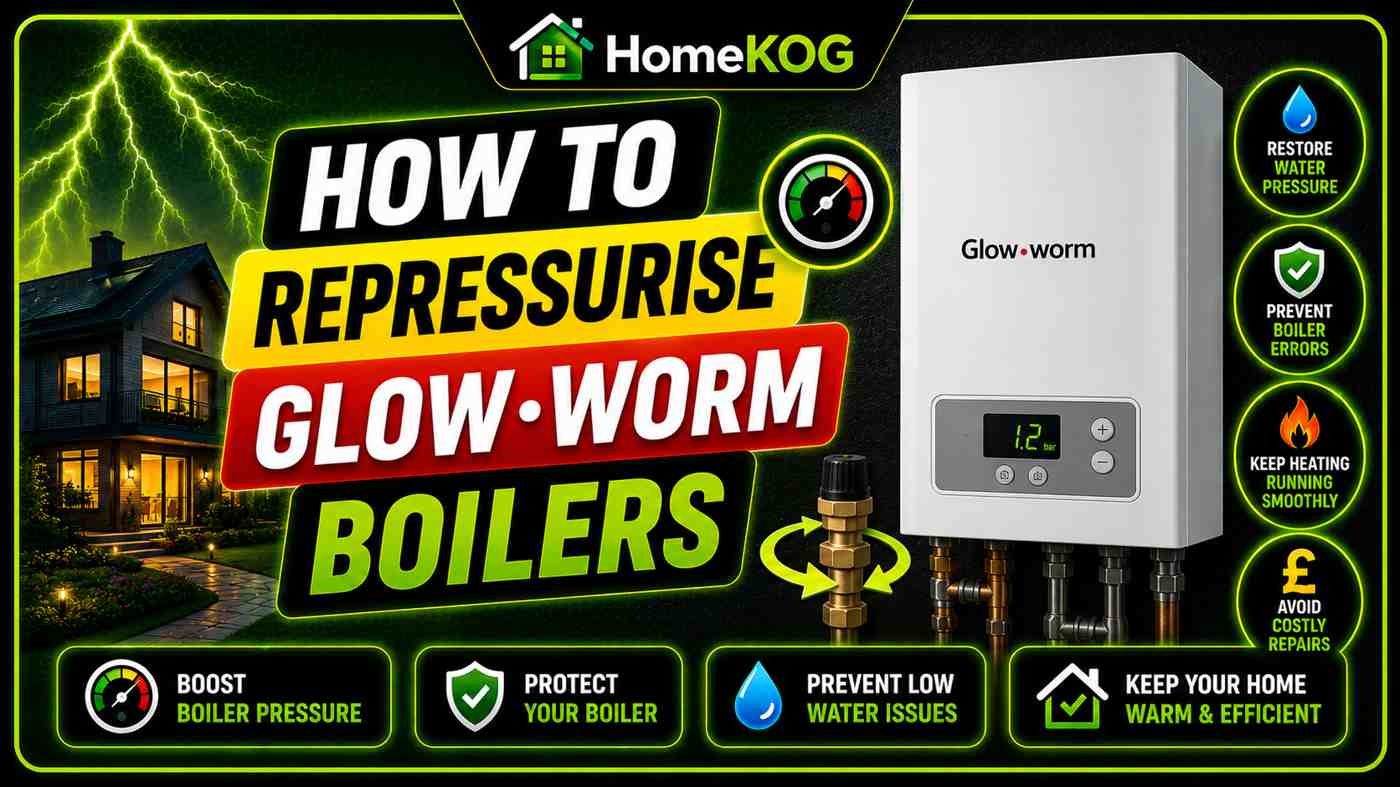
Quick Answer: To repressurise a Glow Worm boiler, locate the filling loop beneath or near the boiler, open both taps slowly while watching the pressure gauge, and close them once the pressure reaches 1.5 bar. If the boiler displays fault code E22 or F9, low pressure is confirmed. If pressure keeps dropping after repressurising, a leak in the system is the most likely cause and a Gas Safe engineer should investigate.
Low boiler pressure is one of the most common issues Glow Worm boiler owners encounter, and the good news is that repressurising the system is one of the few boiler problems a homeowner can fix confidently without calling out an engineer. Understanding why pressure drops, how to spot it, and how to restore it correctly takes less than ten minutes to learn and can save the cost of an unnecessary call-out.
Why Does a Glow Worm Boiler Lose Pressure?
A central heating system requires a steady water pressure to push heated water through the pipework and radiators. When that pressure falls below the minimum threshold, the boiler is unable to fire and the heating and hot water stop working until the pressure is restored. For homeowners looking to upgrade or maintain their heating systems, understanding boiler financing options for homeowners can be essential. These options often provide manageable payment plans that can ease the financial burden of a new installation or repairs. Additionally, exploring different financing avenues can help ensure that you don’t face unexpected costs when your boiler is malfunctioning. For those with three bedroom homes, researching the toprated boilers for three bedroom homes can lead to significant energy savings and improved comfort. Selecting the right model not only enhances performance but also increases the value of your property. By investing in a high-quality boiler, homeowners can enjoy efficient heating for years to come.
The most common cause of low pressure is a small leak somewhere in the system — often so minor that it produces no visible drips and goes unnoticed for weeks or months. Water gradually escapes through the leak, pressure drops slowly, and the boiler eventually locks out and displays a low-pressure fault code. If pressure drops repeatedly after repressurising, a leak of this kind is almost certainly the underlying cause and a Gas Safe engineer will need to locate and repair it.
Bleeding a radiator is another frequent cause of a drop in system pressure. Releasing air from a radiator also releases a small amount of water from the system, which reduces the overall pressure. After bleeding any radiator it is always good practice to check the pressure gauge and repressurise if needed.

How to Recognise Low Pressure in a Glow Worm Boiler
The pressure gauge is the quickest and most reliable indicator of the system’s current pressure. On most Glow Worm boilers this is a dial or digital display positioned on the front of the unit. A reading below 1 bar indicates the system is under-pressurised and the boiler will not fire reliably at that level.
The control panel provides a second indicator. Glow Worm boilers display fault code E22 to confirm low water pressure, at which point some models will lock the system entirely until the pressure is restored and the boiler is reset. On newer Glow Worm models produced since the Vaillant takeover, the same fault may appear as code F9 rather than E22 — both mean the same thing and both are resolved by repressurising the system.
What You Will Need
Before starting, make sure the following are to hand to keep the process straightforward.
- Access to the filling loop, located beneath or near the boiler
- A view of the pressure gauge throughout the process — either directly or with someone watching it for you
- A cloth or towel in case of any minor drips around the filling loop connection
Step-by-Step Guide: Built-In Filling Loop Method
Most Glow Worm boilers with a built-in filling loop have two taps positioned beneath the boiler. The process is straightforward and takes only a few minutes from start to finish.
Step 1 — Locate the filling loop. The filling loop will be found underneath the boiler unit. It typically consists of a flexible braided hose with a tap at each end, or in some models two lever taps mounted directly to the pipework beneath the boiler casing. Once you have located the filling loop, you may need to address any issues arising from low boiler pressure, particularly during the colder months when frozen pipes are a concern. Familiarizing yourself with thawing techniques for frozen pipes will be essential to ensure your heating system operates efficiently. Take precautions to prevent future freezing by ensuring proper insulation around exposed pipes.
Step 2 — Open the right-hand tap. Turn the right-hand tap to the open position. This connects the filling loop to the mains water supply and prepares the system to receive water.
Step 3 — Open the left-hand tap slowly. Turn the left-hand tap carefully to the open position. You should hear water entering the system as the mains supply flows through the filling loop into the heating circuit. Keep the movement slow and controlled to avoid overshooting the target pressure.
Step 4 — Watch the pressure gauge. Monitor the pressure gauge continuously as water enters the system. The target pressure is 1.5 bar — this is the recommended level for most Glow Worm boilers at rest with the heating off. Do not allow the pressure to rise above this point before closing the taps.
Step 5 — Close both taps. Once the gauge reads 1.5 bar, close the left-hand tap first, then the right-hand tap. Closing them in this order prevents any residual pressure from the mains supply pushing additional water into the system after the filling loop is sealed.
Step-by-Step Guide: External Filling Loop Method
If the Glow Worm boiler does not have a built-in filling loop, an external filling loop will have been fitted during the original installation. These come in two configurations — with one tap or with two taps.
External Filling Loop with Two Taps
Step 1 — Open one tap fully, then slowly open the second tap. You should hear water beginning to pass through the loop and into the system.
Step 2 — Watch the pressure gauge and wait for the reading to reach 1.5 bar.
Step 3 — Close both taps once the target pressure is reached, starting with the tap that was opened second.
External Filling Loop with One Tap
Step 1 — Open the single tap carefully and listen for water entering the system.
Step 2 — Monitor the pressure gauge and wait for the reading to reach 1.5 bar.
Step 3 — Close the tap firmly once the correct pressure is shown on the gauge.
Tips for Accurate Repressurising
The most important principle when repressurising any boiler is to make small, gradual adjustments rather than opening the filling loop fully and waiting for the pressure to climb. Opening the taps fully can cause the pressure to overshoot 1.5 bar quickly, which then requires water to be bled from the system to bring it back down — turning a five-minute job into a considerably longer one.
If the pressure gauge is not easily visible from where the filling loop is located, asking someone else to watch it and call out the reading as it climbs is the simplest way to avoid overshooting. Alternatively, open the tap in short bursts of a few seconds at a time, checking the gauge after each adjustment until the correct pressure is reached.
What to Do If Glow Worm Boiler Pressure Is Too High
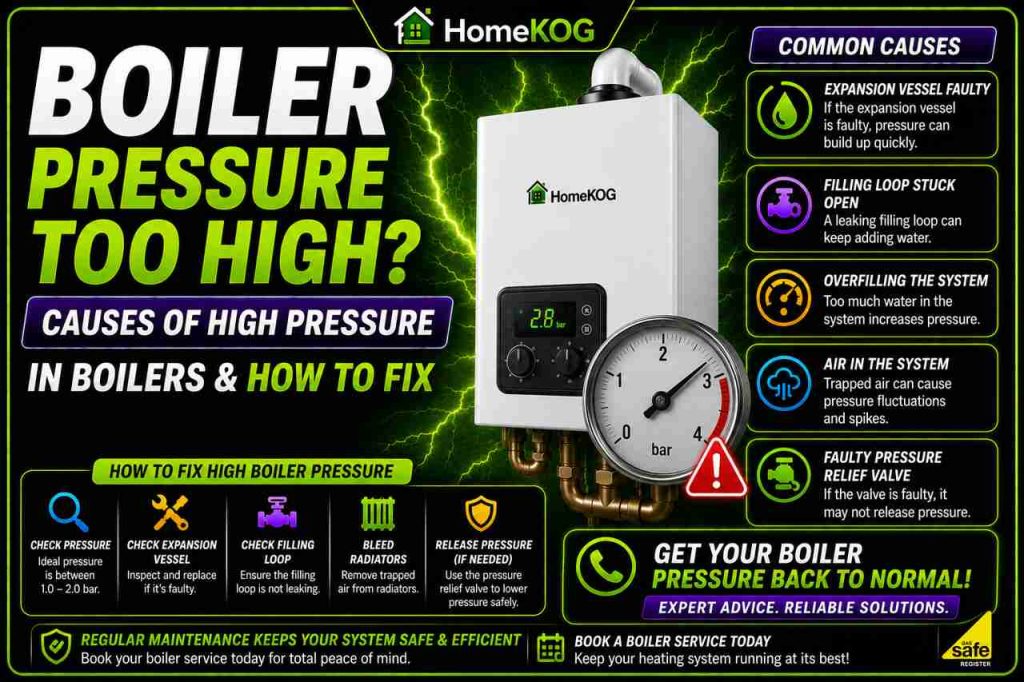
If the pressure gauge reads above 2.75 bar, the system is over-pressurised and needs to be brought down before the boiler will operate safely. High pressure most commonly results from overfilling during a repressurise, but can also be caused by a faulty expansion vessel or a failed pressure relief valve.
The most straightforward way to reduce high pressure is to bleed a radiator. Use a radiator bleed key to open the bleed valve on any radiator until the pressure gauge drops to approximately 1.3 bar, then close the valve firmly. Be prepared for water to follow the air out of the bleed valve — have a cloth ready and treat the escaping water with care as it may be very hot.
If high pressure recurs without obvious cause or if the pressure relief valve is discharging water outside the property through the overflow pipe, this indicates a mechanical fault that requires investigation by a Gas Safe registered engineer rather than a DIY fix.
When to Call a Gas Safe Engineer
Repressurising is a safe and straightforward DIY task, but there are circumstances where professional help is the more appropriate response. If the boiler loses pressure repeatedly within a short time of being repressurised, a leak is almost certainly present in the system. Leaks can occur at radiator valves, pipe joints, the heat exchanger, or the pressure relief valve itself, and locating the source requires a systematic inspection by a qualified engineer.
If repressurising does not restore normal operation and the boiler continues to display the E22 or F9 fault code after the pressure has been corrected, a mechanical fault within the boiler may be preventing the pressure sensor from reading correctly — another situation that requires an engineer’s attention. On older Glow Worm boilers where multiple faults are developing, it is worth asking the engineer to give an honest assessment of whether repair or replacement represents the better long-term investment.
FAQ
What does fault code E22 mean on a Glow Worm boiler?
Fault code E22 on a Glow Worm boiler indicates low water pressure in the central heating system. The boiler has detected that the pressure has fallen below the minimum threshold required for safe operation and has locked out to prevent further operation until the pressure is restored. On newer Glow Worm models produced after the Vaillant acquisition, the same low pressure fault may display as F9 rather than E22. Both codes are resolved by repressurising the system using the filling loop and resetting the boiler once the correct pressure is restored. in addition to low water pressure issues, homeowners may encounter the baxi e119 fault code solutions that relate to specific operational problems within the boiler. resolving this fault often requires checking the ignition process and ensuring that the gas supply is functioning properly. addressing these issues promptly can help maintain the efficiency and safety of the heating system.
What pressure should a Glow Worm boiler be set to?
A Glow Worm boiler should be pressurised to approximately 1.5 bar when the heating is cold and the system is at rest. This is the standard recommended pressure for most domestic gas boilers and provides sufficient headroom for the pressure to rise slightly when the system heats up without triggering a high-pressure fault. The acceptable operating range is typically between 1 and 2 bar, with anything below 1 bar indicating the system needs repressurising and anything above 2.75 bar indicating the system needs to be bled down.
Why does my Glow Worm boiler keep losing pressure?
A Glow Worm boiler that repeatedly loses pressure almost always has a leak somewhere in the central heating system. Leaks can be so small that they produce no visible drips and are difficult to locate without a systematic inspection, but they will cause a gradual and consistent pressure drop over days or weeks. Other possible causes include a faulty expansion vessel that is no longer maintaining system pressure, or a pressure relief valve that is discharging water slowly through the external overflow pipe. A Gas Safe registered engineer should inspect the system if pressure drops more than once or twice a year without an obvious explanation such as recent radiator bleeding.
Can I repressurise a Glow Worm boiler myself?
Yes, repressurising a Glow Worm boiler using the filling loop is a safe and straightforward task that most homeowners can carry out without professional assistance. The process involves opening the filling loop taps slowly while watching the pressure gauge and closing them once the pressure reaches 1.5 bar — a task that takes only a few minutes once the location of the filling loop is confirmed. If pressure does not stabilise after repressurising or drops again quickly, a Gas Safe registered engineer should investigate the underlying cause.
How do I reduce high pressure on a Glow Worm boiler?
If the pressure gauge reads above 2.75 bar, bleeding a radiator is the most straightforward way to release excess pressure from the system. Use a radiator bleed key to open the bleed valve on any radiator until the pressure gauge drops to approximately 1.3 bar, then close the valve. Be aware that the water released may be hot and follow quickly after the initial burst of air, so have a cloth ready and treat the escaping water carefully. If high pressure returns without obvious cause, a faulty expansion vessel or pressure relief valve is the likely explanation and a Gas Safe engineer should be asked to inspect the system.
Does repressurising a boiler affect the warranty?
Repressurising a boiler using the filling loop is a routine maintenance task that does not affect the manufacturer’s warranty on most Glow Worm models. It is one of the few boiler maintenance actions specifically recommended for homeowners to carry out themselves. However, if the process involves accessing internal components or if any part of the filling loop connection needs to be disconnected and reconnected, that work should always be carried out by a Gas Safe registered engineer to avoid any risk of warranty invalidation.
How often should a Glow Worm boiler be repressurised?
There is no fixed schedule for repressurising a Glow Worm boiler — it should simply be done whenever the pressure gauge drops below 1 bar or a low pressure fault code appears on the display. A small drop in pressure once or twice a year, typically after bleeding radiators, is normal and nothing to be concerned about. Pressure dropping more frequently than this, or dropping without any obvious cause such as recent radiator maintenance, is a sign of an underlying issue that warrants an engineer’s inspection rather than repeated repressurising.
Conclusion
Repressurising a Glow Worm boiler is one of the most accessible DIY maintenance tasks available to homeowners and can restore heating and hot water quickly without the need for an engineer call-out in most straightforward cases. Whether the boiler has a built-in or external filling loop, the process is the same — open the taps slowly, watch the gauge, and close them at 1.5 bar. When managing your home heating system, it’s also important to consider creative boiler concealment ideas that can enhance the overall aesthetic of your living space. A well-placed cabinet or decorative screen can not only hide the boiler but also serve as a stylish feature in the room. Additionally, incorporating plants or artwork around the area can further distract from the utilitarian aspects of the boiler while improving the ambiance.
The important caveat is that repressurising resolves the symptom rather than the cause when pressure loss is recurring. A boiler that needs topping up repeatedly is almost always losing water somewhere in the system, and locating and repairing that leak is the only long-term fix. Annual servicing by a Gas Safe registered engineer remains the most effective way to keep a Glow Worm boiler running reliably, catch developing faults early, and avoid the kind of unexpected breakdown that turns a minor pressure issue into a much more costly repair.