
No Hot Water from Your Boiler: Causes and Fixes (2026)
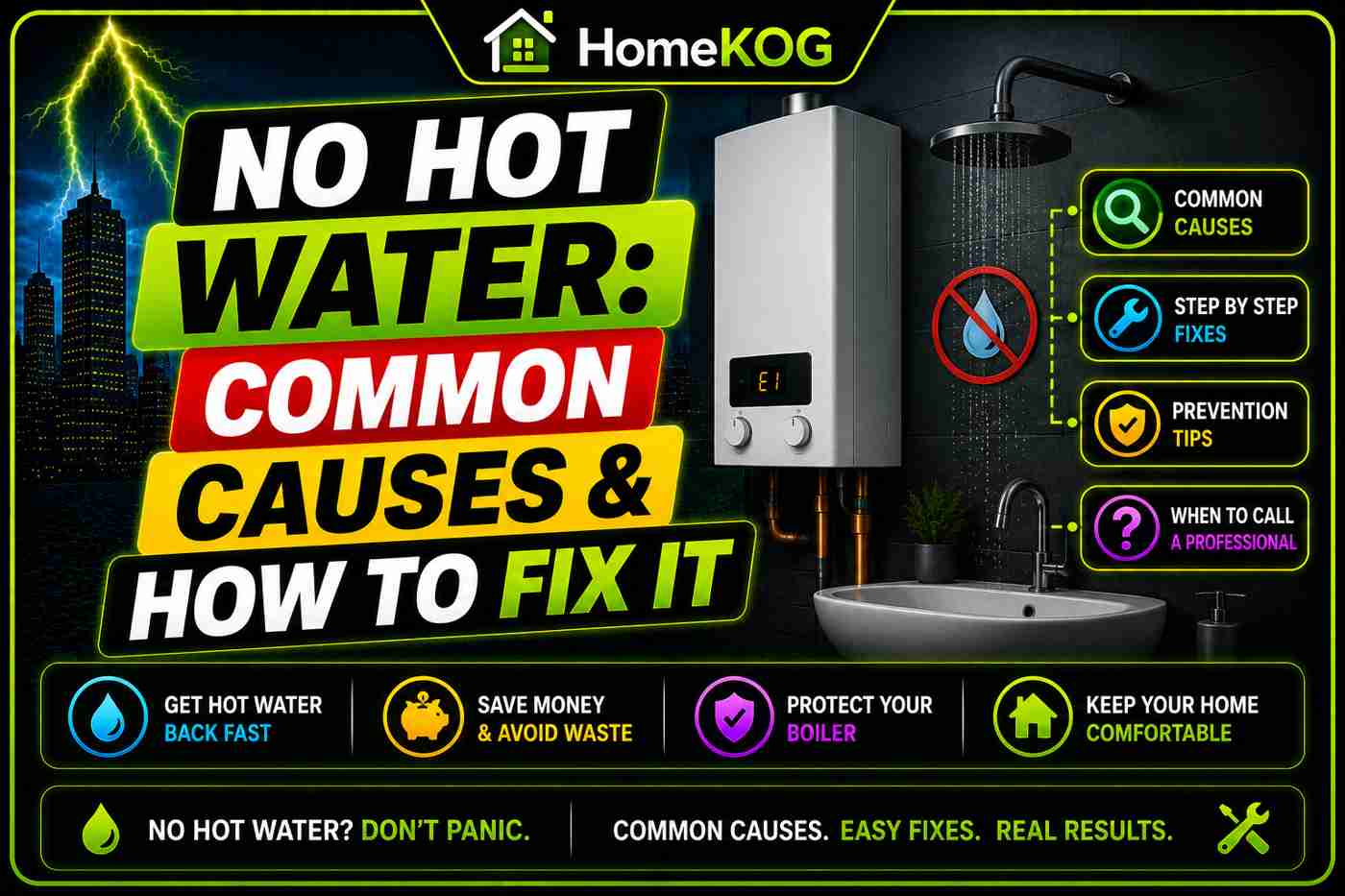
Quick Answer: No hot water from your boiler is most commonly caused by low system pressure, a frozen condensate pipe, a faulty diverter valve, or a pilot light failure. Several of these can be resolved at home without calling an engineer. Start by checking the pressure gauge — it takes under two minutes and fixes the problem more often than most people expect.
Waking up to no hot water is one of those household problems that demands immediate attention, especially during the colder months. The reassuring reality is that most cases come down to a small number of well-understood faults, many of which a homeowner can address without professional help.
Get a new boiler quote online here
What Can Cause No Hot Water?
-
A combi boiler requires correct system pressure to produce hot water on demand
-
The diverter valve controls the flow of hot water between radiators and taps
-
A frozen condensate pipe triggers boiler safety lockout and loss of hot water
-
Pilot light failure prevents gas ignition and subsequent hot water production
-
A Gas Safe engineer is legally authorised to carry out internal boiler repairs and replacements
-
Low boiler pressure results in reduced output or complete loss of hot water
-
A faulty thermistor causes incorrect temperature readings and a boiler shutdown
-
A magnetic filter captures iron oxide debris before it reaches the heat exchanger
-
The boiler pressure gauge displays whether the system pressure falls within the safe operating range
-
A diverter valve fault explains why central heating continues working while hot water fails
-
A chemical flush removes accumulated sludge and scale from boiler hoses and heat exchangers
-
An annual boiler service reduces the likelihood of unexpected hot water failures

The First Things to Check When You Have No Hot Water
Before working through individual components, it is worth ruling out the simplest explanations first. Check whether other gas appliances are functioning — if the hob or gas fire is also unresponsive, the issue may lie with your gas supply rather than the boiler.
If the boiler display is completely blank, a power cut is the most likely cause rather than an internal fault. Once utilities are confirmed as working, check the boiler display for a fault code and consult your manual or the manufacturer’s website for guidance.
Low Boiler Pressure
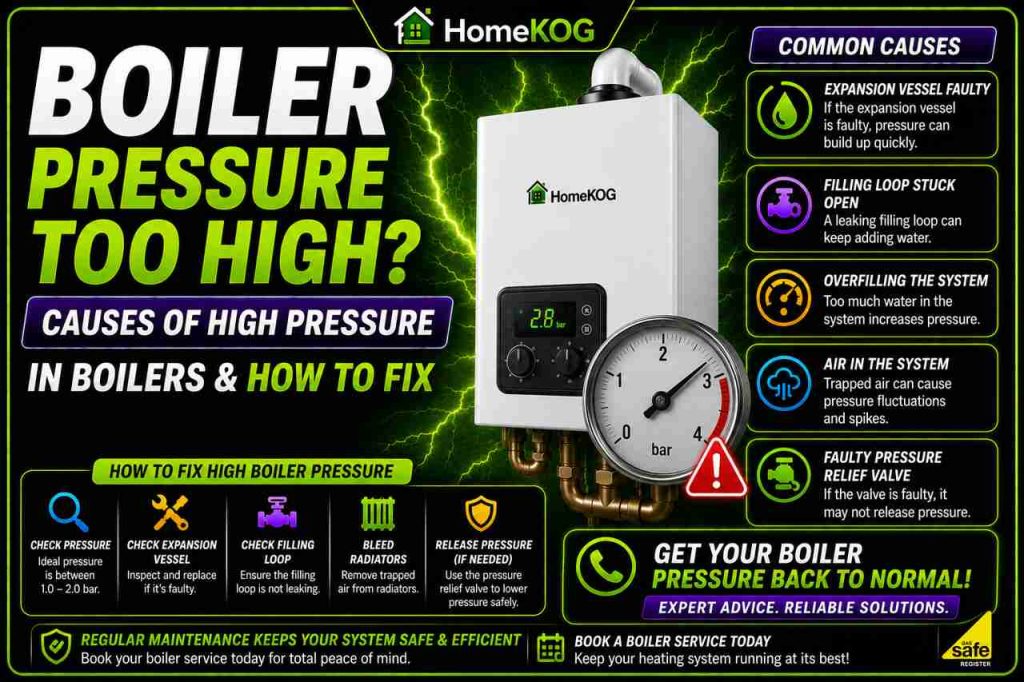
Low pressure is the single most common cause of a combi boiler failing to produce hot water, and one of the few faults most homeowners can fix entirely on their own. The pressure gauge sits on the front of most boilers and should read between 1 and 1.5 bar when the system is cold.
Topping up involves opening the filling loop — a short braided or silver hose beneath the boiler — until the gauge returns to the correct range, then closing the valves. If pressure drops repeatedly over several weeks, this points to a slow leak that requires a professional inspection rather than continued topping up.
Frozen Condensate Pipe
During cold spells, a frozen condensate pipe is the most frequent reason a boiler shuts down suddenly without any obvious mechanical fault. The pipe carries acidic wastewater to an external drain and is vulnerable when outside temperatures drop below zero.
When frozen, the blockage triggers a boiler safety shutdown and usually causes an error code to appear on the display. Wrap a warm, damp cloth around the external pipe or pour lukewarm water over it, then restart the boiler once the blockage clears — never use boiling water on plastic pipework.
Diverter Valve Failure
If your central heating is working normally but you have no hot water from the taps, a faulty diverter valve is the most probable explanation. This valve redirects hot water between the heating and domestic hot water circuits as needed, and when it fails, it typically locks in the heating position.
This is why radiators stay warm while the taps run cold — the boiler produces heat but sends it all to the radiators. A Gas Safe engineer will need to inspect and replace the valve, though it is a common repair usually resolved within a single visit.
Pilot Light and Ignition Faults
Older boilers rely on a standing pilot light to ignite the main burner, and if this flame goes out, the boiler cannot produce hot water. On many older models, you can check whether it is still lit through a small viewing window on the casing.
Newer boilers use electronic ignition and will display a fault code when ignition fails, rather than showing a visible flame. Relighting a pilot light is safe to do yourself if you follow the boiler manual, but if it keeps going out, an engineer should investigate the underlying cause.
Thermistor and Thermostat Faults
A faulty thermistor — the small temperature sensor inside the boiler — can cause the unit to misread water temperature and shut down unnecessarily or fail to fire when hot water is needed. This part is inexpensive and straightforward for a Gas Safe engineer to test and replace.
Room thermostats and smart thermostats control the heating circuit and do not directly manage hot water in most setups, so a thermostat fault alone is rarely the cause. However, where a thermostat doubles as a system timer, a programming error can cut both heating and hot water simultaneously — worth checking after any power cut or recent service.
Blocked Heat Exchanger or Hoses
Over time, limescale, iron oxide sludge, and debris accumulate inside the boiler’s heat exchanger and hoses, gradually restricting water flow through the system. This typically presents as consistently lukewarm water rather than a sudden and complete loss of hot water.
A chemical flush every five years clears this buildup and restores proper circulation, and fitting a magnetic filter to the return pipe prevents debris from reaching the boiler in the first place. Filters are cleaned during each annual service and represent a modest cost compared to the repair bills that can result from sludge accumulation.
Airlocks
An airlock forms when trapped air prevents water from moving freely through part of the heating or hot water system. This can produce patchy hot water, gurgling noises in the pipework, or in more significant cases a complete loss of hot water from the taps.
Bleeding the radiators with a bleed key — starting with the one furthest from the boiler — is the standard first response and takes around fifteen minutes. If this does not resolve the issue, the airlock may be within the boiler itself and will need a Gas Safe engineer to locate and clear it properly.
No Hot Water But Heating Works: Causes at a Glance
| Symptom | Most Likely Cause | Can You Fix It Yourself? |
|---|---|---|
| No hot water, heating works fine | Diverter valve fault | No — engineer required |
| No hot water and no heating | Low pressure or boiler lockout | Yes — check pressure gauge first |
| Lukewarm water only | Thermistor fault or blocked heat exchanger | Check settings first, then the engineer |
| The boiler cuts out in cold weather | Frozen condensate pipe | Yes — warm the pipe gently |
| The boiler shows an error code on the display | Ignition failure or sensor fault | Check the manual, then the engineer if needed |
| Hot water is intermittent or inconsistent | Airlock or partial diverter fault | Bleed radiators first |
| Pressure drops repeatedly | Slow leak in the system | No — engineer required |
Should You Repair or Replace Your Boiler?
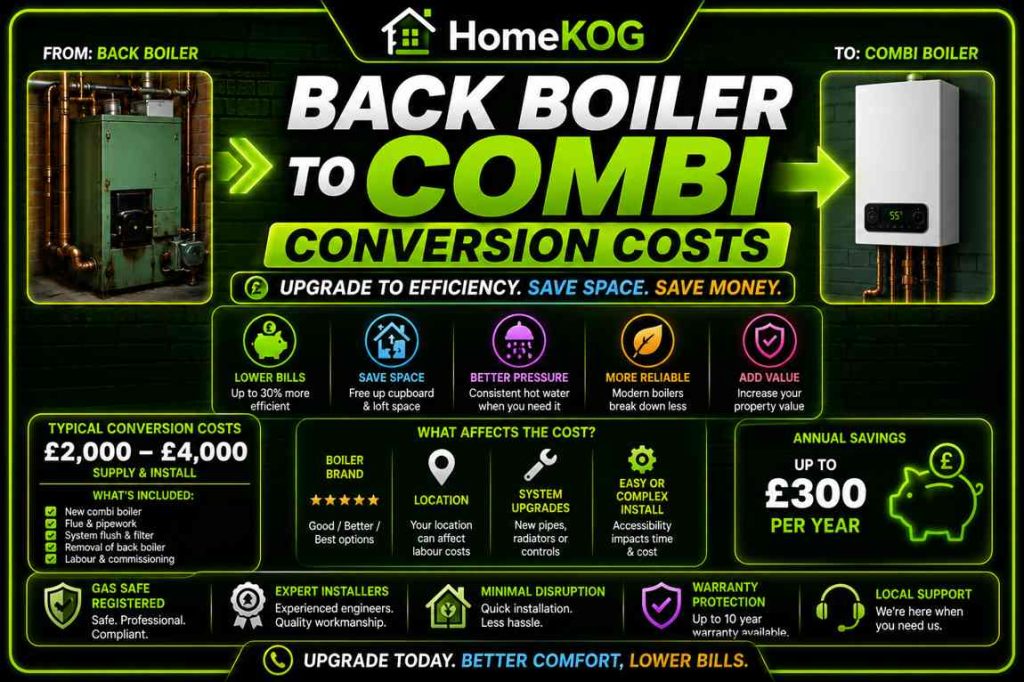
For most hot water faults, repair is the right first step and the more cost-effective choice, with components like diverter valves and thermistors all replaceable without changing the whole unit. The decision becomes more complicated when the boiler is older, and faults are occurring with increasing regularity.
Replacement is worth serious consideration when a boiler is over 15 years old and has needed several repairs in a short period. Modern combi boilers run at efficiency ratings above 90%, and the reduction in energy bills over subsequent years can go a long way toward offsetting the upfront installation cost.
FAQ
Why do I have no hot water, but my central heating is still working?
This symptom points strongly to a faulty diverter valve inside your combi boiler. The valve switches heated water between the central heating circuit and the hot water circuit, and when it sticks in the heating position, radiators stay warm while the taps run cold. A Gas Safe registered engineer will need to inspect and replace the valve — it is a common repair that is usually completed within a single visit without further complications.
How do I increase my boiler pressure myself?
Locate the filling loop beneath your boiler — typically a short braided hose with a valve at each end — and slowly open both valves while watching the pressure gauge. Stop when the needle reaches between 1 and 1.5 bar, close both valves, and confirm the reading holds steady before walking away. If pressure drops again within a few weeks, contact an engineer to locate the source of the leak rather than continuing to repressurise.
What causes a frozen condensate pipe, and how do I fix it?
The condensate pipe carries waste water from the boiler to an external drain and can freeze during cold weather, triggering a full boiler safety shutdown. Apply a warm, damp cloth to the external section of the pipe or pour lukewarm water over it until the ice clears, then restart the boiler. Never use boiling water on plastic pipework — a frozen condensate pipe is one of the most common winter callouts engineers attend across the UK.
Can a faulty thermostat cause loss of hot water?
A room thermostat primarily controls the heating circuit and will not usually cut your hot water supply on its own in standard system configurations. However, if it also functions as a system-wide timer, a fault or programming error could shut down both heating and hot water simultaneously. The thermistor inside the boiler is a separate component that, when faulty, prevents the boiler from heating water correctly and can be replaced by an engineer at relatively low cost.
How often should I service my boiler to prevent hot water problems?
An annual boiler service by a Gas Safe registered engineer is the standard recommendation for all UK households with a gas boiler. During the service, the engineer checks all major components, including the heat exchanger, ignition system, thermistor, flue, and gas connections, catching developing faults before they cause a breakdown. Most manufacturers also require annual servicing to keep the boiler warranty valid.
Why is my boiler firing up but not producing hot water?
If the boiler ignites but no hot water arrives at the tap, the most likely causes are a stuck diverter valve, a blocked heat exchanger, or a faulty thermistor. Check whether central heating is also affected — if radiators are working but hot water is absent, the diverter valve is the prime suspect and will need an engineer. If both have failed together, check the pressure gauge and look for a fault code on the display before calling out.
Is it safe to relight my pilot light myself?
On older boilers with a standing pilot light, relighting it yourself is safe provided you follow the boiler manual instructions and avoid interfering with any gas connections or internal components. The process typically involves holding a reset button while activating the built-in igniter, with the manual walking you through each step. If the light goes out again shortly after, an engineer should investigate the underlying fault rather than you continuing to relight manually.
When does it make more sense to replace a boiler than repair it?
Replacement is generally the better choice when a boiler is over 15 years old and has required multiple repairs in a short period, or when a single repair costs a substantial proportion of what a new installation would cost. Older boilers run at significantly lower efficiency than current models, resulting in higher energy bills year on year. A Gas Safe engineer will present both options clearly so you can make a fully informed decision.
Conclusion
No hot water from your boiler is a frustrating problem, but it rarely signals a catastrophic or irreparable fault. Low pressure, frozen condensate pipes, and diverter valve issues account for the vast majority of cases across the UK, and at least two of those three can often be resolved without calling anyone out.
Working through the logical steps — checking the pressure gauge, looking for error codes, inspecting the condensate pipe in cold weather, and confirming timer settings — will resolve the problem in many cases before an engineer is ever needed. Whatever the outcome, committing to an annual boiler service remains the single most reliable way to prevent hot water problems from recurring.