
How Do Air Source Heat Pumps Work? User Guide & Information
Quick Answer:
Air source heat pumps work by extracting heat from the outside air and transferring it into your home using a refrigerant cycle. Even in cold weather, they can efficiently heat radiators, underfloor heating, and hot water while using significantly less electricity than traditional boilers.
Air source heat pumps are becoming one of the most popular low-carbon heating systems in the UK. They provide an energy-efficient alternative to gas boilers, helping homeowners reduce both energy bills and carbon emissions.
With rising energy costs and government incentives available, more households are now considering heat pumps as a long-term heating solution.
Get a heat pump quote online here >
Air Source Heat Pumps Explained: Key Entity Relationships
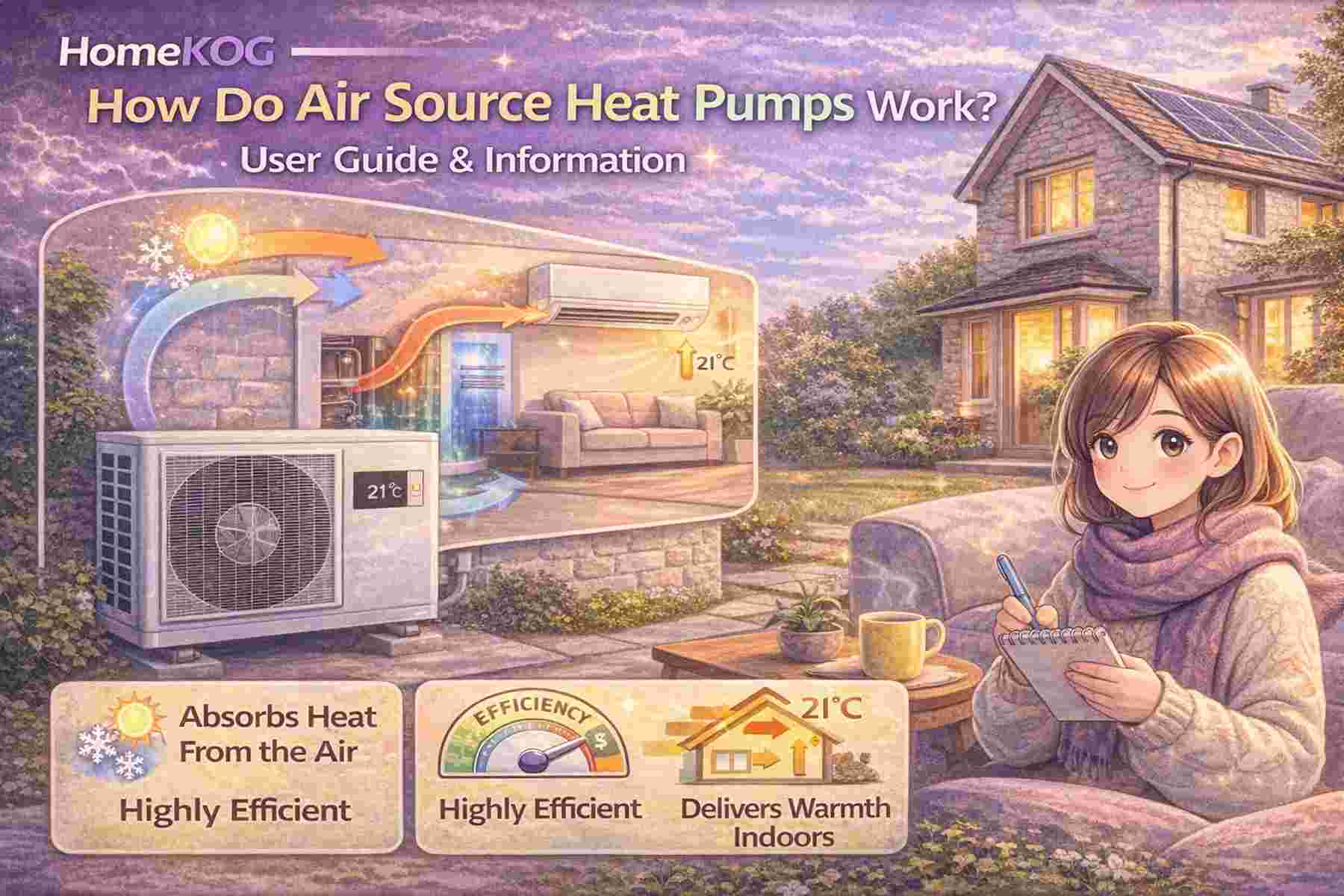
Air source heat pumps extract heat from outside air using a refrigerant that absorbs thermal energy even at low temperatures. The compressor increases the temperature of this heat, while the condenser transfers it into your home’s heating system, including radiators, underfloor heating, and hot water cylinders.
Electricity powers the system, but because it moves heat rather than generating it, it delivers more energy than it consumes. This results in high efficiency and lower running costs compared to traditional heating systems.
What Is an Air Source Heat Pump?
An air source heat pump is a heating system that takes heat from the outside air and uses it to warm your home and water. It works in a similar way to a fridge, but in reverse.
Instead of removing heat from inside and releasing it outside, it captures heat from outside and brings it indoors.
Get a heat pump quote online here >
How Air Source Heat Pumps Work (Step-by-Step)
Step-by-Step Process
- The heat pump absorbs heat from the outside air
- A refrigerant fluid captures and stores this heat
- The compressor increases the temperature of the refrigerant
- Heat is transferred into your heating system
- The cooled refrigerant cycle repeats continuously
This process runs efficiently even in winter, making heat pumps suitable for UK climates.
Air Source Heat Pump Components Explained
Evaporator
The evaporator absorbs heat from the outside air into the refrigerant. This happens even at low temperatures.
It is the first stage of the heat transfer process.
Compressor
The compressor increases the pressure and temperature of the refrigerant. This is where the heat becomes usable for your home.
It is powered by electricity but operates efficiently.
Condenser
The condenser transfers heat into your home’s heating system. This heats your radiators, underfloor system, or water cylinder.
It is the stage where heat is delivered indoors.
Expansion Valve
The expansion valve cools the refrigerant so it can absorb heat again. This completes the cycle.
The process repeats continuously to maintain heating.
Get a heat pump quote online here >
Air Source Heat Pump Efficiency
Air source heat pumps are highly efficient because they transfer heat rather than generate it. For every unit of electricity used, they can produce 3 to 4 units of heat.
This is often referred to as a Coefficient of Performance (COP) of 3 to 4, making them far more efficient than traditional gas boilers.
Air Source Heat Pump Costs in the UK (2026)
| Cost Type | Typical Price Range |
|---|---|
| Heat Pump Unit | £6,000 – £12,000 |
| Installation | £3,000 – £8,000 |
| Total Cost | £9,000 – £20,000 |
Costs vary depending on property size, insulation, and system requirements.
Running Costs and Savings
Air source heat pumps can reduce heating bills, especially in well-insulated homes. They use electricity but operate efficiently, meaning lower overall energy usage.
Savings depend on energy prices and how well your home retains heat.
Benefits of Air Source Heat Pumps
Lower Energy Bills
Heat pumps use less energy than traditional heating systems. This can reduce long-term heating costs.
They are especially effective in energy-efficient homes.
Reduced Carbon Emissions
Air source heat pumps produce fewer carbon emissions compared to gas boilers. This helps reduce your home’s environmental impact.
They are a key part of the UK’s move toward low-carbon heating.
Year-Round Heating
Heat pumps provide both heating and hot water throughout the year. Some systems can also provide cooling during warmer months.
This makes them a versatile solution.
Are Air Source Heat Pumps Suitable for All Homes?
Air source heat pumps work best in well-insulated homes. Proper insulation helps retain heat and maximise efficiency.
Older properties may require upgrades such as improved insulation or larger radiators to work effectively.
Air Source Heat Pumps vs Gas Boilers
| Feature | Air Source Heat Pump | Gas Boiler |
|---|---|---|
| Efficiency | 300–400% | 90–94% |
| Fuel Type | Electricity | Gas |
| Carbon Emissions | Low | Higher |
| Running Costs | Lower (efficient homes) | Moderate |
| Installation Cost | Higher upfront | Lower upfront |
Heat pumps cost more initially but offer long-term savings and environmental benefits.
Frequently Asked Questions
Do air source heat pumps work in cold weather?
Yes, air source heat pumps work efficiently even in cold temperatures. They can extract heat from air as cold as -15°C, making them suitable for UK winters.
Are air source heat pumps expensive to run?
Air source heat pumps are generally cheaper to run than traditional systems if your home is well insulated. Their high efficiency means they produce more heat per unit of electricity used.
How long do air source heat pumps last?
Air source heat pumps typically last between 15 and 20 years with proper maintenance. Regular servicing helps maintain performance and efficiency over time.
Do I need new radiators for a heat pump?
In some cases, larger radiators or underfloor heating may be required. This is because heat pumps operate at lower temperatures than gas boilers.
Can air source heat pumps heat water?
Yes, air source heat pumps can provide hot water through a cylinder. They heat water in a similar way to how they heat your home.
Are air source heat pumps noisy?
Modern heat pumps are relatively quiet, similar to an air conditioning unit. They are suitable for most residential areas.
Is there a government grant for heat pumps?
Yes, schemes like the Boiler Upgrade Scheme offer grants to help reduce installation costs. Eligibility depends on property type and other factors.
Are air source heat pumps worth it in the UK?
Air source heat pumps are worth it for many UK homeowners, especially those looking to reduce energy bills and carbon emissions. They are a long-term investment in energy efficiency.
Conclusion
Air source heat pumps are an efficient and environmentally friendly way to heat your home in 2026. By transferring heat from the air rather than generating it, they offer lower energy usage and reduced emissions.
While the upfront cost is higher, the long-term savings and sustainability benefits make them an increasingly popular choice for UK households.